
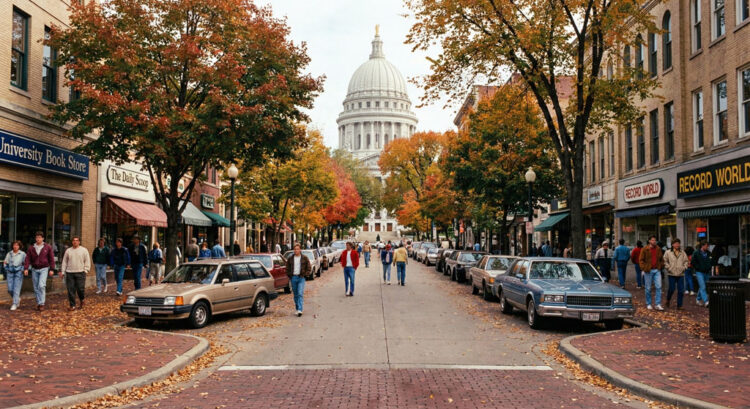
In the previous installment of my story, I recounted the immense effort required to secure my job, visa, and tickets to return to the United States to complete my Ph.D. After a tearful farewell to my mother and family in Allahabad, I was finally on my way. This eighth part of the series chronicles my eventful arrival in Madison, the challenging struggle to finance my family and studies, the completion of my doctoral dissertation, and the bittersweet moment of choosing to return to India after achieving my ultimate academic goal.
The Return to Madison
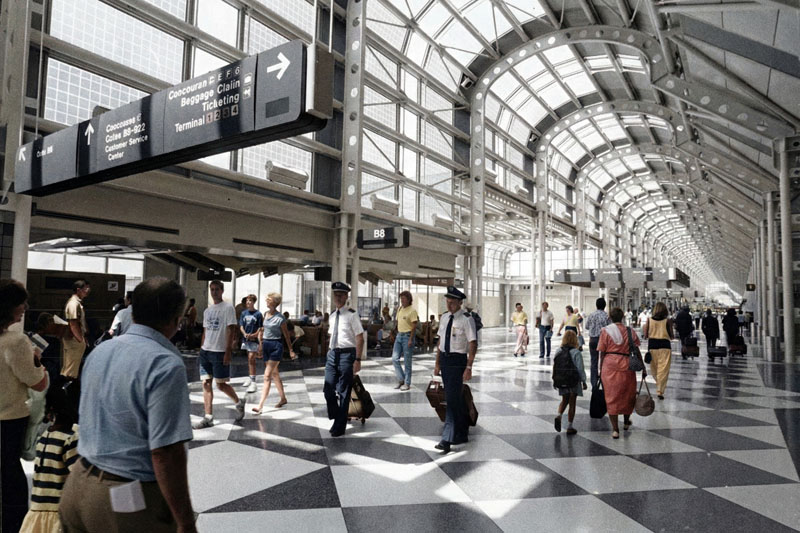
We landed at Chicago airport on the morning of September 7, 1983. My cousin Saeed and his wife Farzana were there at the airport to receive us. We first drove to Saeed’s residence at Davenport, which was approximately a three-hour drive from Chicago. Needless to say, we were overjoyed to meet each other after a gap of two years. It was Saeed’s mother’s first visit to the USA, and their reunion after so many years was a matter of special joy and happiness for everyone.
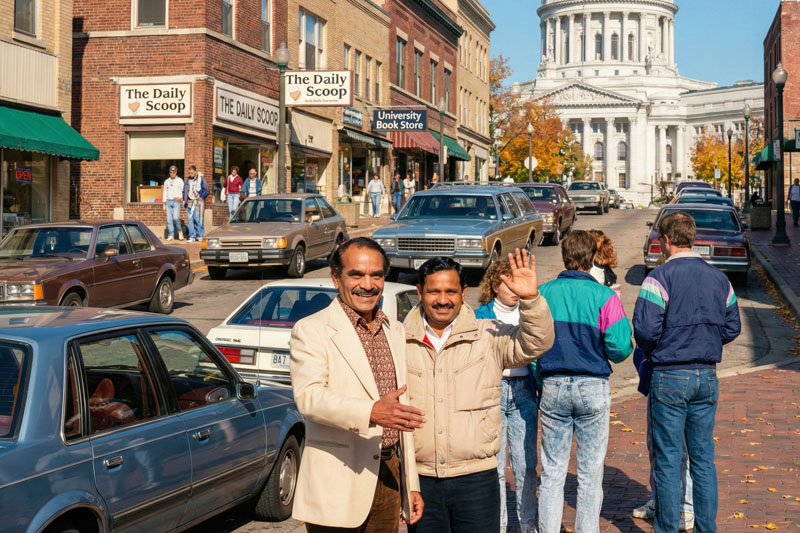
After two days, Saeed and his family drove us to Madison. We first met Amanullah Saheb, who had the keys to our new apartment in the Eagle Heights Housing Colony. It was a sheer joy to find that Amanullah Saheb and our other mutual friends had already arranged for some secondhand furniture, which was enough for the immediate use of a family of four. Crucially, Aman Saheb had also paid my tuition fees for two semesters in my absence. I will forever remain grateful to Aman Saheb for his extraordinary kindness and generosity. He was a gem of a man; what he had done for us was an act of selfless friendship that went beyond the expectations of even a family member. Since I was short of funds at that time (I had only $400 in my pocket, out of which I had to pay the monthly rent), we also needed groceries immediately. Saeed was kind enough to buy enough for one week, paying $60 for it. I will always be grateful to Saeed for this kind gesture.
A Sudden Setback
The very next day, I went to the History department and met Professors Frykenberg and Karpat. They welcomed me back warmly and assured me of all kinds of help in completing my Ph.D. degree. Professor Frykenberg advised me to meet the Chairman of the Centre for South Asian Studies to join my duties as a temporary lecturer there.
However, when I met the Chairman, a respected South Indian scholar, he told me that since I didn’t report at the beginning of the semester, the temporary lecturer position had already been assigned to someone else. I felt as if the heavens had fallen on me, as it would now be incredibly difficult to support a family of four without any financial assistance. I smiled, accepted my fate, and said goodbye. The Chairman, surprised by my reaction, asked how I could smile under such adverse circumstances. I told him that God is great and that He would surely come to my rescue.
An Open Door
That same day, I went to the library. By chance, I met my previous boss from the microfilming section at the library’s gate. He was pleased to see me after such a long time and immediately offered me the same job in his section at the rate of $4.50 per hour for four hours on weekdays. I immediately accepted his offer and agreed to join my duties the very next day. I profusely thanked Allah for His blessings and bounties. I was convinced that if one door closes on you, Allah is always there to open another for His creatures. I also met my old friends Abdullah Badshah and Tahsin Siddiqui, who were also doing part-time jobs in the library. It was a happy reunion after more than two years, and they promised to visit my apartment soon.
After a few days, we admitted Tipu to the Shorewood School in the second standard, which was a walking distance from our apartment. The daughter of our Egyptian neighbors was also studying at the same school in the fourth standard, and she promised to accompany Tipu while going to and returning from school.
Juggling Work and Family
I started working in the library the next day, but I soon realized that my monthly earning of $360 from the campus job would not be enough to sustain a family of four. At this time, Nilofer came to my rescue, deciding to take up babysitting, for which there were enough opportunities available in the Eagle Heights Housing Colony. Many housewives in the colony were doing the same job. Nilofer even joined a one-month training course provided by the housing society to learn how to look after children professionally. Nilofer graciously and selflessly gave me all her earnings, which was a great help in running our household. Needless to say, we had to struggle a lot in making both ends meet during our stay in Madison.
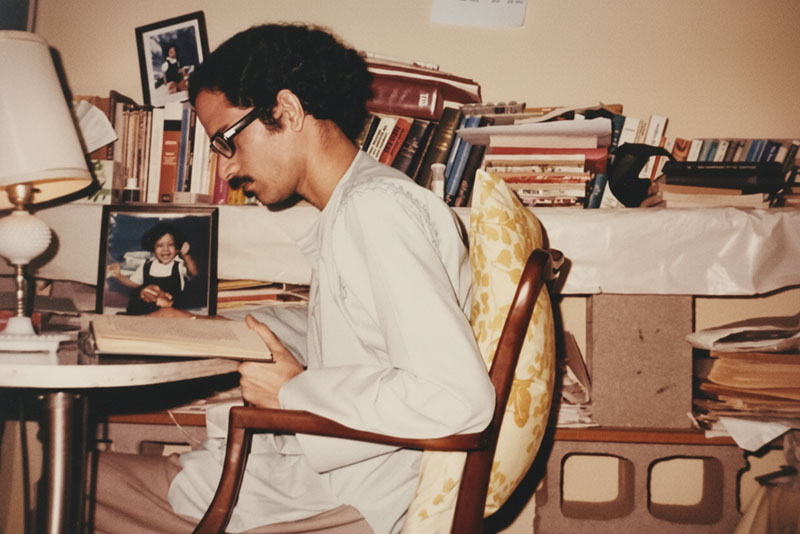
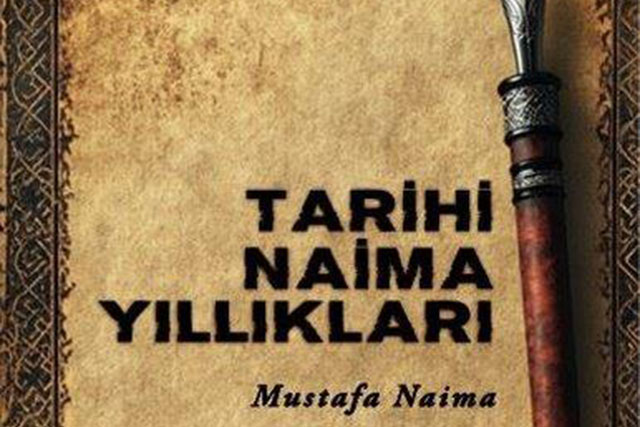
After a few days of settling into the new environment following our return to Madison, I started focusing wholeheartedly on my research work. I would leave home around 9 a.m. with my lunch box, head to the library, and work there. I spent my days browsing the stacks for books relevant to my dissertation and taking copious notes. I collected all the standard books on Ottoman history, especially the published works by famous Ottoman chroniclers of the sixteenth and seventeenth centuries, and studied them thoroughly. The chronicles Tarikh-i Naima by Mustafa Naima and Tarikh-i Rashidi by Rashid proved very helpful in tracing Mughal–Ottoman diplomatic relations, the arrival of Mughal ambassadors, and their reception and activities in the Ottoman capital, Istanbul. The twelve volumes of English factory records edited by William Foster also provided significant information on Mughal–Ottoman Relations. Naturally, I also used the English translations of all the major Mughal chronicles available in the library to get the Mughal perspective on their relations with the Ottoman Empire.
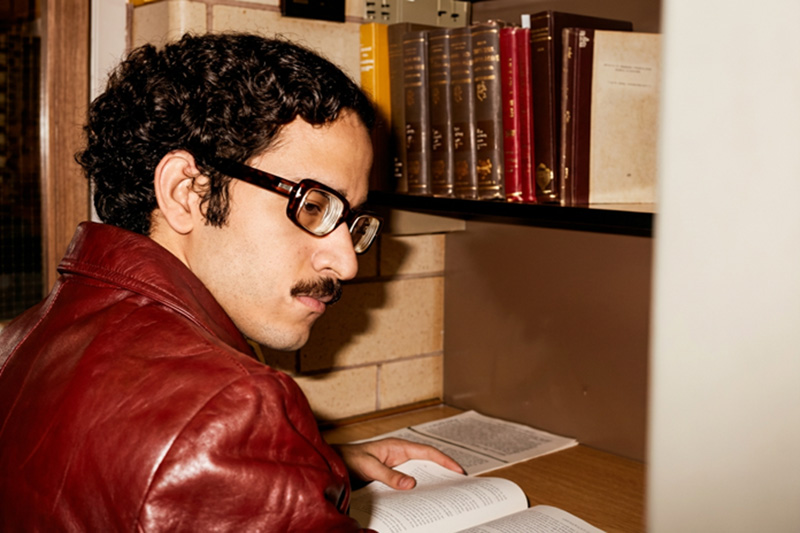
I was allotted a cubicle in the library where I kept my books and studied. I also checked out a large number of books from the library for studying at home. Graduate students at the university library had no limit on the number of books they could issue, but they had to return a book within one week if another patron requested it. I also took advantage of the library’s excellent Inter-Library Loan system to acquire several books that were not available in their collection.
After taking my lunch at 1 p.m., I would work in the microfilming section of the library until 5 p.m. and return home around 6 p.m. by campus bus. During the weekends, I would study eight to ten hours a day, focusing on writing my dissertation and translating Ottoman documents into English with the help of Sir Jaames W. Redhouse’s Turkish and English Lexicon. Professor Karpat also kindly helped me by reviewing my translated documents and suggesting relevant changes to the language and the exact meaning of certain diplomatic jargon. I also began translating the Persian correspondence of the Mughal Emperors that I had brought from Aligarh with the help of the famous F. Steingass Persian–English dictionary.
Dissertation Progress and Personal Blessings
In 1984, Professor Frykenberg organized a three-day international conference on Delhi through the Ages. At the conference, I met the renowned historian Professor Simon Digby from the United Kingdom. Many historians from India and various universities in the USA also participated. When the collection of papers presented at the conference was published in a book form by Oxford University Press, Professor Frykenberg asked me to prepare an index for the book, along with a glossary of Persian and Arabic words. I completed the job with Nilofer’s help within the stipulated time. In return, Professor Frykenberg paid me $400 and graciously thanked both me and Nilofer in the preface of the book.
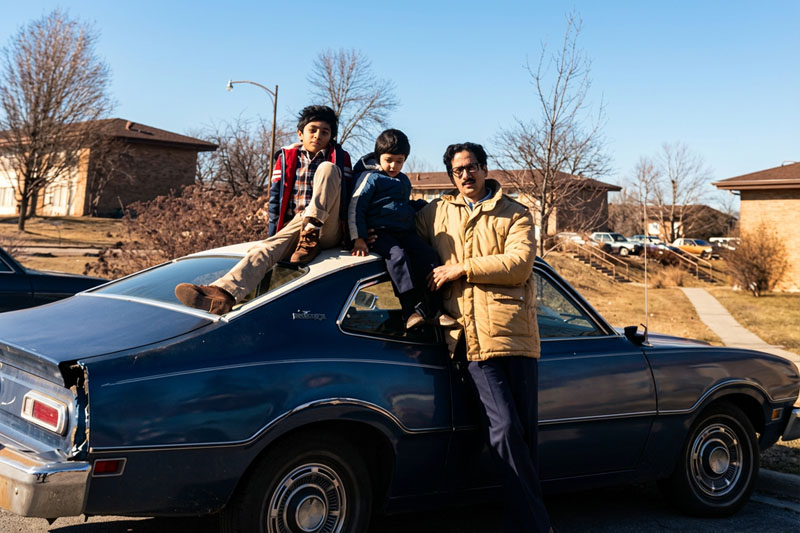
I used this money to buy a secondhand Ford Mustang car. Before buying the car, I had cleared the written and practical driving test conducted by Madison’s transport department on the first attempt and obtained my driving license. Before owning the car, we used to buy all our groceries from the Eagle Heights community center, where I had to work for one hour at a job of my choice, which was mandatory for all residents of the housing colony. I always chose the cheese-cutting job at the center. The car gave us the freedom to visit the city’s malls and shopping centers whenever I had time to buy groceries and other household items. We regularly visited the East Town and West Town malls, which Tipu and Khurram also enjoyed very much.
In November 1984, I submitted the first chapter of my dissertation to Professor Frykenberg. The chapter was typed by Nilofer on the secondhand portable typewriter I had bought from a neighbor. Despite her busy schedule managing household work, looking after our children, and babysitting the two boys she was responsible for, Nilofer found the time to type a chapter of almost 70 pages. When Professor Frykenberg returned the chapter to me after a week, I found every page full of marks and changes in red ink. The Professor had clearly checked every single sentence. He quickly assured me that I shouldn’t be discouraged by the extensive red marks, as the same thing had happened to him when he had submitted his first chapter to his own supervisor at London University. He advised me to submit every subsequent chapter, one by one, to all members of my five-member dissertation committee, which included Professors Karpat, Stephen Humphreys, John Vansina, and M.U. Memon, besides himself.

In 1985, my elder brother Bhaiya visited Madison at the invitation of Professor Memon to deliver a lecture on Urdu poetry at the Centre for South Asian Studies and stayed with us for three days. It was a sheer joy to meet Bhaiya after almost two years, and that too in a foreign country. His lecture was, as usual, a masterpiece and was much appreciated by the audience. He later visited the Universities of Chicago and Columbia to deliver lectures on Urdu literature.
During the 1985 Wisconsin South Asia conference at Madison, my old friend Vivek Katju, who was then the First Secretary at the Indian Embassy in Washington D.C., was also a participant. I was surprised and overjoyed to meet him. He visited our house for dinner the next day. Meeting old friends in a foreign land always brings its own excitement and delight. Our circle of friends in Madison had also expanded during these days. Aman Saheb, as usual, treated us with great affection, and meeting him and other friends was always an occasion of joy and happiness. We also visited the Milwaukee Zoo and the Great America, a mini Disneyland situated not far from Madison, which Tipu and Khurram enjoyed immensely. We visited Saeed and his family in Davenport several times during this period, and their support made our stay in Madison comfortable and fruitful. I will always be grateful to them for looking after us so well all those days.
The Final Defense
During this period, I continued to work as hard as possible to write my dissertation. By the end of November 1985, I was able to finish writing the entire dissertation, which was 430 pages long and consisted of five chapters, along with an introduction, conclusion, and bibliography. Nilofer typed the first draft of the entire dissertation on our portable typewriter, which allowed me to save a significant amount of money. Her contribution to completing my dissertation was immense, and I will always remain grateful to her for her unwavering support during those hard times.
As Professor Frykenberg advised, I kept submitting the dissertation chapters to the members of the dissertation committee as soon as each chapter was ready for review. Professor Frykenberg continued to support and encourage me with his valuable suggestions. I will always remain grateful to him for his constant kindness and generosity. At his recommendation, the History department granted me a sum of $600 for the final typing of the dissertation and other related expenses. I hired the department secretary, Ms. Clara, to type the final draft, paying her $430 at the rate of one dollar per page, and spent the remaining amount on xeroxing several copies of the thesis and getting three copies bound.
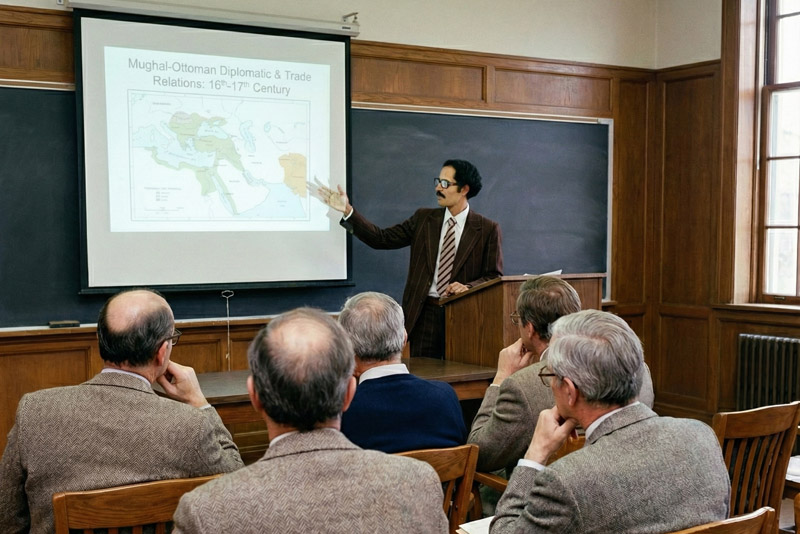
After completing all the final formalities, February 17, 1986 (the day before Tipu’s ninth birthday), was fixed for my defense examination. The defense began at 1 p.m. on the fixed date and continued until 5 p.m. All five members of the committee meticulously questioned and challenged me for almost four hours, grilling me on the merits of my work and offering a few suggestions for further improvements. Finally, the committee was satisfied, congratulating me for a job well done and recommending the University for the grant of a Ph.D. degree in South Asian History. Professor Frykenberg especially congratulated me and wished me good luck for my future career. It was a dream come true for me, as I had never even dreamt of earning a doctoral degree from a prestigious university like the University of Wisconsin–Madison. It became possible only by the grace of Allah, the blessings of my mother, the consistent support of Nilofer, and the good wishes of my friends in Madison.
The next day, I submitted an unbound copy of the dissertation to the library, which was the final formality for completing the Ph.D. degree at the University. The same day, I also received a congratulatory letter from the chairman of the History department for completing all the requirements of the doctoral degree.
The Decision to Return
My future plans now had to be decided. One option was to look for a job in the USA, which was mandatory for our continued stay in the country. However, Professor Frykenberg advised me to return to India and serve my alma mater, urging me to enrich my students with the knowledge and experience I had acquired in Madison. He also wrote a very strong letter to my head of the department, Professor C.B. Tripathi, praising my efforts to earn my doctoral degree and recommending me for an appointment as an Associate Professor at the University as soon as possible. I, too, was looking forward to reuniting with my family in Allahabad, especially my revered mother, who was anxiously waiting to see us return. My secure, permanent job at the University of Allahabad also motivated me to return to India. Furthermore, Tipu and Khurram were very young, and I wasn’t entirely comfortable sending them to public schools in Madison, having heard concerns about issues like drug addiction among some of the older boys in these schools.
Ultimately, we decided to return to India. We booked tickets for the four of us on the Chicago–Amsterdam–New Delhi flight by KLM Airlines. Our last meeting with Aman Saheb and other friends was highly emotional and poignant. Sadly, Aman Saheb passed away a few months after we left Madison. He had proven in letter and spirit that a friend in need is a friend indeed. Since then, more than forty years have passed, but I never forget to pray for his maghfirat in my daily prayers and while reciting the Holy Quran. In April 1986, we flew back to New Delhi with a heavy heart for leaving behind so many good friends and well-wishers in Madison. Our friends Abdullah Badshah, Tahsin Siddiqui, and Riazul Haque hired a car to bid us farewell at the Chicago airport. It was indeed a very difficult moment in my life to say goodbye to such marvelous and selfless friends, but the time had come to leave behind all the good memories of our stay in Madison.
This phase of my life, marked by sacrifice, relentless work, and the unwavering support of friends and family, culminated in the achievement of my Ph.D. from one of the world’s most distinguished universities. Having realized my academic dream, I was now poised to return to the foundation of my professional life, the University of Allahabad, ready to embark on a new role as a fully accomplished scholar and teacher.
To be continued…


One comment on “From the Backbenches to the Vice Chancellor’s Chair: My days at Allahabad University – Part 8”