
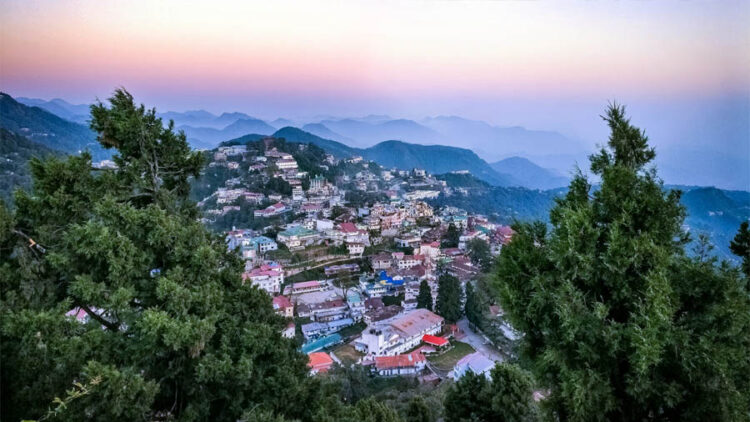
In the eighth part of my memoir, I shared the intense period of my return to the United States. I recounted the challenge of losing my temporary lectureship, the sheer relief of securing my old library job, and the relentless work that culminated in the successful defense of my doctoral dissertation at the University of Wisconsin–Madison. Having achieved my academic goal, I made the crucial decision to return to India to resume my career at my alma mater, the University of Allahabad. This ninth installment details my return home and the significant professional step that took me to the prestigious Lal Bahadur Shastri National Academy of Administration in Mussoorie.
Home, Academic Recognition, and New Colleagues
We landed at the Delhi airport the next morning. My brother Bhaiya was, as usual, there to receive us. Surprisingly, Muhammad Ahmed Bhai had also come, having traveled to Delhi for an official meeting, and joined Bhaiya to welcome us. It was a sheer joy to meet my loving and caring brothers after such a long time. Bhaiya drove us to his residence at Kaka Nagar. We stayed there for the day and took the night train for Allahabad, reaching home on the morning of April 9, 1986. My revered mother, Kalim, and his family received us very warmly, overjoyed to have us back after three long years.
The very next day, I went to the University and immediately rejoined my duties in the department. I met Professor Tripathi and my other colleagues in the staff room. Professor Tripathi was overjoyed to see my Ph.D. dissertation and congratulated me warmly. He proudly told the colleagues present that after almost 54 years, a member of the History faculty had returned from abroad with a doctoral degree. (The last had been Professor B.P. Saxena, who earned his Ph.D. from London University in 1932.) This was a significant moment, especially as three other faculty members had gone abroad on government fellowships in recent years but had returned empty-handed. My degree also entitled me to claim the annual increments due during my leave of absence from the University, which were duly restored.
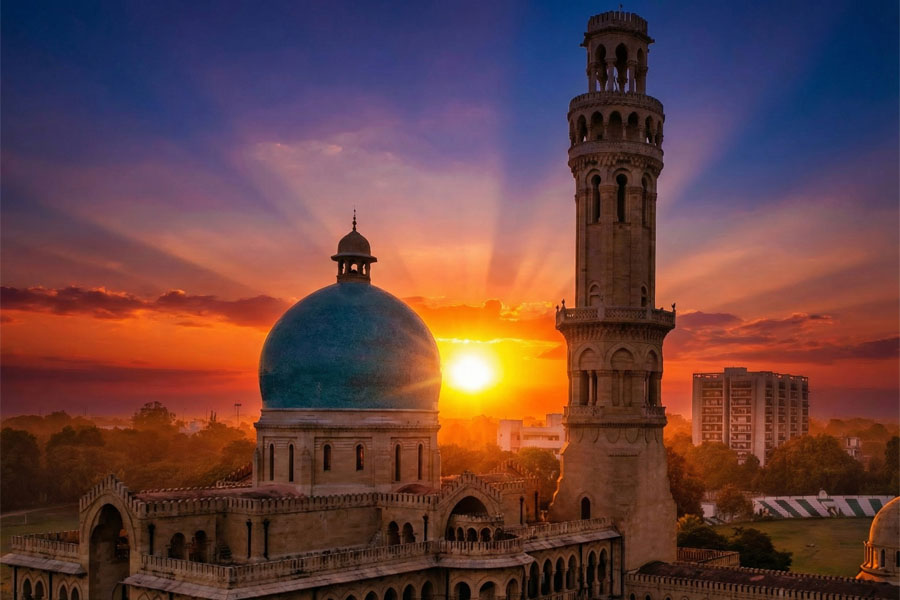
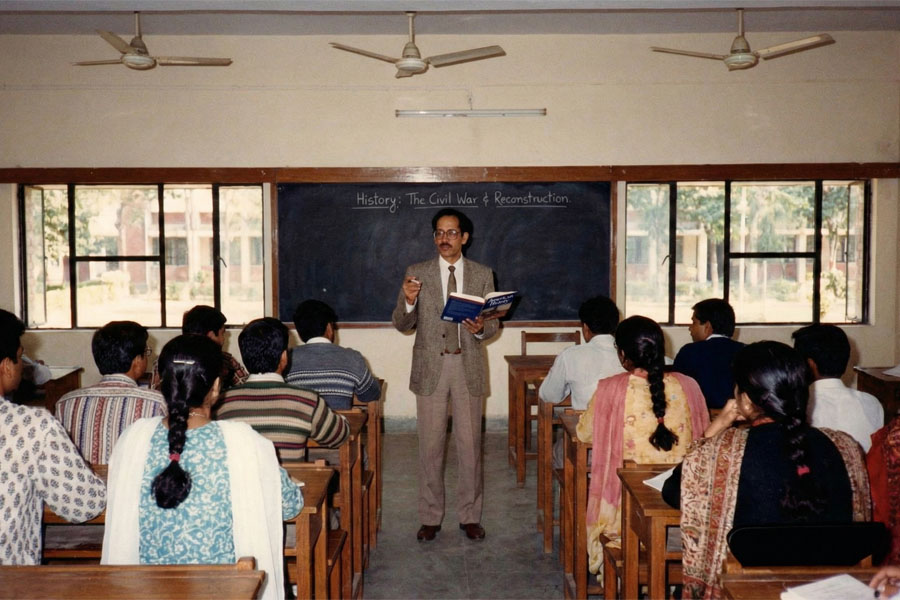
In the last few years, many new faculty members had joined and left the department. Professor Ravinder Kumar had joined as the Director of the Nehru Memorial Library and Museum in New Delhi, and Professor Gyanendra Pande had come from Oxford to replace him. Before my departure for the USA, Dr. G.P. Tripathi and Mrs. Rita Joshi had already joined as Reader and Lecturer, respectively. During my absence, Ms. Kalpana Dwivedi and Ms. Vandita Verma had also joined the History faculty. Professor Tripathi’s retirement was due within a few months, and Professor Radhey Shyam was poised to take over as the Head of the department. I immediately started teaching American History to postgraduate students from the very next day.
A new academic session had started for the children’s school as well. We got Tipu admitted to St. Joseph’s School in the 4th standard. For Khurram, we decided to admit him to an elementary school managed by my friend Aslam’s wife, Sarah. It was initially difficult for Tipu and Khurram to adjust to the new environment in Allahabad, but life gradually became normal for us within a few weeks.
Climbing the Academic Ladder
In 1987, Professor Wahiduddin Malik joined the University as Vice Chancellor. He became the first Muslim scholar to attain this highest office in exactly one hundred years of the University’s existence, as the “Oxford of the East” was established in 1887. Professor Malik’s first priority was to fill the vacant teaching positions. Vacant posts in different departments of the University were advertised in local and national print media. In our department, a few posts for Reader and Professor were advertised in 1988.
By this time, I had become eligible for consideration as both a Reader and a Professor. I knew it wasn’t easy for me to be selected directly for the post of Professor from my position as Lecturer, but I applied for both posts. My senior colleagues in the department were not pleased by my audacity in aiming for a Professorship and indirectly expressed their displeasure. However, in the mid-1980s, the University Grants Commission (UGC) had permitted appointments under the Personal Promotion Scheme, where teachers with a certain number of years of experience could be appointed to the next higher position even without an advertised vacancy.
The selection committee for these positions was held in early 1988. I was not considered for promotion to Professor, given the presence of many faculty members much senior to me, but I was appointed Reader for both the clear vacancy and the Personal Promotion posts. I thanked Allah and joined the clear/cadre post, which I believed was likely to enhance my chance for an appointment to the post of Professor in the near future. My two senior colleagues, Mr. C.P. Jha and Mrs. Chandra Pant, were promoted to Professor by the selection committee under the Personal Promotion Scheme.
A New National Stage
In May 1988, the Union Public Service Commission (UPSC) advertised a post of Professor in Indian History and Culture at the prestigious Lal Bahadur Shastri National Academy of Administration (LBSNAA) in Mussoorie. This is the academy where newly recruited officers of the IAS, IPS, and other Central Services receive initial training for four months. The post belonged to the Group ‘A’ services of the Government of India, and the pay scale was on par with the salary drawn by university professors across the country.
I applied for the post, frankly without much hope of being selected, before the deadline and was called for an interview in July 1988. When I reached the UPSC on the given date, I found that as many as 27 candidates had been called for the interview. Most of the candidates present were senior to me in both age and experience. After a thorough checking of all the required documents, I was asked to wait for my turn.
The selection committee consisted of Professor Satish Chandra of Jawaharlal Nehru University and Professor Amba Prasad of Delhi University, along with the Joint Secretary in the Department of Personnel and Training, Government of India, and was chaired by a member of the UPSC.
As luck would have it, I had recently read an article by Professor Chandra in which he had rebutted the theory of Professor John Richards of Duke University regarding the crisis in the jagirdari system during the reign of Aurangzeb and its impact on the decline of the Mughal Empire in the eighteenth century. (Professor Athar Ali of AMU had also discussed this issue earlier in his famous book, The Mughal Nobility under Aurangzeb.).
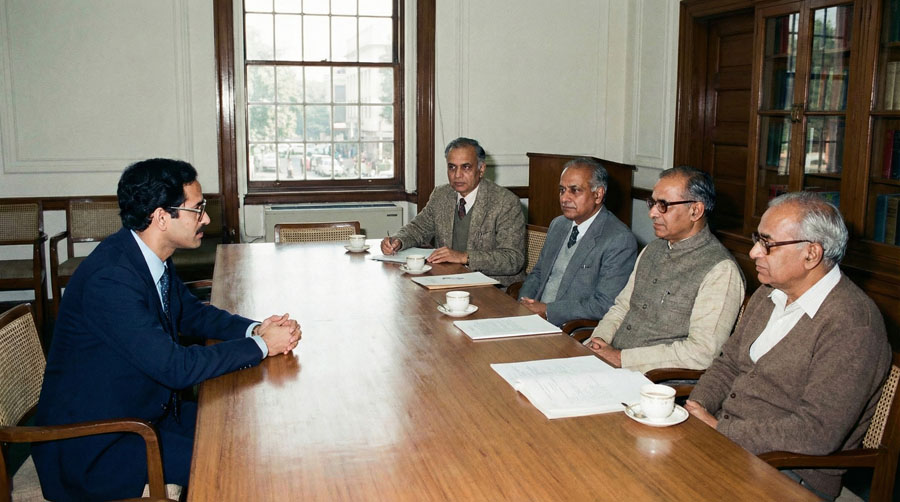
When my turn came, I entered the interview room expecting a tough time ahead. But my interview went quite well. Professor Amba Prasad asked me questions on various aspects of Indian Culture through the ages. Professor Satish Chandra discussed the causes of the decline of the Mughal Empire. Naturally, the crisis in the Jagirdari system also came up for a thorough discussion. I spoke about the views of Professors Richards, Athar Ali, and his own views regarding the issue. Professor Chandra looked satisfied with my answers. My Ph.D. degree from the University of Wisconsin-Madison and the subject of my dissertation also impressed the members of the selection committee. After about half an hour, I came out of the room satisfied with my performance and returned to Allahabad by the night train.
After about a month, I received a letter from the UPSC informing me that I had been selected for the post of Professor at the National Academy of Administration and was asked to report for a medical examination at the Safdarjung Hospital in New Delhi. Needless to say, the result was quite unexpected and pleased me and my family immensely. I knew that the job would be challenging, as I had no experience serving in a prestigious national academy for training India’s future bureaucrats, but I prepared myself mentally to take up the challenge. The medical examination was held in September 1988, and I was declared medically fit for the post. My colleagues in the department were also surprised and pleased when they learned about my impending departure for Mussoorie.
Starting a New Chapter at LBSNAA
In October 1988, I received a letter from Mr. B.N. Yugandhar, the Director of the National Academy, stating that all formalities for my appointment as Professor of History at the Academy had been completed and urging me to join at my earliest convenience. I showed the letter to Dr. Radhey Shyam, the Head of the department, who advised me to immediately apply for one year’s leave of absence from the University and prepare to proceed for Mussoorie as soon as possible. With his recommendation, the Vice Chancellor graciously granted me one year’s leave without pay and wished me good luck for my future career.
I left Allahabad for Mussoorie in November 1988, temporarily leaving behind my family, as Tipu and Khurram were in school, and it was not possible to take them out in the middle of the academic session. I had informed the Director of my eventual departure from Allahabad in advance. The receptionist at the academy was aware of my arrival, and arrangements for my stay in the academy’s guest house had already been made.
I met the Director the same day in his office. He received me very warmly and advised me to attend a meeting of the staff at 4 p.m. He also asked me to meet Mr. Badal Kumar Das, the Course Director of the ongoing Foundational Course for the 1988 batch probationers, to chart out my teaching schedule. In the staff meeting that afternoon, the Director formally welcomed me and introduced me to my new colleagues.
The staff consisted of several IAS and other allied services officers, alongside several academicians. The next day, I met all of them in their offices. Among the IAS officers were Mr. Lalit Mathur, the Joint Director; Mr. B.K. Das and his wife, Mrs. Anita Das; Mr. S.V. Bhave; Mr. Rajiv Takru; Mr. A.N.P. Sinha and his wife, Mrs. Jalaja Sinha. Mr. R.S. Dalal was a Haryana cadre IPS officer, while Mr. I.M.G. Khan and Mr. Kulshrestha belonged to the Indian Postal Service and Indian Audit and Accounts Service, respectively. I also met Professors Banerjee and V.K. Gupta of the Law faculty, O.N. Koul of the Hindi faculty, C.S. Prasad and Brijpal Singh of the Economics faculty, R.D. Tiwari of the Political Science faculty, besides Dr. Sudhir Mathur and Mr. Mutthuswammi, Associate Professors in Hindi and Political Science, and Mr. Arshad of the Urdu faculty.
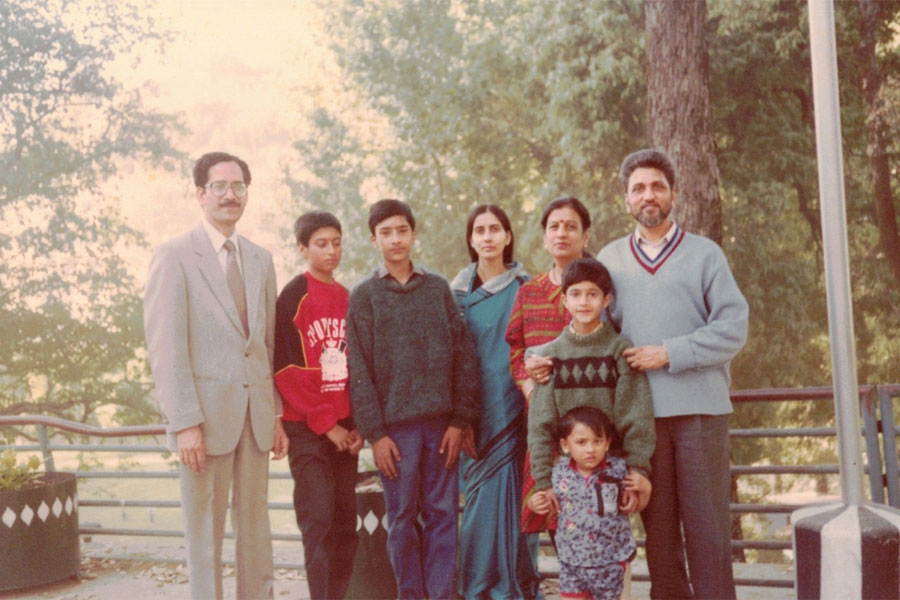
All the faculty members received me cordially and wished me a comfortable and memorable stay at the academy. Mr. I.M.G. Khan, who belonged to Bhaiya’s service and knew him well, and his wife, Sufia Bhabhi, extended a particularly warm welcome, regularly inviting me to their residence for lunch and dinner. Since V.K. Gupta and C.S. Prasad had joined the academy only a few days before me, we quickly became very fond of each other. Later, when we were all allotted Type IV apartments, consisting of two bedrooms, a large living room, two washrooms, and a spacious kitchen, in a newly constructed building within walking distance of the academy, our friendship strengthened further. We regularly visited each other’s apartments and walked to the academy together almost every day. The academy had provided sufficient furniture for all the apartments for a nominal monthly rent. Pending the arrival of my family, I continued to order breakfast, lunch, and dinner from the academy’s mess on a payment basis.
Teaching and Triumphs
Since the foundational course was coming to an end soon, I was assigned to deliver lectures on Mughal History and Modern Indian History, which I started the very next day. At the academy, every lecture was evaluated by the probationers themselves. Evaluation forms were distributed immediately after the lecture ended, and the probationers’ rating was discussed in the weekly staff meeting of the faculty members in the presence of the Director. I was pleased to find that the probationers rated my lectures very highly.
In the lecture hall, I found several familiar faces who had been students of Allahabad University. I was immensely pleased to find that Allahabad University was one of the few institutions with an active alumni association at the academy, and I received my first invitation from the office bearers of the association to interact with them over a cup of tea. At the conclusion of the foundational course, the probationers were required to take an examination, the performance in which determined their final ranking in their respective services. Professor Tiwari, the Controller of Examinations, asked me to set the question paper for Indian History and Culture. I also had to examine over three hundred answer scripts and submit the marks within a stipulated time.
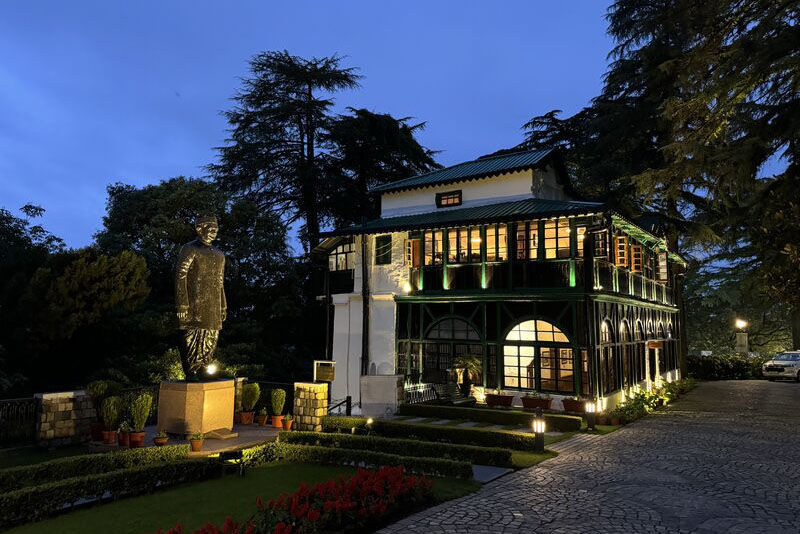
In April 1989, I went to Allahabad to bring my family to Mussoorie. The academic session for Tipu and Khurram had also come to an end, and they needed to be admitted to schools in Mussoorie. We arrived in the middle of April and immediately initiated the process of their admission. Mussoorie schools were famous all over India, and there was always a rush for admission. After several visits to different schools and leveraging my connection with the National Academy of Administration, I was able to admit Tipu to the Wynberg Allen School in the 7th standard and Khurram to the Hampton Court School—where former Prime Minister Indira Gandhi had once studied—in the 2nd standard.
We spent the next few days buying school uniforms, including blazers and sweaters, which were necessary in Mussoorie’s cold climate. The academy provided a pick-and-drop service for the children of the faculty members. Tipu and Khurram used this facility and started attending school when the new session began. Many grocery shops were available near our apartment complex, and after many months, I was finally able to enjoy home-cooked food prepared by Nilofer.
Associate Course Director and New Initiatives
The next foundational course, for the 1989 batch of officers, began in September 1989. Mr. R.S. Dalal was appointed as the Course Director, and I was assigned the duty of Associate Course Director for the course. Mr. Dalal asked me to take on the task of preparing a weekly time table for the four-month course, which I successfully completed with the help of the subordinate staff.
I suggested several changes to the History syllabus, including an introductory lecture on the definition and utility of history for the probationers, along with many topics on the agrarian history of Mediaeval India. I also suggested that every probationer write a review of one assigned history book, available in the academy library, for which 20 marks were earmarked from the total history marks of the final examination. The Director was a very dynamic and open-minded person, and he graciously approved all my suggestions.
The overall environment of the academy was very healthy and cheerful. The faculty members were courteous, friendly, and cooperative. I made many friends that proved to be long-lasting, a friendship that continues even today. Many dignitaries visited the academy almost every week to address the probationers, and all faculty members and their wives were invited to the formal dinner parties organized by the Director in their honor. The faculty members often invited each other for dinner, and we, too, extended our invitations for lunch or dinner at our residence.
There were many cultural events featuring leading artists of the country invited to interact with the probationers. The probationers also arranged cultural events on their own. In one such event, Tipu and Khurram even played small roles in a play written and directed by a group of probationers.
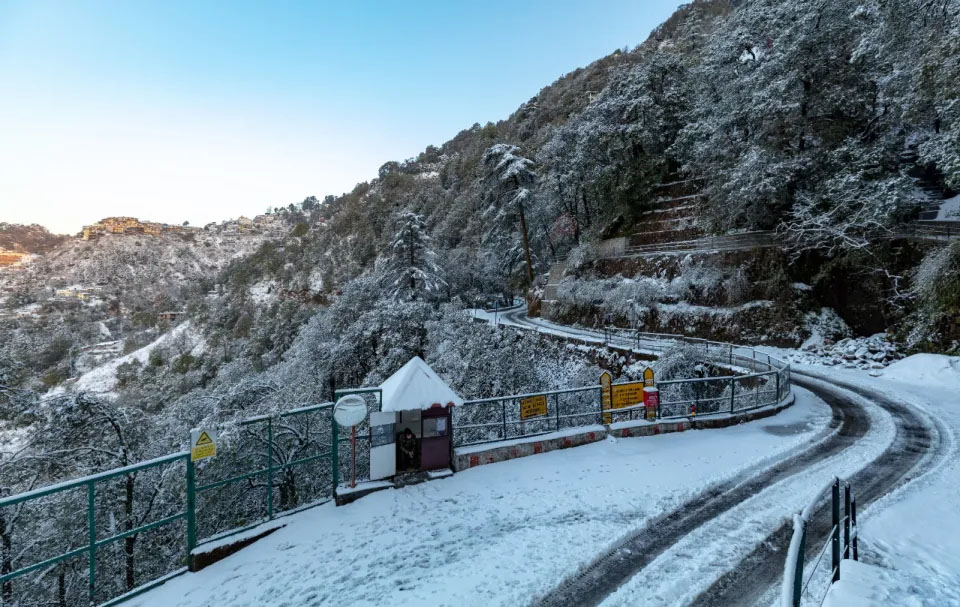
However, the weather in Mussoorie was harsh throughout the year, and it eventually took a toll on us. Nilofer especially suffered immensely from chilblain, which considerably affected her normal life. The academy’s health officials referred her case to the military hospital in Dehradun. The doctors at the hospital, however, delivered an unfavorable diagnosis: the wet and cold climate of Mussoorie was the sole cause of her problem, and the only long-term remedy was to move out of Mussoorie.
The shift from the lecture halls of Allahabad to the national stage of LBSNAA was an exhilarating professional leap, filled with new challenges, wonderful friendships, and rewarding work guiding India’s future leaders. Yet, the same beautiful, cold mountains that fostered this growth now presented a critical domestic challenge. With Nilofer’s health at risk, I knew my tenure in Mussoorie would be shorter than anticipated, forcing me to confront yet another major decision about our family’s future and my next professional move.
To be continued…


Amazing write up…so informative inspiring. Keep up the excellent writing. Thank you so much for sharing.