
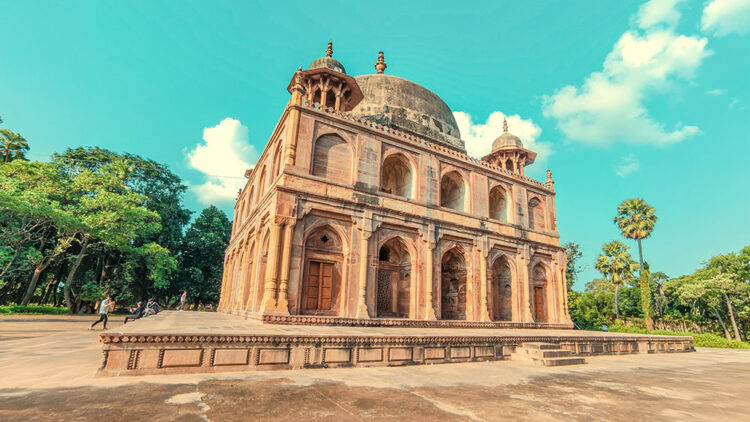
Allahabad, often celebrated for its sacred rivers, holds a far more intimate and profound history in its soil: the legacy of the Sufi saints. Beyond the physical confluence of waters lies a spiritual meeting point where mysticism, scholarship, and a radical commitment to humanity intertwined for centuries. From the early Suhrawardi pioneers who settled in Bamrauli to the metaphysical giants like Shah Muhibbullah who challenged imperial orthodoxy, the “Dairas” of Allahabad served as sanctuaries of peace in a turbulent age. This post explores the lives, legends, and the enduring ethos of these masters, whose message of universal love remains a vital compass for our modern world.
The True Meaning of Sufism and Tasawwuf
The word “Sufism” is a misnomer. The Arabic term that we translate as Sufism is Tasawwuf, meaning the process of becoming a Sufi. It was used to cover a wide spectrum of spiritual qualities. The term “Sufism” was used by Orientalist scholars in European languages, much like socialism, capitalism, and so forth. Many Sufis believe that Prophet Muhammad was the first Sufi, whose lifestyle and total submission to God’s will were regarded as an ideal for every seeker. Recent studies on the subject also characterize Prophet Muhammad and the Quran as the twin sources of Sufism.
The Etymology of ‘Sufi’ and the Path of Renunciation
The origin of the word “Sufi” is itself highly contested. It is derived from the word Suf (wool), referring to the rough garments generally worn by ascetics in the Middle East for centuries as a symbol of their voluntary poverty and renunciation of worldly pleasures (tark-i-dunya). Hazrat Nizamuddin (d. 1325) always impressed upon his disciples the need for tark-i-dunya in order to gain spiritual progress. In fact, the largest number of anecdotes recorded in his malfuzat, Fawa’id al-Fu’ad, are concerned with “other-worldliness.” He sought to use these anecdotes as a medium for teaching his disciples the value of the abnegation of worldly pleasures. This, he believed, would purge their hearts of impurities, which would in turn generate in them the love of God and help them achieve the status of muqarrabun (friends of God).

Albiruni, however, links the word “Sufi” with Sophos, the Greek word for wise men, and hence with Greek philosophy. Some Sufis connect the word “Sufi” to the Arabic word safa (purity) and safwa, meaning the “chosen one.” But most leading Sufis endorse the origin of “Sufi” as being derived from Suf, and regard poverty and self-control as the first stage on the Sufi path.
The Silsilahs: Chains of Spiritual Authority
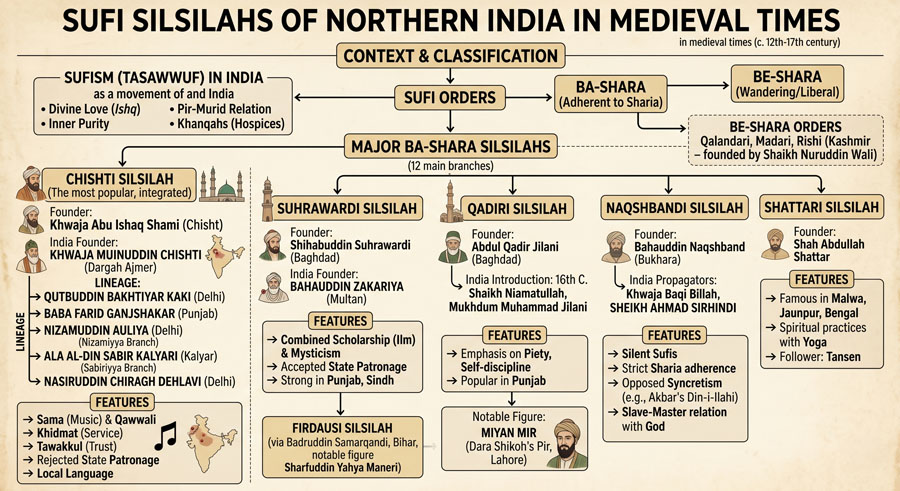
Sufism as a way of life seems to have originated first in Iraq and subsequently became established in Northern Iran and Northwest Afghanistan. By the eleventh century, Sufism had emerged as a well-established movement with a large body of literature. By this time, Sufism had diverged into several silsilahs (sects/brotherhoods). Literally meaning “chain,” the silsilah denoted the genealogy of spiritual authority, tracing its mystic teachings all the way to Prophet Muhammad (peace be upon him) through one of his companions—especially Hazrat Ali (d. 661), the Prophet’s son-in-law and the fourth Khalifa of Islam. However, the Naqshbandis trace their descent to Hazrat Abu Bakr (d. 634), the first Khalifa of Islam. Each silsilah rallied around a great saint whose disciples were expected to obey his commands implicitly, opposing him in no matter whatsoever and binding themselves to follow him absolutely. The saint’s shrine later became the most important center of pilgrimage for the Sufis associated with that silsilah.
Migration to the Subcontinent: The Suhrawardi Arrival
After the establishment of the Delhi Sultanate in the early thirteenth century, Sufis migrated to India from all parts of the world in large numbers. Writing in 1595, Abul Fazl (d. 1602) refers to the existence of fourteen Sufi Khandwadas (families) in India. None of these sects originated in India, and only three, according to Abul Fazl—the Chishti, the Suhrawardi, and the Firdausi—were able to exercise substantial influence on the life and thought of the Indian people. But other Sufi orders, like the Qadiri, the Shattari, and the Naqshbandi, were also active in India.
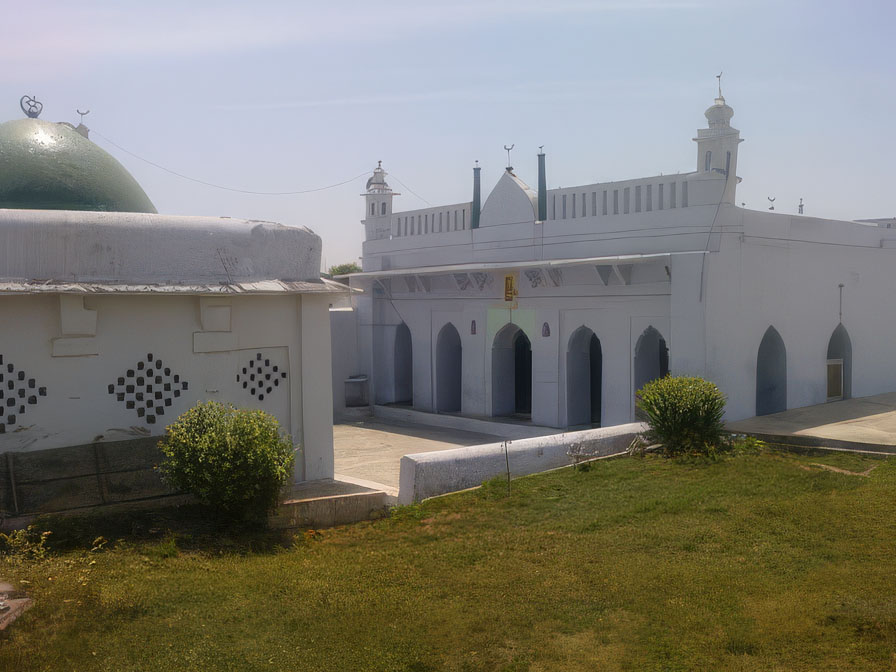
The first Sufi to arrive in Allahabad, Sheikh Ismail Qureshi, however, belonged to the Suhrawardi silsilah. Some writers suggest that he was the grandson of the great Suhrawardi saint of Multan, Bahauddin Zakariya (d. 1262), but the author of Mirat al-Asrar says that he was either a brother or a nephew of Bahauddin Zakariya. He was born in 1260 in Multan and was initiated into the order by the great saint himself. He was later trained by his uncle, Shah Ruknuddin Alam. At the instance of his uncle, he traveled to Allahabad at the end of the thirteenth century and settled in Bamrauli village. He is therefore popularly known as Makhdum Shah Bamrauli. He strictly adhered to the basic tenets of Islam and deeply impressed the local populace with his piety and simple lifestyle. He erected a mosque over a small mound on the bank of the Ganges, which stands even today. After spending more than 50 years in Bamrauli, he died in 1349. No massive or lavish tomb was erected over his grave, and according to his last wish, he was laid to rest in the mosque that he had built. He is the only saint in Northern India where no urs ritual is performed. The author of Mirat al-Asrar paid a pious visit to his grave during the reign of Shah Jahan (1628–58) and found it a great place of barkat (blessing). Though he initiated a lot of people into the Suhrawardi order, he bestowed his khilafat (the authority to initiate others) on three disciples: Shah Abdur Rahim, Sheikh Ali, and Sayyid Ahmad, alias Khwaja Karak Majzub (Khawaja Gurg, according to Simon Digby), who rose to become his most influential Khalifa and remains to this day the most famous Sufi saint of Allahabad.
The Legend of Khwaja Karak and Alauddin Khalji
Sayyid Ahmad, alias Khwaja Karak, was a trader by profession and had migrated to India for a commercial venture in the late thirteenth century. He met Sheikh Ismail in Bamrauli and became his disciple. At the advice of his master, he settled in Kara, in the suburbs of Allahabad, where his shrine still exists. He is said to have blessed Alauddin Khalji—the nephew and son-in-law of Jalaluddin Khalji, the Sultan of Delhi (r. 1290–96) and the then-governor of Kara—with the throne of Delhi. When the Sultan visited Kara, Alauddin conspired to assassinate his uncle and usurp the throne. According to the author of Futuh al-Salatin, when Alauddin sought the blessings of the Khwaja in his fight against the Sultan, the Khwaja said:
Har kas ki kunad ba tu jang
Sar dar kishti tan dar gang
(Whoever will fight against you,
his head shall fall on the boat and the trunk shall fall in the Ganges).
Other major medieval chroniclers, including Firishta in Gulshan-i-Ibrahimi and Nizamuddin Ahmad in Tabaqat-i-Akbari, have also referred to this episode in their works. It is well known that Sultan Jalaluddin Khalji was assassinated by Alauddin in Kara in 1296 when the Sultan was traveling in a boat to meet him, and Alauddin subsequently became the Sultan of Delhi (r. 1296–1316). It is also said that after assuming the Delhi throne, Alauddin Khalji sent several trays full of gold and silver coins as a gift to the Khwaja. When the royal messenger carrying the gift reached Kara, he found the Khwaja sitting on the bank of the Ganges in a state of spiritual intoxication. He told the messenger to shut his eyes and open them after a while. When the messenger opened his eyes, he found the river full of gold and silver coins. The Khwaja smiled and said that the gifts sent by the Sultan were worthless to him because he could get as much gold and silver from the river if he so desired. The Khwaja died in 1305 and lies buried in Kara. There is also a grave near his shrine which is said to be the grave of Jalaluddin Khalji.
Expansion and the “Twelve Dairas”
After the construction of the Allahabad Fort by Akbar (1575) and the subsequent expansion of the town as a major military and administrative center, Sufis from all parts of Northern India settled here. It is said that twelve Sufi dairas, or centers, were established here. Mir Sher Ali Afsos in his book Araish-i-Mahfil (1808) has also referred to the twelve dairas of Allahabad. But there is a dispute among scholars regarding the actual number; some writers have mentioned that as many as 33 dairas flourished in the city.
Shah Muhibbullah Allahabadi: The Great Sheikh
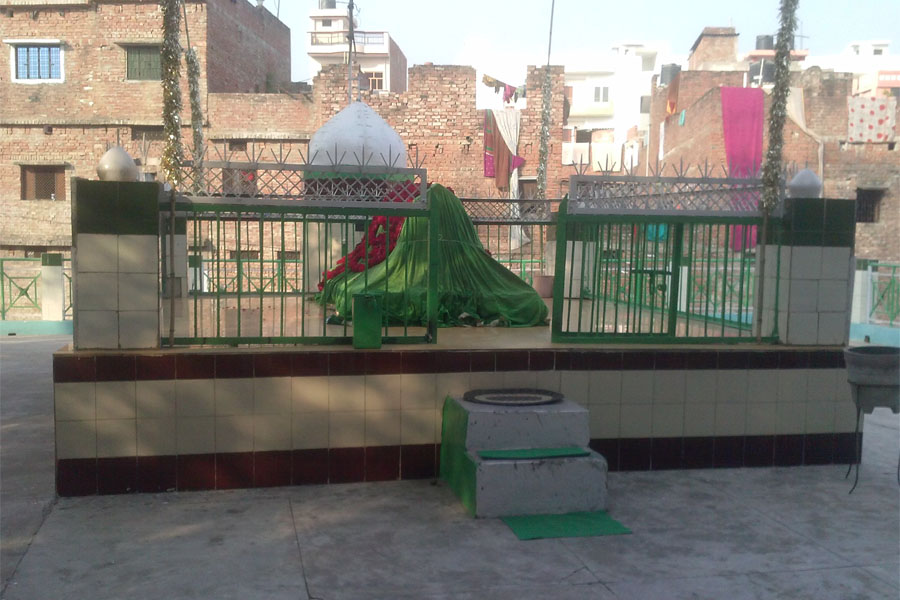
To one of these centers, Daira Shah Muhibbullah, belonged the greatest Sufi saint of Allahabad: Shah Muhibbullah Allahabadi. He was born in 1587 in Sadarpuri, in the modern Sitapur district, but settled in Allahabad during the reign of Shah Jahan. He was initiated into the Chishti order by Sheikh Abu Sayeed Gangohi, the grandson of the great Chishti saint Sheikh Abdul Quddus Gangohi (d. 1536). Muhibbullah’s learning and mastery over Sufi metaphysics earned him the title of Sheikh-i-Kabir (the Great Sheikh). He was an ardent advocate of the doctrine of Wahdat al-wujud and wrote extensively to establish its authenticity. Letters contained in the collection of his correspondence, Maktubat-i-Shah Muhibbullah Allahabadi, also present a cogent argument in support of this doctrine.
Imperial Favor and Theological Conflict
The ulama of Allahabad, however, openly opposed his ideas and accused him of heresy, issuing a fatwa for his execution. It was with considerable effort on the part of his well-wishers, including Prince Dara Shikoh (d. 1659), that the fatwa was withdrawn. The Prince corresponded with the Shah regularly. In one of his letters, the Prince informed him that he had accepted the governorship of Allahabad because of the Shah’s presence in the town. In response to another query from the Prince regarding what should be the attitude of the state towards its non-Muslim subjects, the Shah replied that the thought of the well-being of the people ought to remain in the heart of the rulers without any discrimination between believer and non-believer, because all human beings are the creatures of God and the Prophet showed mercy to everyone without any discrimination between the pious, sinner, believer, and non-believer, as described in the Quran.
Of the numerous works of the saint, Taswiyyah turned out to be the most controversial. Some of its passages provoked angry outbursts of condemnation from the theologians. The Shah’s demise in 1648 put the controversy to rest for some time. After his death, Dara Shikoh ordered the construction of a grand tomb over his grave. It is said that the saint appeared in the dreams of some of his disciples and forbade them to erect a tomb. The material that was brought for the construction of the tomb was instead used to build a mosque in the Bahadur Ganj locality of Allahabad, within the Daira Shah Muhibbullah complex. The mosque, known as Sangeen Masjid, still exists and is an exquisite example of Mughal architecture. The Shah’s open-air grave is also situated within the Daira’s complex.
Defiance Under Aurangzeb
During the reign of Aurangzeb (1658–1707), Taswiyyah again became a subject of debate. The Emperor summoned two Khalifas of Shah Muhibbullah residing in Delhi to the court and directed them to explain and justify the objectionable passages in the book. Of the two Khalifas, Sayyid Muhammad Qannauji, a mansabdar, dissociated himself from his spiritual master, claiming that he had nothing to do with the Shah. Sayyid Muhammadi Fayyaz, the other Khalifa, visited the court. The King enjoined him either to clarify the controversial passages or burn all the copies of the book. The Sayyid replied that he had not yet reached that elevated mystic stage that the Shah had acquired. The day he reached that stage, he said, he would write a commentary as desired. However, if His Majesty had decided to reduce the tract to ashes, much more fire was available in the imperial kitchen than could be had in the house of a destitute like him; orders may be issued to burn as many copies of the book as could be acquired. Aurangzeb remained nonplussed, but in 1679, the Sayyid was deported to Makkah.
The Naqshbandi Centers: Daira Shah Ajmal
In the seventeenth and eighteenth centuries, Allahabad became an important center for the Naqshbandi order. Sheikh Muhammad Afzal was a great Naqshbandi Sufi of Allahabad. According to the authors of Maasir al-Kiram and Tazkira Ulama-i-Hind, the Sheikh was born in 1628 in Saidpur Bhitri, in the modern Ghazipur district. He studied in Jaunpur. At the age of 25, he traveled to Kalpi and was initiated into the Naqshbandi order by Sayyid Muhammad Kalpavi. He later settled in Allahabad, where he built a mosque and a madrasa in 1669–70. According to another account, the mosque and the khanqah were built by Aurangzeb in 1699, which came to be known as Daira Shah Ajmal. He was a prolific scholar, authoring no less than 50 books, including a commentary on Sheikh Muhiuddin Ibn al-Arabi’s famous work Fusus al-Hikam. He died in 1713 and was buried in the Daira’s complex. Emperor Farrukhsiyar (r. 1713–19) and Nawab Asaf-ud-Daula visited the Daira after the Sheikh’s demise.
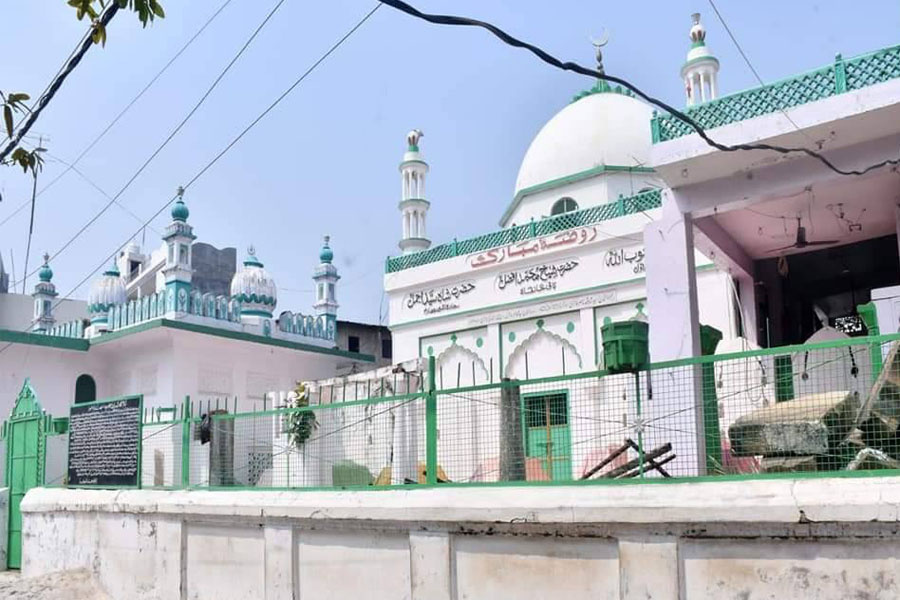
His nephew and successor was Shah Muhammad Yahya, alias Shah Khubullah Allahabadi. The Shah was a great man of learning and authored a number of books on diverse aspects of Sufism. According to the author of Maasir al-Kiram, his letters have been compiled into four volumes. He passed away in 1731 and was laid to rest by the side of his uncle and spiritual master in Daira Shah Ajmal. The modern locality of Allahabad, Yahyapur, is probably named in his memory.
Independence and Complete Dependence on God
The Sufis of Allahabad, like their illustrious predecessors and contemporaries in Delhi, Punjab, and the Deccan, led lives of simplicity, poverty, austerity, and selfless devotion to God. They fasted regularly, practiced tark-i-dunya, and preferred a life of renunciation of wealth, government service, and worldly comforts. They remained by and large aloof from political elites and avoided close contacts with the king and the court. They believed that avoiding political elites was necessary to preserve their independence and prevent governmental interference in their lives. They, by and large, did not accept offers of land grants or financial assistance from the kings. They believed that acceptance of such gifts would make them subservient to worldly authorities, which would be against the doctrine of tawakkul (complete dependence on God) which they espoused.
A Legacy of Communal Harmony
The Sufis of Allahabad made no discrimination between people on the basis of religious belief or economic status. Their doors were always open to people of all religions, castes, and creeds. This benevolent and tolerant attitude created an environment of greater interaction between Hindus and Muslims and promoted religious and communal harmony and camaraderie among the people of India. It would be no exaggeration to suggest that the message and lifestyle of the Sufis of Allahabad is much more relevant today than in the pre-modern period.



I need information about Hazrat Diwan Gadda Ali Shah Kalandri Irani, a Sufi saint of Kada Kaushbi, please help me,
Let me share some of his details with you.
Hazrat Diwan Gadda Ali Shah Kalandri Irani
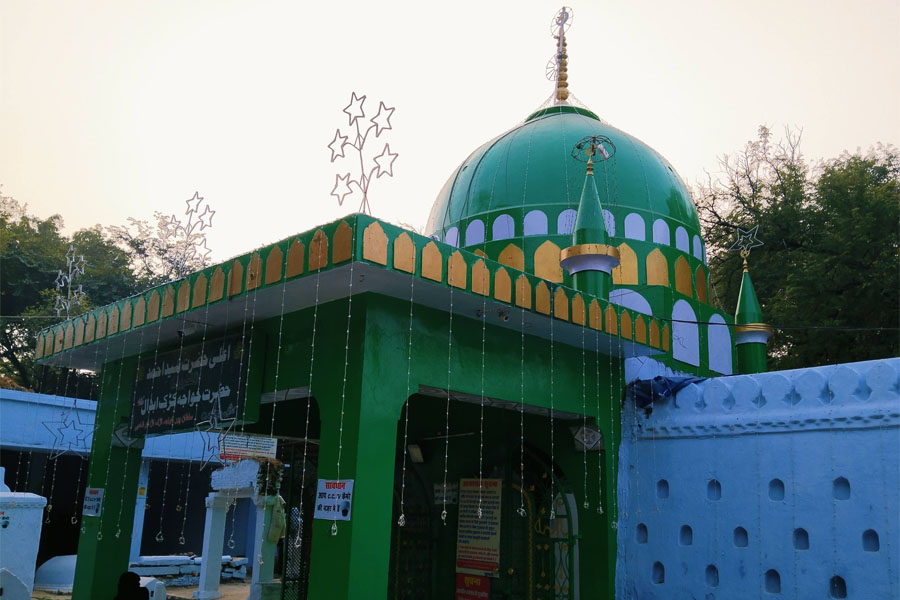
He was a resident of Iran and was the head or Caliph of a Sufi elder of Lahore, and he came and settled in Takiya Akbarpur Sipah in Kada, his Vishal also happened here and his tomb is here.
You came to Delhi at the time of Dara Sikho and from there you settled in Kada Kaushbi.
Unfortunately, I don’t have much information on him. But I found this post on Facebook that might be of some help — https://www.facebook.com/AllahabadKaushambiDargah/videos/750760138954267/?sfnsn=mo&mibextid=2Rb1fB
Hello Farooqi Sahib,
I enjoyed this article very much. I lived in Allahabad as a youngster and am now a writer/researcher with a special interest in India. I have a MA in Modern Indian History from the University of Minnesota but have never been an academic.
I’m curious to know more about the economic and trade and political significance of Allahabad during the Sultanate and Mughal periods. Any recommendations or insight?
Thank you,
Nate Rabe
Hello Nate. Thank you very much for your kind comment. I am glad you enjoyed this post. Regarding the significance of Allahabad during the Mughals, this book has very good information about the subject – “Subah of Allahabad under the Mughals” by S. N. Sinha.