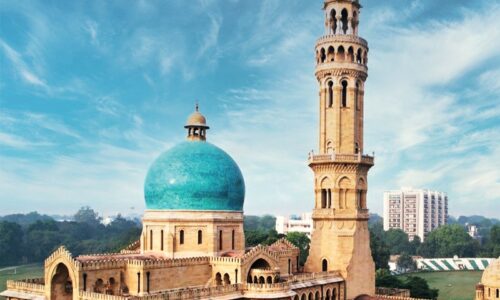
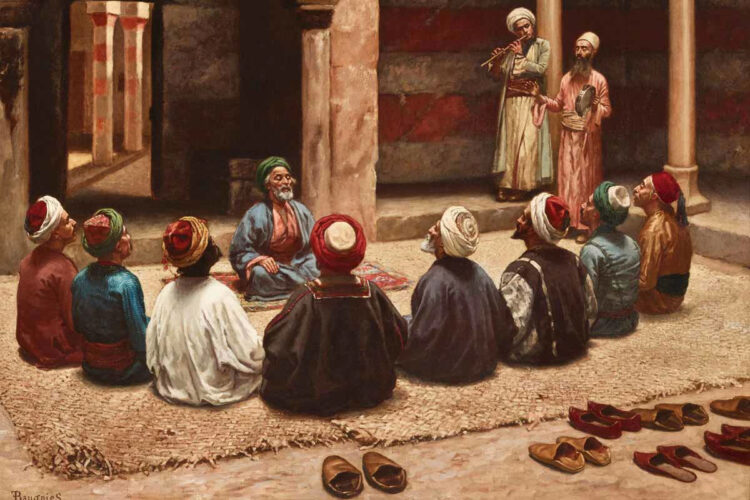
In this final installment of our series on the Sufis of Delhi, we explore the vibrant revival of the Chishti order during the seventeenth and eighteenth centuries. While earlier parts of our journey traced the arrival of mystical traditions and the rise of the Naqshbandis, this post centers on the resilient figures who restored Delhi’s spiritual prestige amidst a changing political landscape. From the mathematical lineage of Shah Kalimullah to the inclusive humanitarianism of Maulana Fakhruddin, we witness how these masters synthesized ancient wisdom with local traditions to create a message of peace that remains strikingly relevant today.
The Mathematician’s Quest: Shah Kalimullah Jahanabadi
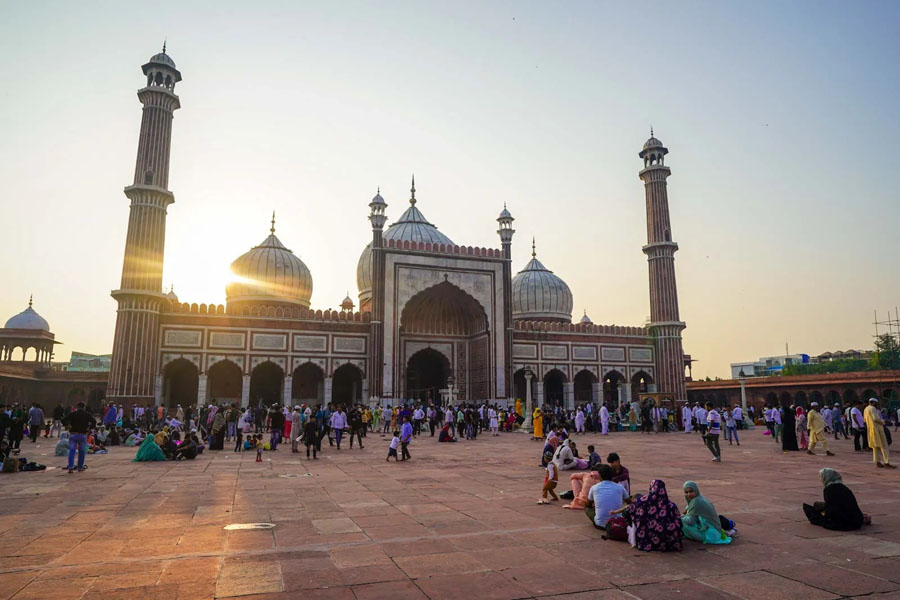
In the seventeenth and eighteenth centuries, Delhi once again emerged as a major center of the Chishti order thanks to the efforts of Shah Kalimullah Jahanabadi (d. 1729) and his successors. Shah Kalimullah belonged to a distinguished family of mathematicians and engineers. His grandfather, Ustad Ahmad Lahori (d. 1650), was the chief designer of the Taj Mahal and the Red Fort at Delhi. The saint’s father, Hajji Nurullah, was an eminent calligrapher and architect in his own right; we know that the exquisite inscription on the outer arches of the Jama Masjid in Delhi, which gives the construction date of the mosque, was designed by him. He had performed the pilgrimage to Makkah—a rare feat in those days, as indicated by the epithet “Hajji” attached to his name. It was therefore not surprising that his son, Kalimullah, did not opt for the family profession and chose instead to spend his life in the quest for God1.
A Spiritual Code of Conduct
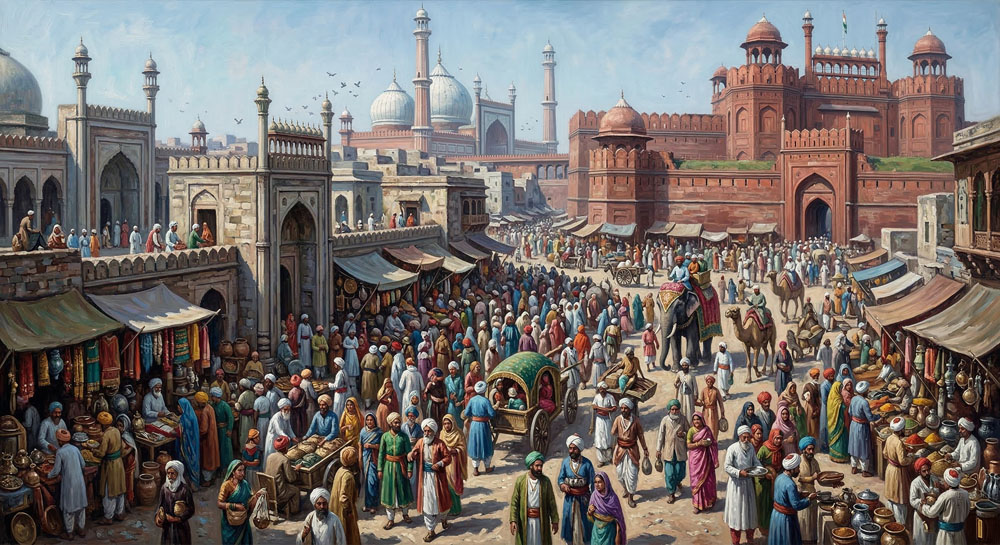
Born in 1650, Kalimullah had his early education at his place of birth, Shahjahanabad (the Old Delhi of our time), and subsequently traveled to the Hijaz for higher studies in Islamic sciences, where he was initiated into the Chishti order by Sheikh Yahya Madani (d. 1689). After returning to India, Kalimullah established a madrasa (school) and a khanqah in the crowded Bazar Khanam area of Delhi, adjacent to the Red Fort and Jama Masjid, and embarked upon a long and fruitful academic and spiritual career.
He prepared a comprehensive dastur al-amal (code of conduct) for his disciples, enjoining them to strive for the welfare of all people irrespective of their religious affiliations, promote social and religious harmony, avoid the company of the rich and powerful, and refrain from admitting them into their circle of disciples—for the rich were prone to a life of luxury and could not bear the trials and tribulations of the mystic life. He maintained an active correspondence with his disciples, supervised every possible aspect of their lives, and made regular inquiries about the progress they had attained in their quest for the truth. He also sought detailed reports about the activities of the Khalifas who were alleged to have ignored the code of conduct, and such Khalifas were warned to behave properly2.
Defending the “Unity of Being”
Shah Kalimullah was an avid advocate of the doctrine of Wahdat al-wujud. He wrote a lengthy commentary on Sheikh Muhibbullah Allahabadi’s treatise, Taswiyyah, defending the Sheikh’s stand on the doctrine3. Sheikh Ahmad Sirhindi’s view—that the doctrine represents the initial and therefore immature state of sahw (sobriety)—also came in for a spirited rebuttal in this commentary. He was nonetheless aware of the complex nature of Wahdat al-wujud and discouraged public discussion on the doctrine, as it was likely to create doubt and confusion in the minds of ordinary human beings.
Mystical Exercises and Yogic Science
Shah Kalimullah also wrote a manual on Chishti doctrines. Regarded as his finest work, the book Kashkul-i Kalimi underscores the observance of the Shariat in the day-to-day life of a Sufi, for Shariat is not only the pillar of the Tariqah (Sufi path) but also the test of the aspirant’s earnestness for his professed objective. Achieving Fana-fillah (annihilation into God), the saint believed, was the summum bonum of the Sufi. He prescribed diverse mystical exercises, calculated to turn the Sufi’s heart away from everything not associated with God, for the attainment of this objective.
He believed that Zikr (remembrance of God) was the best of all mystical exercises, for Zikr is an attribute of God. It cleanses the heart of carnal desires and worldly temptations and prevents the ingress of evil thoughts into the mind. Like many Chishti saints, Shah Kalimullah was an admirer of Yogic science. He wrote about the baithak yogs (yogic asanas) and suggested that the performance of Zikr while observing hasb-i-nafs (the yogic practice of breath control) helps Sufis concentrate on God, which in turn facilitates the attainment of Fana-fillah4.
Maulana Fakhruddin: Reviving the Chishti Prestige
Shah Kalimullah’s spiritual successor, Shah Nizamuddin Aurangabadi (d. 1733), spent most of his spiritual life in the Deccan, which also became his final resting place. But the latter’s son, Maulana Fakhruddin (d. 1784), returned to Delhi after his father’s death and became instrumental in reviving the prestige and popularity that the Chishti order had enjoyed during its heydays in the thirteenth and fourteenth centuries. He also continued the time-honored traditions of the early Chishtis of Delhi.
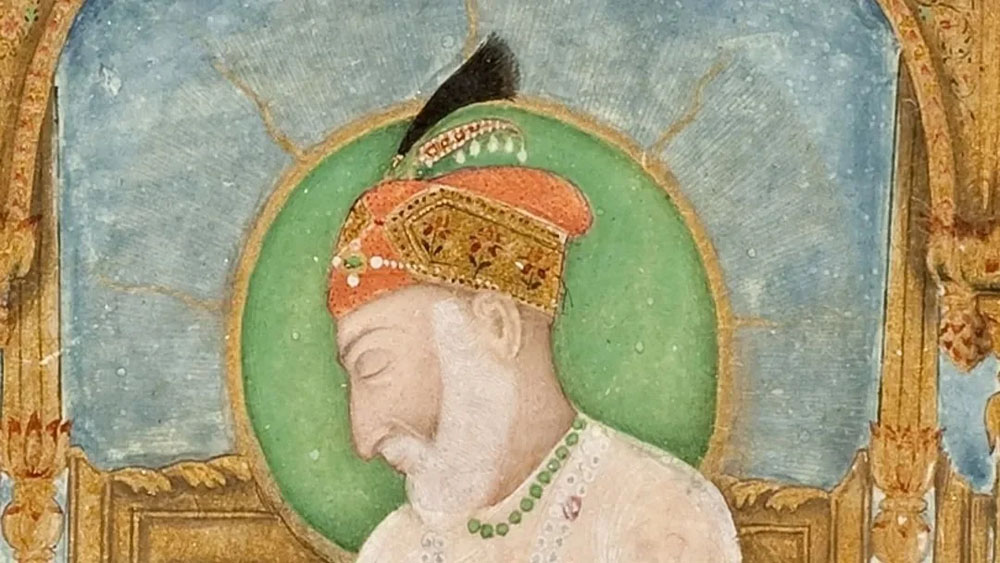
Though he maintained cordial relations with the elites of the capital and even occasionally visited their residences, he invariably refused their offers of pecuniary assistance for his khanqah. He once paid a visit to the Red Fort at the invitation of Emperor Shah Alam II (r. 1759–1806) and advised him to take an active interest in the affairs of the state in order to tide over the multifarious problems plaguing the empire. He also counseled him to refrain from depending too much on the nobles for carrying out the arduous duties of the state. After returning from the palace, he arranged a feast for the poor of Delhi in order to atone for the sin of violating the Chishti practice of avoiding trips to the royal court5.
Bridging Sectarian Divides
Maulana Fakhruddin lived in an age of growing animosity between Shia and Sunni Muslims and made sincere efforts to build a bridge of consensus between them. He always welcomed Shia visitors to his khanqah and freely admitted them into the circle of his disciples. He was also fond of sama’ and held sama’ assemblies in the teeth of stiff, and at times violent, opposition from the Rohilla Afghans of the city.
His approach to Wahdat al-wujud was in keeping with the tradition of the Chishti stalwarts; he suggested that belief in the doctrine was obligatory—so much so that those who disagree with it do not deserve to be called Sufis. He prescribed a strenuous discipline for the inmates of his khanqah and was extremely vigilant in ensuring the observation of Shariat obligations in letter as well as in spirit6.
Education and the Decline of Ascendancy
He also made sincere efforts to bring the Muslim community out of the mores of ignorance and asked his disciples to impart lessons to their Muslim brethren on the basic principles of Islam. The Maulana’s endeavor to propagate the Chishti order in other parts of the country also bore fruit. His disciples spread over Punjab, Rajasthan, and modern Uttar Pradesh. They established khanqahs, trained disciples, and became instrumental in making the order a cynosure of popular acclaim and esteem once again.
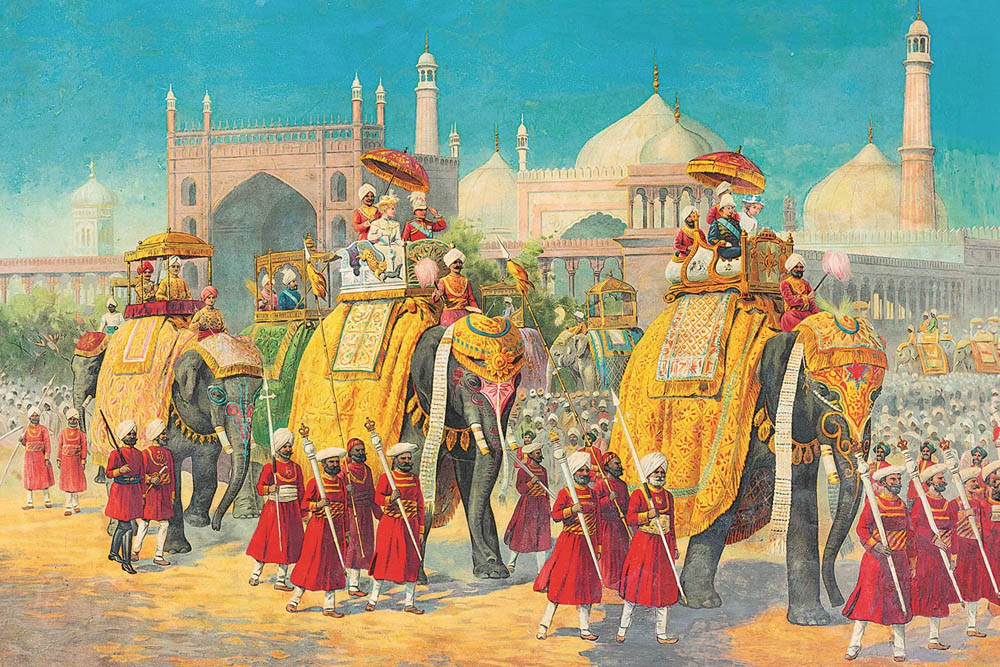
Maulana Fakhruddin was the last great Chishti saint of the eighteenth century. Though his son and grandson continued to kindle the fire of Sufism in Delhi and commanded the devotion of the last three Mughal Emperors as well as a host of Mughal elites, they were no match for the Maulana’s spiritual prowess and popular acclaim7. The British occupation of Delhi, occurring less than two decades after the Maulana’s death, proved to be the proverbial last nail in the coffin of Sufism in Delhi. The void created by the demise of the Maulana failed to be bridged, as no other Sufi rivaling the intellectual and mystical attainments of Shah Kalimullah and Maulana Fakhruddin graced the city again. The passing of the empire was thus followed closely by the fall of Delhi’s ascendancy as the intellectual and spiritual capital of India8.
A Tradition of Political Aloofness
The Sufis of Delhi, cutting across mystical and ideological affiliations, remained by and large aloof from the politics and political elites of their times. They avoided the company of state officials, discouraged their disciples from joining government service, and more often than not rebuffed any offer of pecuniary assistance from the state. They seldom visited the royal court and discouraged ruling princes from calling on them in their khanqahs.
Only under special circumstances and for specific reasons did they allow the royalty to visit their abode; on such occasions, the king and his grandees were made to observe all norms of behavior and etiquette prescribed in their assemblies, and no undue courtesy was shown to them. They were, however, conscious of the power wielded by men in authority and avoided open conflict with them, preferring to move away from a place that was likely to induce a clash with the state.
Compassion for the Rank and File
For the rank and file, however, the Sufis had nothing but sympathy and compassion. People from different walks of life, belonging to diverse castes and creeds, visited their khanqahs looking for material and spiritual well-being and usually returned satisfied and content. They were not averse to writing recommendation letters to nobles seeking suitable employment and financial assistance for their followers. They even did not hesitate to part with their savings to alleviate the distress of the needy. Maulana Fakhruddin, for instance, is reported to have given all the money he had saved for performing the Hajj to a woman when she sought his help for the marriage of her daughter9.
Inter-Religious Dialogue and Pluralism
The Sufis of Delhi, like their illustrious predecessors of the thirteenth and fourteenth centuries, were not averse to engaging with Hindus and Hindu thought. They freely admitted Hindus into their circle of disciples and trained them in the intricacies of the Sufi path but never insisted that they convert to Islam. Belief in the doctrine of Wahdat al-wujud persuaded them to treat all human beings, irrespective of their religious affiliations, with tolerance and sympathy.
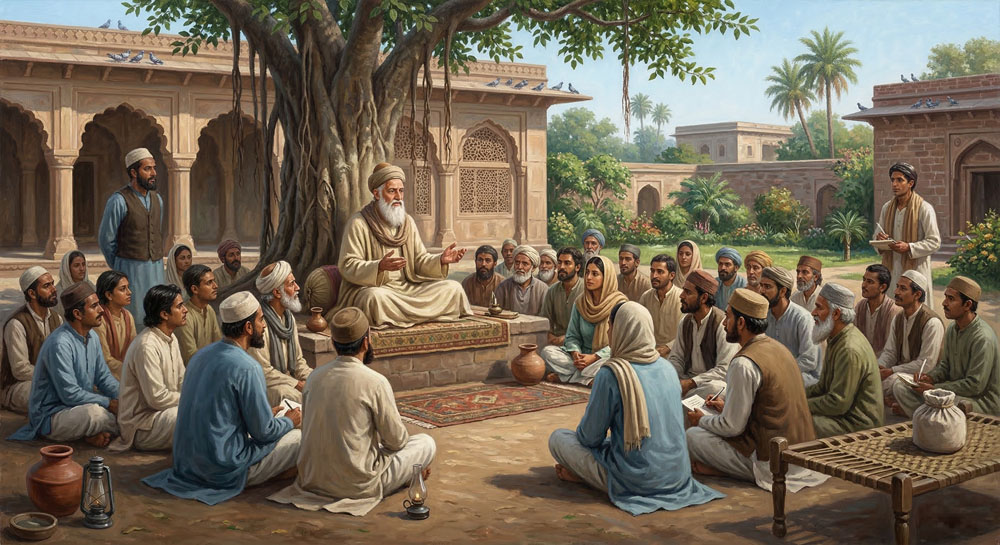
They respected Hindu religious precepts and adopted a conciliatory view toward Hindu religious deities. Mirza Mazhar Jan-i Janan, for instance, not only espoused the idea that “India was favored with the divine gift of prophecy” but suggested that Lord Ram and Lord Krishna were perhaps the prophets sent by God to India. They encouraged interaction between various sections of society and promoted inter-religious dialogue among the followers of Islam and Hinduism.
The Sufis of Delhi lived in an era of mounting religious and sectarian hostility; not only Hindu-Muslim but even Shia-Sunni animosity was on the rise. They worked hard to find a middle path in which people belonging to diverse faiths and sects could live in peace and concord. By their words and deeds, they demonstrated that in spite of doctrinal differences and ideological disparities, communal harmony can be attained. Needless to say, the message given by the Sufis of Delhi to their contemporaries has not lost its appeal altogether and is perhaps more relevant today than it was in the early modern period.
- Saiyid Suleiman Nadavi, ‘Taj Mahal aur Lal Qile ke Mimar’, Maqalat-i Suleimani, (ed.) Saiyid Sabahuddin Abdur Rahman, Azamgarh, 1966, vol.i, 291-352 ↩︎
- Ghulam Sarwar, Khazinat al-asafyia, Kanpur, 1894, vol. I, 494-5. Also see S. A. A. Rizvi, History of Sufism in India, vol. ii, 300-304 ↩︎
- Sheikh Muhibbullah Allahabadi (d.1648) was the leading Sufi of the Sabiri branch of the Chishti order in the seventeenth century. The Sheikh’s learning and mastery over Sufi theosophy had earned him the title of Sheikh-i Kabir (the great Sheikh). He wrote many treatises to establish the authenticity of Wahdat al-wujud. His extant letters also present cogent arguments in support of the doctrine. See S. Moinul Haq, Islamic Thought and Movements, 355-58; S. A. A. Rizvi, History of Sufism in India, vol. ii, 268-72 ↩︎
- K. A. Nizami, Tarikh-i Mashaikh-i Chisht, 1953, rpt. Islamabad, 1982, vol. v, 71-150. For a proper understanding of Shah kalimullah’s teachings and thought see the collection of his letters Maktubat-i Kalimi, (ed.), Maulvi Muhammad Kalim, 2 vols., Delhi, 1897 ↩︎
- N. R. Farooqi, Medieval India: Essays on Sufism, Diplomacy and History, 150. Also see S. Moinul Haq, Islamic Thought and Movements, 364-368 ↩︎
- S. A. A. Rizvi, History of Sufism in India, vol. ii, 305-08 ↩︎
- Maulana Fakhruddin’s son and successor was Ghulam Qutbuddin (1818). He was succeeded by his son Mian Nasiruddin alias Kale Saheb (d.1845). See K. A. Nizami, Tarikh-i Mashaikh-i Chisht, 236-40 ↩︎
- K. A. Nizami, Tarikh-i Mashaikh-i Chisht, 183-249. For a detailed account of the life and times of Maulana Fakhruddin see Nuruddin Husaini Fakhri, Fakhr al-talibin, (trans.), Mir Nazr Ali Dard Kakorvi, Karachi, 1961; Ghaziuddin Khan Imadulmulk (Nizam of Hyderabad), Manaqib-i Fakhriya, Delhi, 1897 ↩︎
- Maulana Fakhruddin’s son and successor was Ghulam Qutbuddin (1818). He was succeeded by his son Mian Nasiruddin alias Kale Saheb (d.1845). See K. A. Nizami, Tarikh-i Mashaikh-i Chisht, 236-40 ↩︎
Bibliography
Abul Fazl ibn Mubarak, Ain-i Akbari, (trans.), H. Blochmann and H. S. Jarrett, 3 vols., 1873-96, rpt, New Delhi, 1978
Ahmad, Aziz, Studies in Islamic Culture in the Indian Environment, 1964, rpt. Delhi, 2000
Anjum, Khaliq, (trans.), Mirza Mazhar Jan-I Janan ke Khutut, Delhi, 1962
Baljon, J. M. S. ‘ Shah Waliullah and the Dargah’, in Christian W. Troll, Muslim Shrines in India, Delhi, 1989
Buehler, Arthur F., Sufi Heirs of the Prophet: The Indian Naqshbandiyya and the Rise of Meditating Shaikh, University of South Carolina Press, 1998
Danhardt, Thomas, Change and Continuity in Indian Sufism: A Naqshbandi-Mujaddidi Branch in the Hindu Environment, New Delhi, 2002
Ernst, Carl W. , Refractions of Islam in India – Situating Sufism and Yoga, New Delhi, 2016
Sufism, Shambhala South Asia Editions, New Delhi, 2000
Ernst, Carl W. & Lawrence, Bruce B., Sufi Martyrs of Love: The Chishti order in South Asia and beyond, Palgrave Mcmillan, 2002
Fakhri, Nuruddin Husaini, Fakhr al-talibin, (trans.), Mir Nazr Ali Dard Kakorvi, Karachi, 1961
Farooqi, N. R. , Medieval India: Essays on Sufism, Diplomacy and History, Allahabad, 2006
Faruqi, Burhan Ahmad, Mujaddid’s Conception of Tauhid, Delhi, 1940
Friedmann, Y. , ‘Islamic Thought in Relation to the Indian Context’ in Richard M. Eaton (ed.), India’s Islamic Traditions, 711 – 1750, Oxford India Paperbacks, New Delhi, 2006
‘Medieval Muslim Views of Indian religions’, Journal of the American Oriental Society, vol. 95, 1975
Shaykh Ahmad Sirhindi: An outline of His Thought and a Study of His image in the Eyes of Posterity, Montreal and London, 1971
Ghulam Ali, Shah, Maqamat-I Mazhari, Delhi, 1892.
Haq, S. Moinul, Islamic Thought and Movements in the Subcontinent (711-1947), Karachi, 1979
Ibn Batuttah, Abu Abdullah Muhammad, The Rehla, (trans.), Agha Mehdi Husain, Baroda, 1976
Ikram, S. M. , Rud-i Kausar, 1957, rpt. Delhi, 1991
Imadulmulk, Ghaziuddin Khan (Nizam of Hyderabad), Manaqib-I Fakhriya, Delhi, 1897
Iqbal, Sir Muhammad, Reconstruction of Religious Thought in Islam, London, 1934
Isami, Khwaja Abdullah Malik, Futuh’s Salatin, (trans.), Agha Mehdi Husain, London, 1977
Jahanabadi, Shah Kalimullah, Maktubat-i Kalimi, (ed.), Maulvi Muhammad Kalim, 2 vols., Delhi, 1897
Jahangir, Nuruddin Muhammad , Tuzuk-i Jahangiri, (trans.), A. Rogers and H. Beveridge, rpt, Delhi, 1968
Jalbani, G. N. , Life of Shah Waliullah, Delhi, 1980
Juzjani, Minhaj-i Siraj, Tabaqat-I Nasiri, (trans.), H. G. Raverty, 1881, rpt, Delhi, 1970
Kalim, Maulvi Muhammad (ed.), Maktubat-i Kalimi, 2 vols., Delhi, 1897
Khan, Sir Saiyid Ahmad , Asar al-sanadid, 1847, rpt. Delhi, 1965, 461-69
Kishmi, Khwaja Muhammad, Zubdat al-maqamat (trans.), Ghulam Mustafa Khan, Sialkot, 1986
Malik, Zahiruddin, ‘Role of Sufis and Bhaktas in North-Western India during the Eighteenth Century’ in Exploring Medieval India: Sixteenth to Eighteenth Centuries, (ed.), Meena Bhargava, New Delhi, 2010
Muradabadi, Abul Khair Muhammad Ibn Ahmad, (ed.) Kalimat-i Taiyibat, Muradabad, 1891
Nadavi, Saiyid Suleiman, ‘Taj Mahal aur Lal Qile ke Mimar’, Maqalat-i Suleimani, (ed.) Saiyid Sabahuddin Abdur Rahman, Azamgarh, 1966, 2 vols.
Nasim, A. D. , ‘Khwaja Mir Dard ka Khandan’, Oriental College Magazine, 1958
Nizami, K. A., Tarikh-i Mashaikh-i Chisht, 1953, rpt. Islamabad, 1982
Rizvi, S. A. A., History of Sufism in India, New Delhi, 2 vols., 1983
Shah Waliullah and his times, Canberra, 1980
Sirhindi, Sheikh Ahmad, Maktubat-i Imam-i Rabbani, (ed.), Nur Ahmad Amritsari, Istanbul, 1977
Sarwar, Ghulam, Khazinat al-asafyia, Kanpur, 1894, 2 vols.
Umar, Muhammad, Islam in Northern India During the Eighteenth Century, Delhi, 1993Waliullah, Shah, Anfas al-arifin, (trans.), Hakim Muhammad Asghar, Lahore, n.d.
Weismann, Itzchak, The Naqshbandiyya: Orthodoxy and Activism in a Worldwide Sufi Tradition, Routladge, 2007