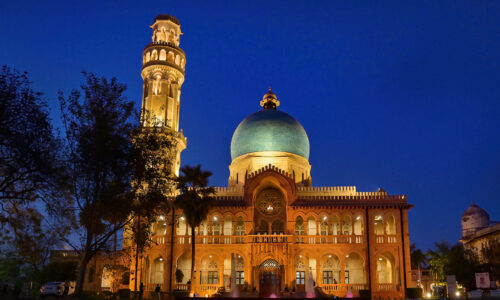

In the previous part of my memoir, I shared the surreal and humbling moment of assuming the highest office of Allahabad University—taking charge as Vice-Chancellor in November 2010, plaster cast and all. The challenges of the office were myriad, and as I sat behind that historic desk, I knew my administrative experience was about to be tested like never before.
Facing the Students and Setting the Tone
The next day, after assuming the office of Vice-Chancellor, when I came out of my class I found the Chief Proctor waiting for me. He told me that a large number of students, including former office bearers of the students’ union, had gathered near the Vice-Chancellor’s office. He suggested that I should avoid going to the office and leave the university by the rear gate adjacent to the History department. I told him that it would not be wise on my part to do so, and asked how I could function as Vice-Chancellor by avoiding the students, adding that it was better to defuse the situation by meeting them immediately.
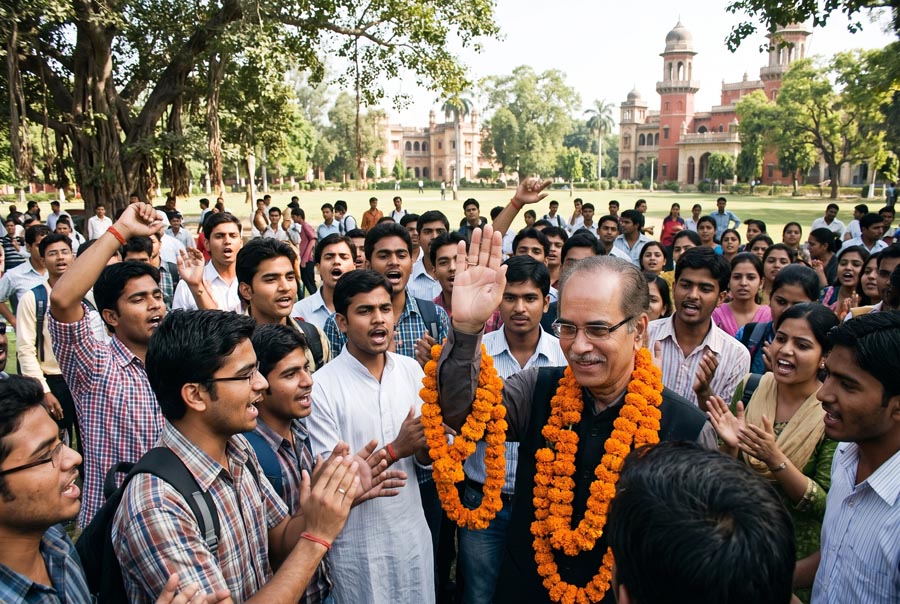
I went to the office and met the students, who welcomed me warmly. A few students garlanded me, and a few others gave me flowers. They told me that they knew my style of functioning in the university very well, that they had high expectations of me, and that I would listen to their grievances. I told them that I would certainly try to solve their legitimate demands and that they were at liberty to meet me in my office after making an appointment. They raised slogans in my favour and dispersed peacefully.
The following day, I convened a meeting of all academic heads of the departments and deans of all faculties to discuss the state of affairs in the university. I impressed upon them that our first commitment ought to be towards our students. I requested them to ensure that all classes in their respective departments were held regularly and to adopt a student-friendly approach in their dealings with the students. I also told them that I would be available in my office after taking my classes from 1:00 p.m. onwards, and that they were free to discuss any problems related to their departments. Although there were a few voices of dissent, overall, the meeting was held in a cordial environment.
A Precedent for Security and Navigating Political Pressures
The same day, the security officer of the university told me that, as per the established system, the university would provide twenty-four-hour security at my residence to keep rowdy elements from creating problems for me. Two security guards landed up at my residence to take up duty. The guards were changed every eight hours to provide continuous security. I soon realised that since there was no shade in the open space adjacent to the porch where my car was parked, the guards would suffer sitting in the cold nights of November and December.
I spoke to the University Engineer, who promised to take care of the problem. In a few days, a fiberglass shade was erected in the open space outside my residence. I enquired with the Engineer about the expenses incurred on this venture. He told me that approximately twenty thousand rupees were spent on erecting the shade. I immediately gave him a cheque for 20,000 rupees. The Engineer told me that the university would bear the expenses, but I insisted that since the shade was erected at my private residence, the university did not need to pay. I handed over the cheque, which the Engineer reluctantly accepted, but he said that I had established a new precedent in the university’s history.
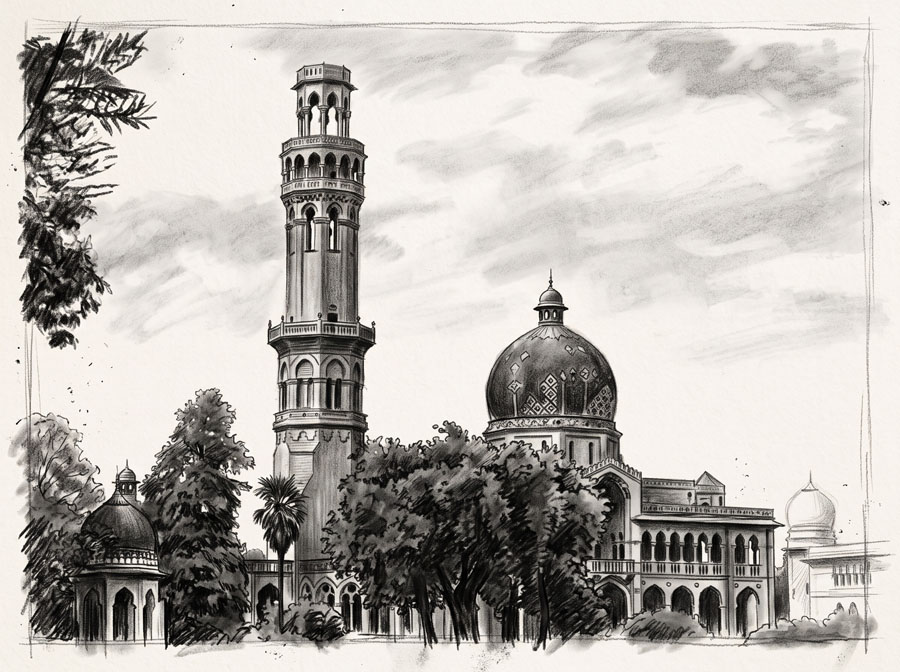
A few days later, we had to face a new problem. The Registrar received a communique from a high-profile political leader stating that he would like to address the students of Allahabad University. The office bearers of his party visited the university and decided that the Senate Hall was the proper place for the address. The dilemma before us was that if the leader of one political party was allowed to address the students, the leaders of other national political parties would like to do the same, and the university would become a playground for politicians.
I called a meeting of the deans of all faculties to discuss the problem. The deans were unanimous in their view that no politician should be allowed to address the students. At this juncture, the local MLA came to our rescue. He spoke to the concerned politician, explaining that at Allahabad University, the tradition had always been that the students’ union invites speakers from all walks of life to address the students. Since the university union did not exist at this time, the university would not be able to extend an invitation for him to speak. Furthermore, the university would not be able to provide adequate security to a high-profile political leader. To the great credit of the politician concerned, he understood the university’s dilemma and didn’t insist on visiting. In this way, the problem was defused, and we breathed a sigh of relief.
A Personal Calamity on the Home Front
On the home front, a calamity fell upon us in the third week of December 2010 when Nilofer slipped accidentally in the lobby of our residence and fractured her femur bone. Luckily, I was at home and immediately came to her rescue. She was in considerable pain and couldn’t get up by herself. I picked her up in my arms and had her lie down on the bed. I called Baran and Afshan, who were in Allahabad at that time, and they confirmed our worst fears when they examined her.
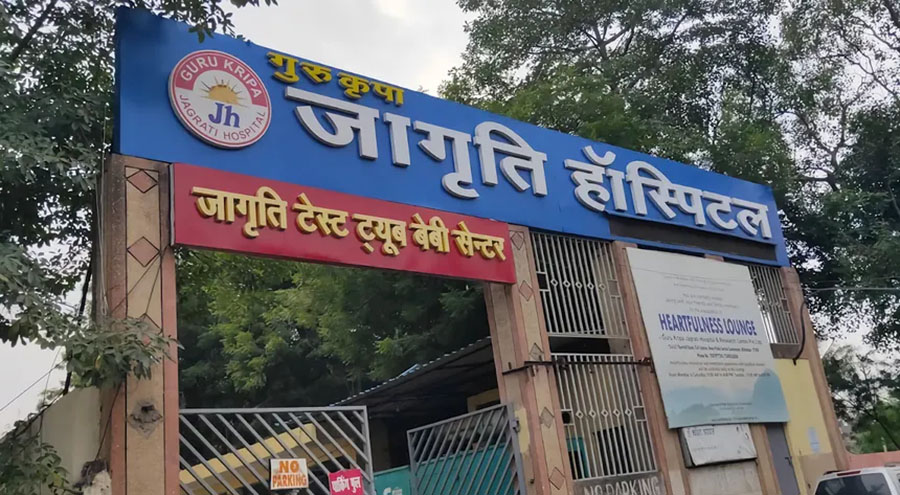
I also called my colleague Yogeshwar Tiwari, who personally knew Allahabad’s most reputed orthopedic surgeon, Dr. K.D. Tripathi. Dr. Tripathi had also treated my ankle’s hairline fracture a few weeks ago. He advised us to immediately admit her to Jagriti Hospital, which was also covered under the university’s health service scheme. In the hospital, a few X-rays were taken, which confirmed a fracture in her femur bone. Dr. Tripathi examined her immediately and advised surgery to fix the broken bone. He assured us that within a few days of surgery, Nilofer would be able to walk normally.
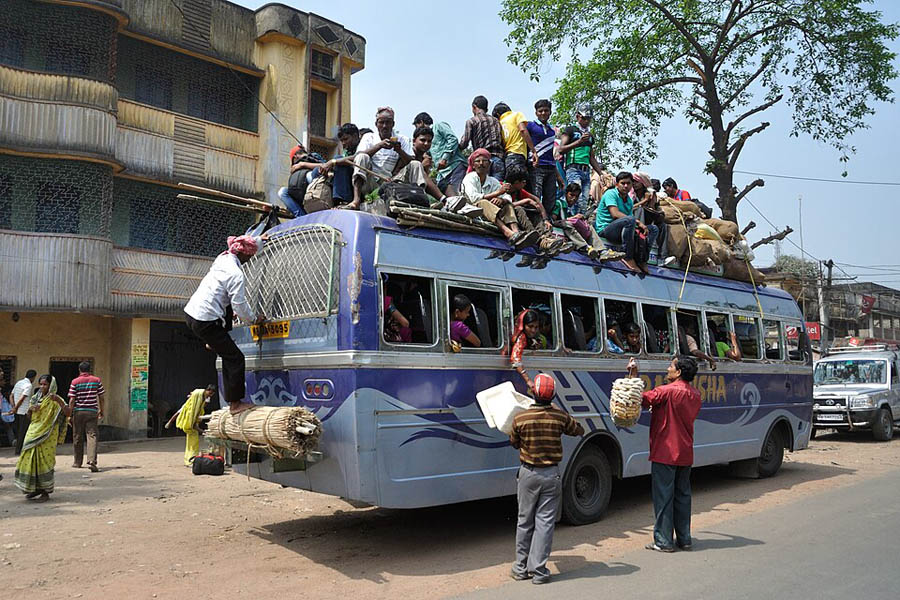
Khurram was in Delhi pursuing his doctoral degree, and he came to Allahabad the very next day to give moral support. My elder sister, Taiyyaba Baji, was kind enough to visit us and stayed in the hospital to look after Nilofer. My nieces, Naila and Rahela, came from Lucknow by roadways bus to meet her. The surgery was done after four days, and by the grace of Allah, everything went off well.
It was a testing time for all of us, and we were on tenterhooks as long as Nilofer remained admitted to the hospital. My position as Vice-Chancellor in those days was a great help, and the doctors and other hospital staff looked after her very well. After four days, Dr. Tripathi made Nilofer walk for some time and allowed us to go back home, on the condition that she undergo physiotherapy for the injured leg for at least four weeks. He deputed a physiotherapist from the hospital to do the needful.
Nilofer’s return home was a matter of great rejoicing for all of us. She silently suffered this trauma and created no fuss, nor did she make any complaints. Needless to say, she followed the Quranic dictum “Innallaha ma’as sabireen” (Allah is with those who have patience) in letter and spirit. After four weeks of physiotherapy, she recovered fully. By the grace of Allah, this difficult and testing time for all of us came to an end.
Campus Strikes and Passing the Baton
As soon as the university reopened after winter vacation on January 2, 2011, the employees of the Institute of Correspondence Courses, a constituent institute of the university, went on a lightning strike. A large number of employees sat on dharna in the verandah outside the Vice-Chancellor’s office. Their main grievance was that a number of the Institute’s employees had been working on daily wages for many years, and they demanded that they should be accommodated against the existing vacancies of the university’s ministerial and technical staff.
The leaders of the university’s employees’ union, on the other hand, expressed their opposition to this demand, stating that daily wage workers of the university itself should be accommodated against these vacancies. I tried to reason with the leaders of both unions that this was a policy matter, and that they should let the new Vice-Chancellor take a call on it. The Correspondence Institute’s employees remained adamant, and the stalemate continued. Since the winter season was at its peak and these employees had to brave severe cold in the night, I told the Estates officer to supply some wood every night at the dharna site to keep the strikers warm.
One fine morning, many employees arrived at my residence to pressurize me to sympathetically consider their demands. The guards on duty at my residence handled the situation well and persuaded them to return. On my part, I continued to go to my office and looked after business as usual.
In the middle of January 2011, the Ministry of Human Resource Development informed the university that Professor A.K. Singh of the Indian Institute of Technology, Bombay, had been appointed by the President of India as Vice-Chancellor for a term of five years from the date he assumed office. Professor Singh arrived on 24th January 2011. The Registrar went to receive him at the airport, from where he came straight to the university.

I welcomed him into the Vice-Chancellor’s office with a bouquet of flowers. After some time, I formally handed over charge to Professor Singh. I felt that a mountain of burden had been lifted from my shoulders, and I would now be relieved of the daily stress and strain of the duties of the Vice-Chancellor that I had been subjected to for the last two and a half months. I assured Professor Singh of my full cooperation in the running of the university. I found him to be a very well-meaning and sensible person, and I wished him well in carrying out the arduous task of running the fourth-oldest university in India.
His most immediate problem was dealing with the employees of the Institute of Correspondence Courses, who were still sitting on a dharna outside his office. Within a few days, the problem was resolved after intensive negotiations, which persuaded them to lift their dharna. I also told Professor Singh that I had been holding the office of Dean, Research and Development, for the last year, and although my tenure would continue till 2013, he was at liberty to appoint a professor of his choice to this post. He said that he favoured the maintenance of the status quo in all such matters and asked me to continue my duties.
A Night Held Hostage: The Hostel Crisis
Everything was going on smoothly, but the first major policy decision that Professor Singh took backfired. In May 2011, he issued an order that during the summer vacations, all university hostels be vacated so that fresh admissions to the hostels could be initiated at the beginning of the new academic session in July 2011. This order led to a furor in the university.
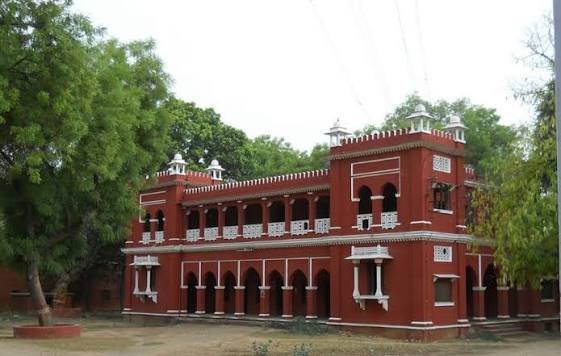
Many inmates of the hostels preferred to stay in their hostels to prepare for competitive examinations. They decided to raise their voices against this decision, and one day a large number of male and female hostel inmates gheraoed the Vice-Chancellor’s office, demanding to speak directly to the Vice-Chancellor, which Professor Singh refused.
I was informed of the situation by the Vice-Chancellor’s secretary in the afternoon and immediately rushed to the Vice-Chancellor’s office. I found a few senior teachers and the proctorial staff sitting with Professor Singh. After a short while, the District Magistrate and the Senior Superintendent of Police also arrived and tried to persuade the VC to meet the students and defuse the situation, but he refused point-blank, and the stalemate continued. After some time, the officers left, leaving us to personally handle the situation.
Meanwhile, the students began to get aggressive, and the situation appeared to get out of hand. By nightfall, the senior teachers began leaving one by one. Professor Singh suggested that I should also go home, but I felt that it was my duty to provide moral support to the Vice-Chancellor. I called Nilofer to let her know the situation and told her that I might not be able to reach home soon. My only worry was that Nilofer would have to spend the night alone. I also told my driver to go home and come back again in the morning.
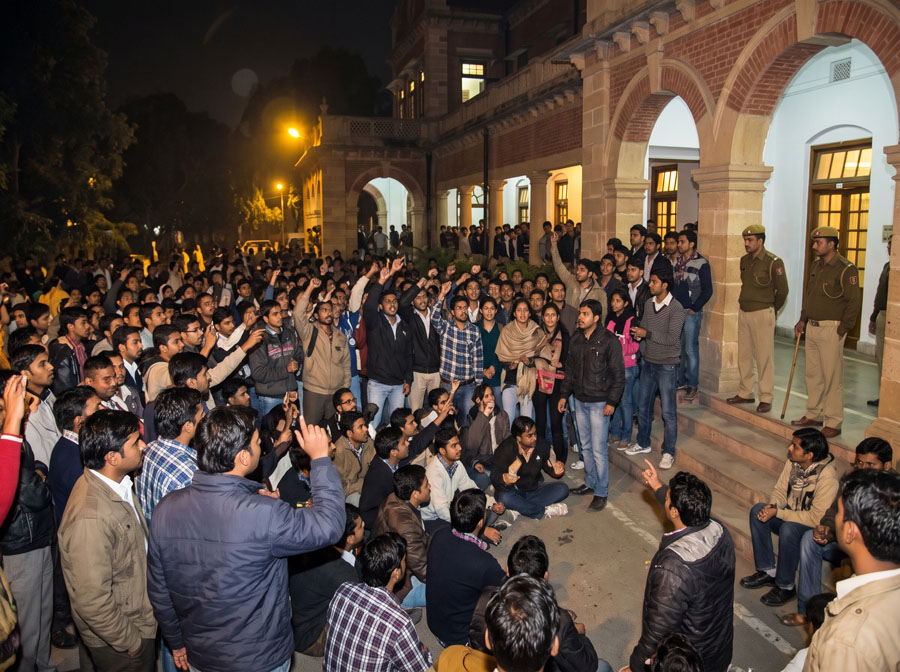
The students were in no mood to let the Vice-Chancellor leave his office, and we were forced to stay in the VC’s office the whole night. In the morning, police personnel came in large numbers and helped the VC leave through the back door of his office. I also left and reached home around 8:00 a.m. The upshot of all this drama was that the inmates of the hostels were allowed to stay during the summer vacations, pending a final decision on the matter.
Stepping down from the Vice-Chancellor’s office brought a tremendous sense of personal relief, yet as that long night trapped in the Senate House proved, my commitment to the university and its leadership remained absolute. Returning to my role as Dean of Research and Development allowed me to focus once again on the academic progress of our institution, even as new administrative challenges loomed on the horizon.
To be continued…