
Popular Sufism in the Indian subcontinent is often defined by a captivating intersection of history, folklore, and deeply rooted devotion. While formal theological treatises chronicle the lives of great mystics, popular memory has created its own pantheon of revered figures whose legends transcend sectarian boundaries. Among these, few personalities evoke as much fascination, controversy, and enduring veneration as Salar Masud Ghazi of Bahraich.
The Legend and the Text: Mirat-i-Masudi
Salar Masud Ghazi, better known as Ghazi Miyan or Bale Miyan, remains a legendary figure in the annals of Indian Sufism. No contemporary account of his life and activities exists. The first detailed account of his career and exploits in India, Mirat-i-Masudi, was written in the seventeenth century, more than six hundred years after his death. Its author, Abdur Rahman Chishti, a well-known Sufi of the Chishti order, claims to have collected information for his book from an eleventh-century work, Tarikh-i-Mulla Muhammad Ghaznavi, whose author reportedly served both Salar Masud and his uncle, Sultan Mahmud of Ghazni (r. 999–1030). This earlier text is no longer extant. Abdur Rahman also claims to have written the book with the assistance of the deceased Salar Masud himself, whose spirit reportedly visited him in a vision, commended his efforts, and vouched for the authenticity of the events narrated in the book.
Mirat-i-Masudi, however, is not a serious historical work. It is an agglomeration of fact and fiction in which the “great actions and exploits of other men are appropriated, without scruple, to the hero of the tale.” It can at best be placed in the category of historical romance or religious martyrology.
The Heroic Narrative of the Mirat
The Mirat begins with an account of the invasion of Ajmer by Salar Sahu, the brother-in-law of Sultan Mahmud of Ghazni, whom the Sultan had dispatched for this purpose. Sahu defeated the local chieftain and was rewarded with the governorship of Ajmer. His wife, the Sultan’s sister, also joined him, and it was in Ajmer that Masud was born on February 14, 1015. During the next ten years, Sahu undertook numerous military expeditions from Ajmer, humbled many Indian chieftains, and collected enormous revenue.
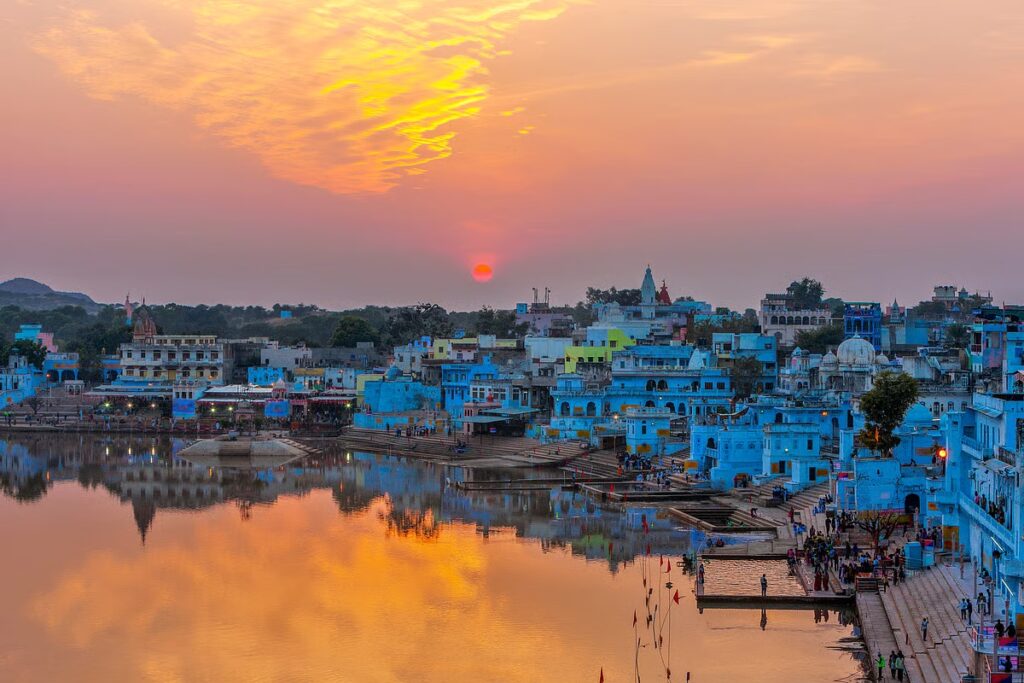
When an Indian army besieged Kabuliz in the vicinity of Kashmir, the Sultan asked Sahu to relieve the besieged garrison. Sahu defeated the Indian army and was subsequently appointed the governor of Kabuliz. He then summoned Masud to Kabuliz, who in the meantime had grown into an accomplished soldier. On his way to Kabuliz, Masud defeated Rai Satugan, the ruler of Rawal, thereby achieving his maiden victory at the tender age of twelve. During Mahmud’s Somnath campaign (1027), Masud fought with great distinction. After the campaign concluded, Masud returned to Kabuliz at the instance of the Sultan.
Now bearing the title of Sipahsalar Masud, he waged relentless campaigns against Multan, Ajodhan, Delhi, and Meerut. He defeated the rulers of these towns and finally camped at Satrikh (in modern Barabanki district), where he established his headquarters. Shortly afterward, his father joined him at Satrikh. From Satrikh, Salar Masud dispatched armies in diverse directions to conquer the surrounding territories. Masud next sent his two commanders, Salar Saifuddin and Miyan Rajab, against Bahraich.
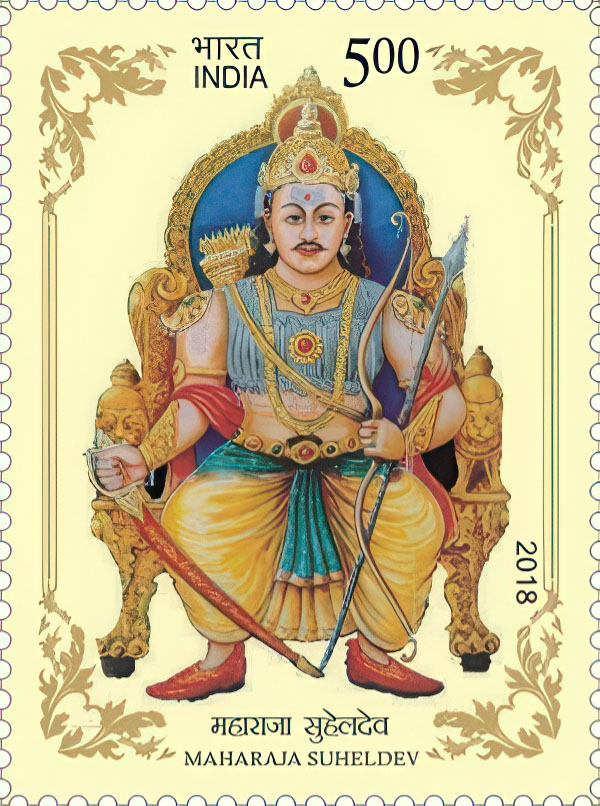
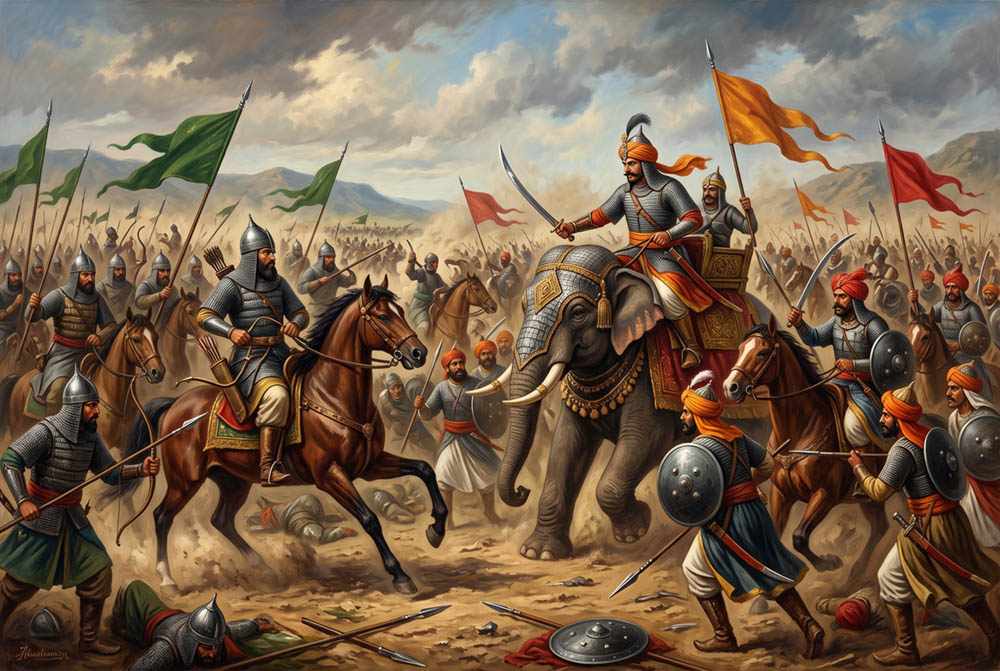
Raja Sohil Deo of Bahraich assembled a formidable army and prepared to give battle. The two generals accordingly requested reinforcements from Masud, who, against the explicit wishes of his father, marched there in person. He reached Bahraich on July 29, 1032, and camped under a mahua tree on the bank of a tank called Surajkund. The battle for the mastery of Bahraich was fought over three days on the banks of the river Kosala and was hotly contested throughout. On June 15, 1033, Masud was killed alongside most of his followers and was later buried under his favorite mahua tree. The “Prince of Martyrs,” as Masud came to be known after his death, was only nineteen years old and unmarried when he was slain.
Historical Scrutiny and Discrepancies
Needless to say, most of the aforementioned events belong to the realm of legend rather than history. Ghaznavid histories furnish abundant details regarding Mahmud’s exploits in India. His campaigns against Kannauj and Somnath—among the few authentic events mentioned in Mirat-i-Masudi—are fairly well-documented. Yet, none of these contemporary or near-contemporary histories refer to either Sahu or Masud, nor do they mention their supposed Indian campaigns undertaken ostensibly with Mahmud’s blessings.
Furthermore, there is no historical evidence of any Muslim presence in Ajmer prior to Muhammad Ghori’s campaign against Prithviraj Chauhan in the final decade of the twelfth century. Even the identity of Salar Masud remains deeply obscure, and one cannot assert with any degree of confidence that an individual by this name actually existed. Sultan Mahmud had no nephew named Masud; his son and successor was named Sultan Masud, which seems to have inspired the narrators of the folklore to designate their hero by the same name.
The historical evidence at our disposal also indicates that the Turks conquered the territories of Awadh and Bahraich only during the reign of Sultan Iltutmish (r. 1210–1236). Prince Nasiruddin Mahmud, the grandson of Iltutmish who later ascended the throne as Sultan of Delhi (r. 1246–1266), served as the governor of Bahraich during the early thirteenth century. Yet the Tabaqat-i-Nasiri, the foremost chronicle of the early Sultanate period which was dedicated to Nasiruddin Mahmud, contains no reference whatsoever to Salar Masud.
In the absence of concrete historical evidence, a persistent question mark must hang over the identity of Salar Masud as well as the events associated with his name. There is clear evidence that even by the sixteenth century, Muslim intellectuals and Sufis entertained reservations about his historical existence. Abdul Qadir Badauni, the author of Muntakhab-ut-Tawarikh, records that Sheikh-ul-Hadiya, a prominent Sufi of Khairabad (in modern Sitapur district), once told the chronicler’s patron that Salar Masud “was an Afghan who met his death by martyrdom.”
The Emergence of the Cult and the Shrine at Bahraich
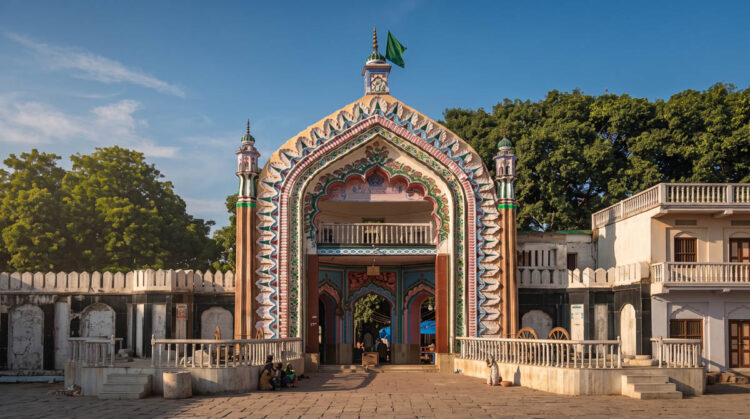
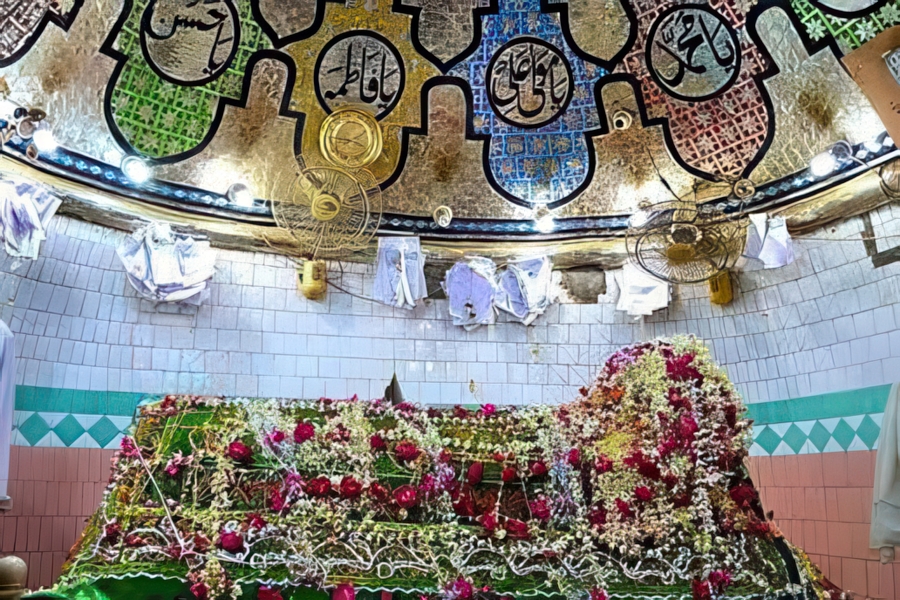
Despite these historical uncertainties, the tomb of Salar Masud still stands in Bahraich and continues to be one of the most popular centers of pilgrimage in Northern India. The exact period of Salar Masud’s transformation from a fallen warrior into a venerated saint remains unknown. The servitors of the tomb, as well as his modern Urdu biographers, would have us believe that the grave was initially tended and guarded by his family servants. Gradually, local residents began visiting the spot to pay their respects.
The grave grew into an object of widespread popular veneration after the barren wife of a milkman named Jasu Ahir reportedly gave birth to a son after praying there. Later, in 1062–63, Zohra Bibi, the blind daughter of a certain Saiyid Jalaluddin, traveled from Rudauli (in modern Barabanki district) to pray at Masud’s resting place. Salar Masud was believed to have responded to her fervent entreaties, and her eyesight was miraculously restored. As a token of deep gratitude, she constructed a magnificent tomb over the grave and spent the remainder of her life as a servitor of the shrine. She remained unmarried and, upon her death, was buried near the mausoleum. The wider fame of Salar Masud as a miracle-working Sufi saint firmly came into the limelight following this episode.
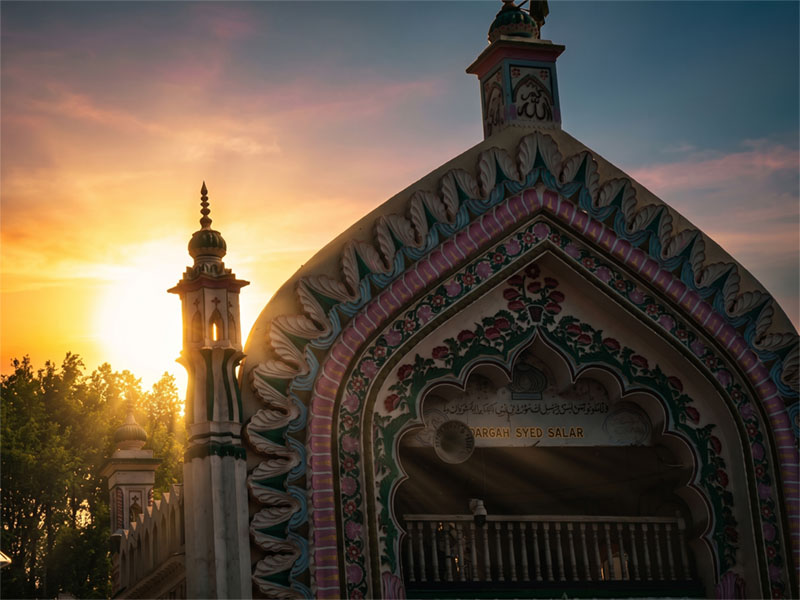
During his tenure in Bahraich, more than two centuries after Masud’s purported death, Prince Nasiruddin Mahmud is reported to have constructed a mausoleum over the grave, though contemporary evidence to verify this claim is lacking. Amir Khusrau (d. 1325) is the first early writer to mention Salar Masud explicitly. In his work Aijaz-i-Khusravi (1311), Khusrau writes that “in the town of Bahraich, the fragrant tomb of Sipahsalar Shahid scents the entire Hindustan with the perfume of odorous wood.” This contemporary reference indicates that Salar Masud was probably martyred sometime during the thirteenth century in the wake of the initial Turkish expansion into Bahraich. Such a dating would readily explain the complete absence of any reference to him in chronicles written before the fourteenth century.
Royal Pilgrimages and Growing Renown
By the turn of the fourteenth century, the legend of Salar Masud had spread far and wide, prompting the first royal pilgrimage to the site. In 1340–41, Sultan Muhammad bin Tughluq (r. 1325–1351) undertook a journey to Bahraich and distributed handsome sums of money among the servitors of the dargah. The Moroccan traveler Ibn Battuta accompanied the Sultan’s royal entourage during this visit. He was struck by the dense throng of devotees vying with one another to pay their homage to the Salar. “Many marvelous stories,” Ibn Battuta observed, “are told about him, and some notable battles are attributed to him.” Indeed, the press of the crowd was so overwhelming that it prevented the traveler from entering the inner sanctum, obliging him to turn back without paying personal homage.
Thirty-four years later, Sultan Firuz Shah Tughluq (r. 1351–1388) visited Bahraich and resided there for a considerable time. Shams Siraj Afif, author of the Tarikh-i-Firuz Shahi, relates that one night the Salar appeared to the Sultan in a dream, exhorting him to remain steadfast in the observance of religious rituals and prepare himself for his final journey. The following morning, Firuz had his head shaved in Sufi fashion and embarked, as the chronicler phrases it, upon the path of orthodoxy.
Furthermore, the anonymous author of the Sirat-i-Firuz Shahi informs us that by the third quarter of the fourteenth century, the tomb of Salar Masud had acquired nationwide fame as a place of healing for those suffering from leprosy. The chronicler notes that even Haji Ilyas, the ruler of Bengal who was afflicted with the disease, traveled all the way to Bahraich seeking the saint’s healing blessings.
Rituals, Processions, and Akbar’s Incognito Visit
By the dawn of the sixteenth century, the legend of Salar Masud had evolved into an expansive popular cult spanning the far-flung regions of Northern and Eastern India. Numerous fairs and festivals commemorating the reputed milestones of his life were regularly celebrated across modern Uttar Pradesh, Bihar, and Bengal. Replicas of the Salar’s tomb sprang up in almost every town and village across these provinces. (In Allahabad, for instance, a replica of his tomb still stands in the Sohbatiya Bagh locality).
A unique custom emerged wherein green and red banners fastened to spears, symbolizing the standards of Masud’s army, were carried from distant settlements to Bahraich each year on the eve of the festival celebrating his mystical marriage to Zohra Bibi. Although Sultan Sikandar Lodi (r. 1489–1517) banned the festival throughout his dominions, citing certain corrupt and immoral practices that had gathered around the gathering, the popular festivities were revived soon after.
Chronicling the events of June 1561, Abul Fazl, the author of the Akbarnama, explicitly details the observance of Salar Masud’s festival in Agra:
“In the town of Bahraich is the grave of Salar Masud Ghazi. It is a custom in India for people to make flags of various colors and convey them along with numerous presents to that place. Accordingly, a large contingent starts from Agra to this rendezvous and keeps awake for several nights in the neighborhood of the city. There is a great concourse, and both the good and the bad assemble there.”
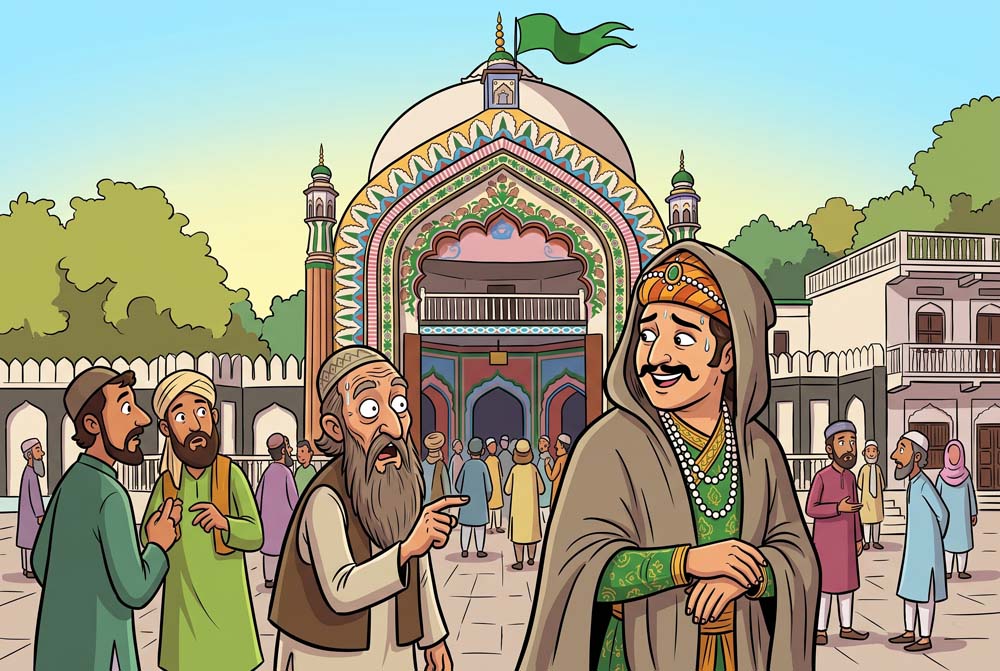
Abul Fazl goes on to describe how Emperor Akbar himself visited the festival on the banks of the Yamuna incognito, having to resort to a clever ruse to preserve his anonymity when an observant bystander recognized him in the crowd.
Shared Devotion, the Mystical Wedding, and Colonial Observations
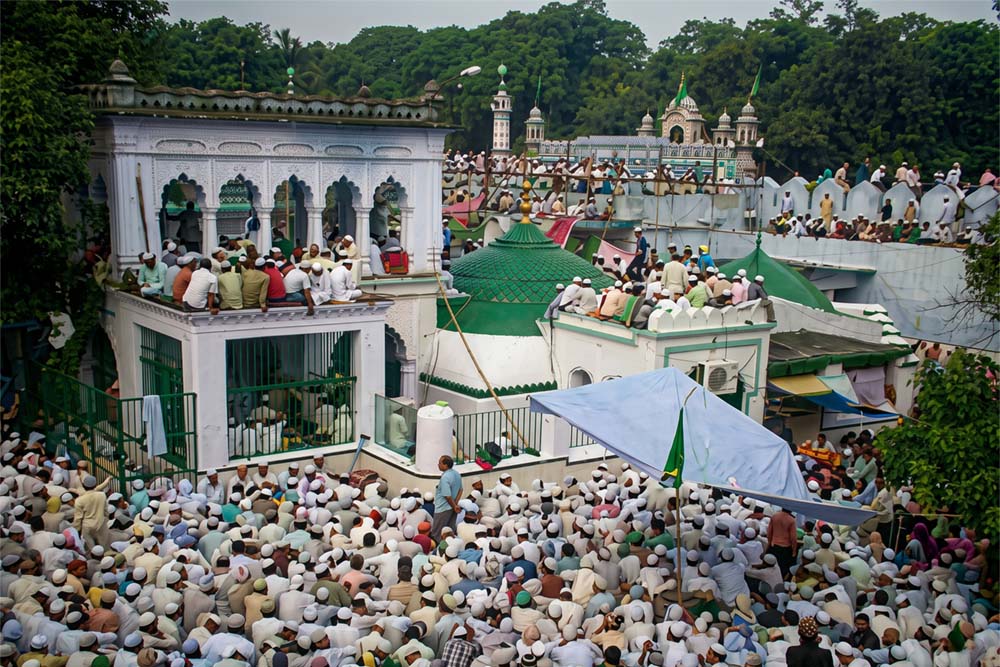
To this day, the Urs (death anniversary) of the Salar is commemorated on the 12th, 13th, and 14th days of the Islamic month of Rajab with great fanfare. Another major festival, held on the first Sunday of the Hindu month of Jyeshtha (May–June) and continuing for twelve days, draws massive crowds to Bahraich. This timing likely commemorates Jyeshtha 1033, when Salar Masud is said to have launched his final offensive against Raja Sohil Deo.
The centerpiece of this summer gathering is the symbolic wedding of Salar Masud with Zohra Bibi. Following Zohra’s death, her parents inaugurated the custom of leading a bridal procession (barat) from Rudauli to Bahraich to formally offer her in marriage to Ghazi Miyan—a practice that continues unbroken to this day. Similar processions depart from numerous towns across Uttar Pradesh, converging upon Bahraich on the designated day. The wedding guests (baratis) carry ceremonial wedding gifts and place them reverently before the tomb of the eternal bridegroom. Identical symbolic ceremonies take place on the first Sunday of Jyeshtha in dozens of regional towns and villages. Attracted by the Salar’s reputation for miraculous healing, countless individuals afflicted with chronic ailments, particularly leprosy, gather at these celebrations in search of solace and spiritual cure.
The remarkably high proportion of Hindu devotees at the shrine repeatedly intrigued European observers during the nineteenth and twentieth centuries. In 1913, N.L. Rockey noted with astonishment that nearly fifty percent of the pilgrims attending the Bahraich fair were Hindu. Earlier, in 1849, Colonel W.H. Sleeman remarked upon the extraordinary sight of both Hindus and Muslims making joint offerings at the shrine of a warrior “whose only recorded merit consists of having destroyed a great many Hindoos in a wanton and unprovoked invasion of their territory.” Sleeman postulated that the common folk “worship any sign of manifested might or power,” attributing the devotion of the Hindu masses to Ghazi Miyan’s perceived influence in heaven, “which he may be induced to exercise in their favor by suitable offerings and personal supplication to the shrine.”
Historical Reality and Hagiographical Construction
The problem of establishing Salar Masud’s historical identity remains unresolved. It is virtually certain that he was not the nephew of Sultan Mahmud of Ghazni. The dramatic military exploits across northern and western India recorded in Mirat-i-Masudi and celebrated in regional folklore lack independent historical foundation. In all probability, he was an obscure military adventurer who perished while fighting alongside Turkish contingents in the region of Bahraich during the thirteenth century. His status as a martyr, coupled with his growing reputation for miraculous physical healing and the gradual assimilation of orthodox symbols into indigenous folk traditions, helped spark his widespread popularity and steadily multiplied his devotees.
In his narrative, Abdur Rahman Chishti asserts that following Masud’s martyrdom, the region of Ajmer lapsed once more into spiritual darkness and idolatry. It was only in the late twelfth and early thirteenth centuries, he contends, that the light of spiritual guidance was permanently restored to Ajmer when Khwaja Moinuddin Chishti (d. 1236) settled there and initiated the region’s spiritual transformation.
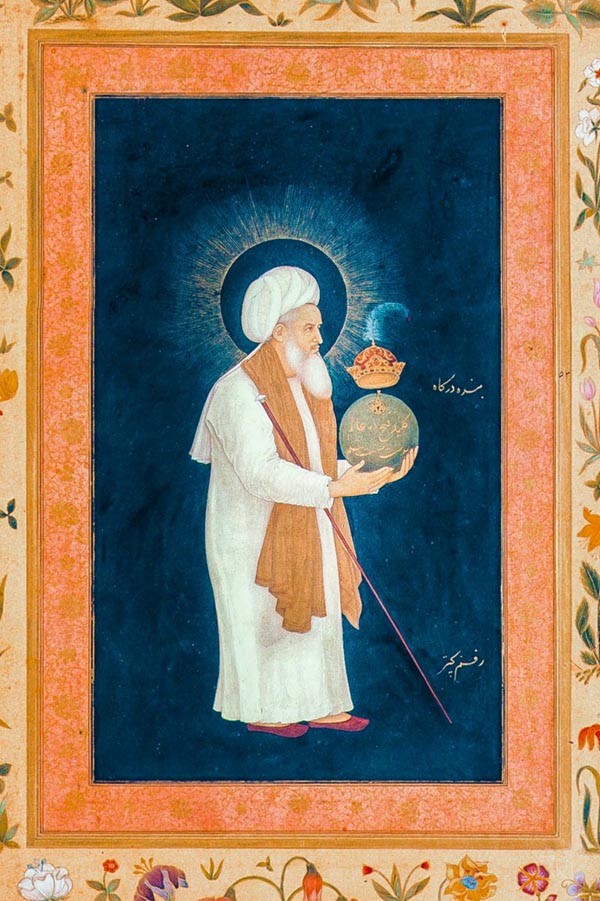
However, historically speaking, Khwaja Moinuddin Chishti is not known for coercive proselytizing or militant campaigns; indeed, aggressive proselytization was alien to classical Sufi practice. Abdur Rahman’s conscious effort to weave an umbilical link between Salar Masud Ghazi and Khwaja Moinuddin Chishti must therefore be seen as an attempt to hagiographically legitimize the Salar’s supposed military-religious exploits. It is equally plausible that Abdur Rahman chose to identify Ajmer as both the birthplace and the staging ground for Masud’s early campaigns specifically because of the city’s subsequent, universally recognized sanctity as the seat of the Chishti order in India.
The enduring cult of Ghazi Miyan serves as a vivid reminder that in South Asian religious history, faith frequently constructs its own truths independently of formal archives. Whether viewed as an idealized warrior-martyr of hagiographical romance or as an accessible folk saint granting solace to ordinary people across creeds, Salar Masud occupies a unique niche where military myth, pastoral memory, and popular Sufism remain inextricably intertwined.
Learned lots of discoveries. Thank you for your superb writing.
Thank you very much, Arshad!