

In the fourteenth part of my memoir, I reflected on a period of meaningful growth at the University of Allahabad—from expanding our department’s classrooms and organizing the Xth session of the UP History Congress to presenting my research in Bikaner and Paris. I also shared the joy of seeing my sons, Tipu and Khurram, establish themselves in their respective paths. Just as these domestic and professional efforts settled into a fulfilling rhythm, a prestigious offer arrived: an invitation under the Fulbright Visiting Expert program to deliver a series of lectures on South Asian Islam at the University of Pittsburgh. This fifteenth installment details my journey to America, my academic engagements across various universities, and the tragic loss that awaited my return home.
Journey to Pittsburgh and Warm Welcomes
The flight took me initially to Amsterdam, where I had to take another flight to Detroit after a layover of four hours. While I was waiting to board the Detroit flight in the lounge, the security in charge of the flight quizzed me regarding the purpose of my journey to the USA. When I showed him the invitation from the State Department and the University of Pittsburgh, he was satisfied and went away. I boarded the flight to Detroit at the right time and landed in Detroit after an approximately eight-hour journey.
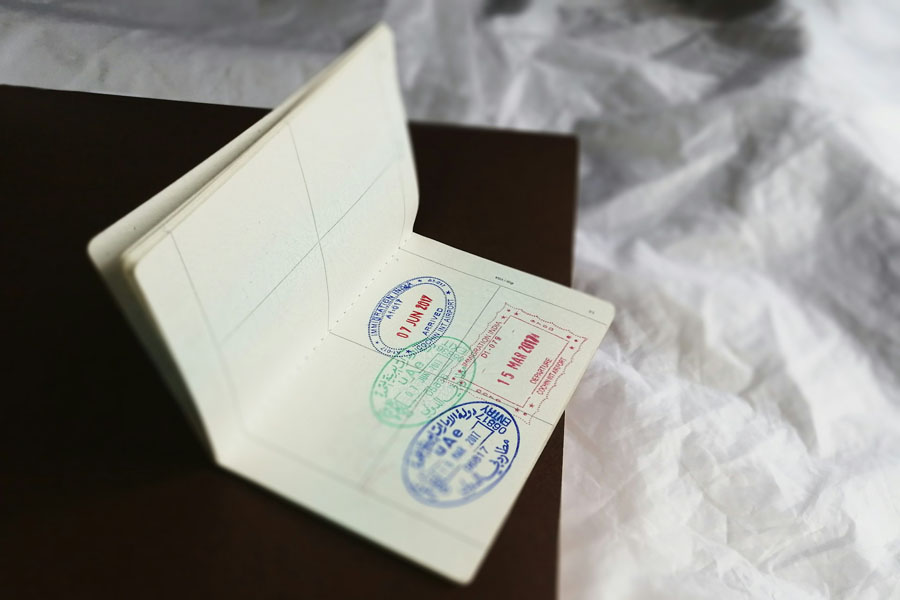
However, my ordeal had not yet ended, for I had to wait for a few more hours before boarding another flight to Pittsburgh. After going through the immigration formalities, I reached the gate where I had to take the Pittsburgh flight. At long last, I landed at Pittsburgh Airport after a journey of more than twenty hours.
When I came out of the arrival lounge after going through customs and other formalities, I was delighted to see Afshan, Dr. Richard Cohen, Sabbo, and her husband Aatif waiting for me. Aatif was doing a Master’s in Engineering at the University of West Virginia, which was a few hours’ drive from Pittsburgh. Sabbo knew about my impending arrival in Pittsburgh, and she and Aatif were kind enough to travel there to receive me. We went straight to Dr. Cohen’s residence, where we enjoyed the delicious chicken biryani that Sabbo had cooked for this occasion. After dinner and resting for a while, Afshan and Dr. Cohen took me to the hotel where arrangements for my stay during my sojourn in Pittsburgh had been made. I had to pay a rent of 60 dollars per day, which was covered by my daily stipend of 300 dollars. Afshan and Dr. Cohen left after I settled into the hotel suite, promising to return the next day to take me to the University of Pittsburgh. Sabbo and Aatif stayed with me for the night and drove back to West Virginia the following morning.

Settling In and Academic Responsibilities at Pitt
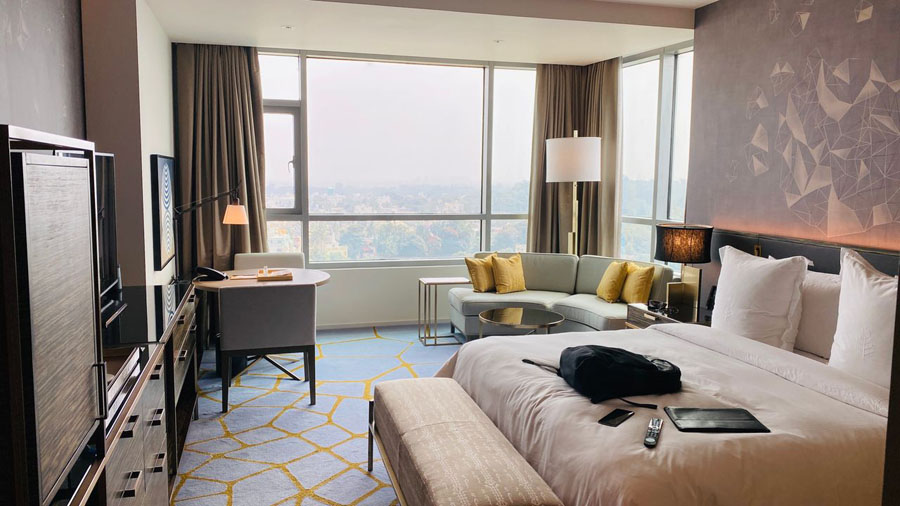
The hotel suite was quite spacious and was akin to a one-bedroom apartment with a bedroom, living room, a small lobby with a table and two chairs for taking meals, a small kitchen with all the gadgets for cooking food, a landline telephone, and, of course, a bathroom. The toiletries, towels, and bed sheets were changed periodically by the hotel staff. Overall, the place was very comfortable, and I didn’t face any problems during my one-and-a-half-month stay there.
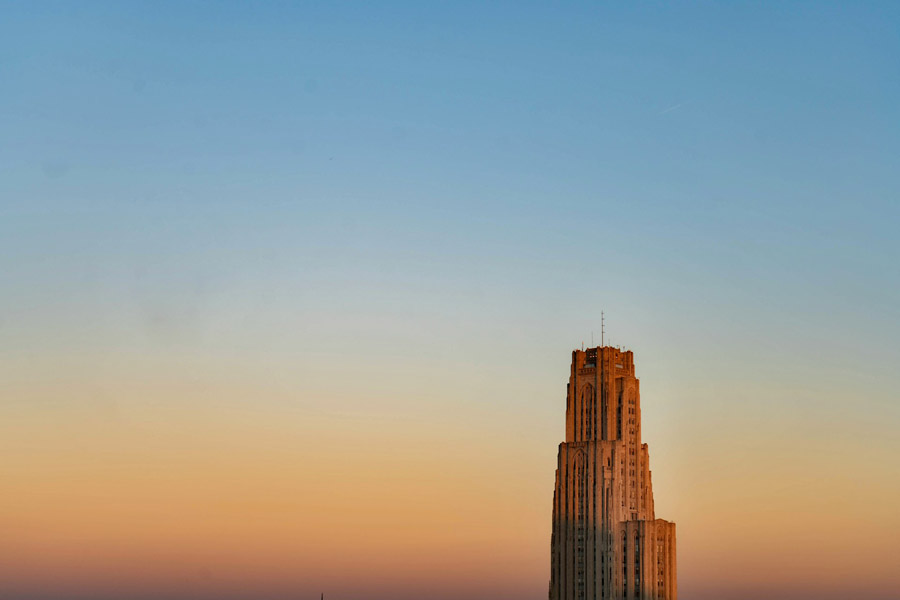
The next morning, I took a shower, had tea and breakfast, and got ready to go to the University. I needed to buy groceries for cooking food and preparing breakfast, which I planned to purchase while returning from the University. At the appointed time, Dr. Cohen arrived and drove me to the University of Pittsburgh, which was almost within walking distance from the hotel. I was impressed by the buildings and infrastructure available at the University.
Dr. Cohen introduced me to the Director of the South Asian Studies Centre and other faculty members present there. It was decided that I would teach a course on South Asian Islam along with a lady professor at the Centre, and the topics I was to discuss in class were finalized along with the days and time schedule of my lectures. It was also decided that I would deliver lectures on South Asian Islam at various universities and educational institutions across Pennsylvania, and a timetable with specific dates was scheduled for the same. Dr. Cohen then took me to my office at the Centre, which had a desktop computer and a landline telephone connection. My nameplate was already placed outside the room. Dr. Cohen was very courteous and helped me settle down in every way possible, for which I will always be grateful to him.
After completing all the formalities and visiting the University library—where the required documents permitting me to borrow books from the library were completed—Dr. Cohen drove me back to the hotel. On the way back, I bought the necessary groceries from a nearby Indian store and a phone card to call home. At my request, he also took me to the Islamic Centre of Pittsburgh, which was at a fair distance from the University campus, where I planned to offer prayers every Friday. After dropping me at the hotel, Dr. Cohen left, promising to return the next morning to take me to the University. I called Nilofer using the phone card from the landline and was delighted to hear her voice after almost two days. I briefed her about the developments so far, telling her that I was comfortably settled and that she need not worry about me. I also spoke to Tipu, Khurram, and Bhaiya, and then planned for the tasks I had to perform in the coming days.
Lectures on South Asian Islam and Mughal History
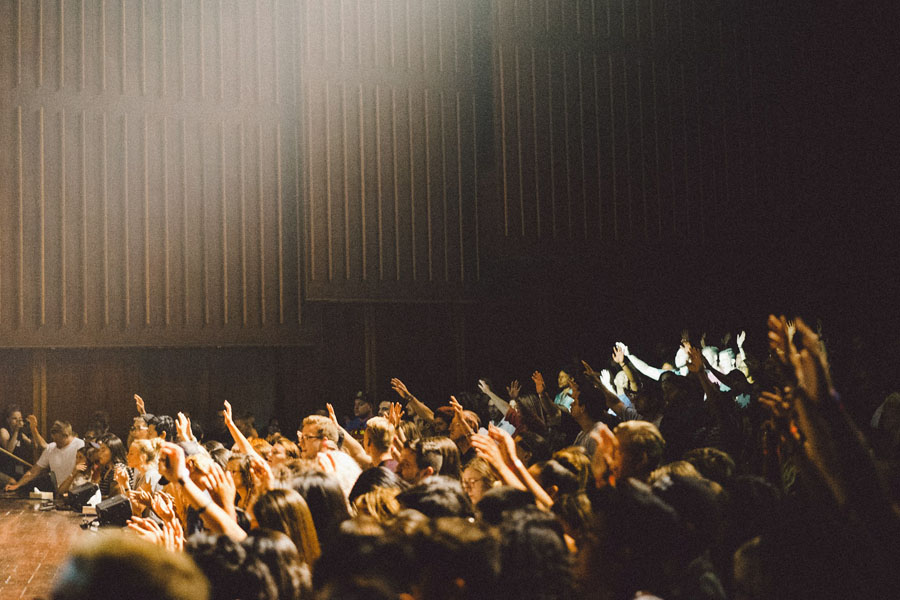
I delivered my first lecture at the University of Pittsburgh two days later. There were around sixty students in the lecture hall, including several elderly persons sitting in the front row. I spoke extempore, as has been my habit at Allahabad University, regarding the different stages of the foundation and expansion of Muslim political power in India between the thirteenth and sixteenth centuries and its implications for Indian society and culture. I was pleased to find the students taking a keen interest in my lecture, which became evident during the question-and-answer session that followed.
In another class a few days later, I spoke about the conversion of the local population to Islam during this period and the myths regarding the role of the state and the Sufis in the process of conversion. I told the students that while conversion to Islam did take place, the state and the Sufis by and large did not encourage conversion, which is attested by the fact that despite almost six hundred years of Muslim rule, Muslims remained a minority in present-day India. In yet another lecture, I spoke about the arrival of Sufis in India even before the foundation of Muslim rule, their worldview, and their contribution to promoting religious and social harmony and amity during the medieval period.
I was also invited by another professor to address his students on any subject of my choice regarding South Asian Islam. I spoke at length about how Indian Muslims utilized their past for political mobilization and identity formation in the nineteenth century. I was pleased by the thoughtful questions raised by both the students and the professor, which I believe is the true mark of a successful lecture.
At the advice of Dr. Cohen, I also gave a public lecture at the University on Mughal diplomacy and diplomatic protocol in the sixteenth and seventeenth centuries. Although the lecture was widely publicized among the University community, I was disappointed to find very few people in the audience. I was, however, pleased to see Afshan in the audience, who had come especially for the occasion from Charlottesville, Virginia, where she was teaching South Asian literature. Dr. Cohen was also a distinguished scholar of South Asian literature in his own right and had worked on Maulana Dawood’s prem akhyan (romantic poem) Chandayan, composed during the reign of Sultan Firuz Tughluq (r. 1351–1388). Recently, his translation of the epic has been beautifully published by Marg Publications, Mumbai.
Reaching Wider Audiences and Facing Tough Questions
During my sojourn in Pittsburgh, I was invited by ten universities and even two seminaries to deliver lectures. I generally spoke on the cultural contributions of Muslim rulers in the shaping of the glorious Indian civilization, which is the hallmark of medieval India. I found that the audience in these lectures took great interest in Mughal monuments and especially Mughal painting. In the seminaries, I generally spoke about the Sufis, their thoughts, and the positive impact they left on Indian society, which is evident from their continued popularity among both Muslim and Hindu masses even several centuries after their departure for their heavenly abode. I was also invited by the local Pittsburgh radio station for an hour-long interview, during which the anchor asked me questions regarding my experience at the University of Pittsburgh along with some searching queries related to the political and economic conditions of India.

Before I had left India, the liaison officer of the State Department—a Japanese-American lady—had cautioned me that due to the September 11 episode, I might have to face some tough questions from audiences. But I was pleased to find that in most places where I spoke, the audience was generally polite and sporting, except at the University of Ohio, where I was asked to speak on Hindu-Muslim relations in India. I found that there were several Indians in the audience who had come prepared for the occasion.
After my lecture, a few gentlemen posed awkward questions regarding the persecution of Hindus during Muslim rule in India. One gentleman spoke about the disparaging remarks about Hindus made by the fourteenth-century historian Ziauddin Barani (d. 1356). I told him that he was quoting Barani out of context and that Barani was primarily a cleric whose worldview was by and large different from the men in power at that time. Moreover, I explained to him that historical events should be analyzed in the context in which they took place, and judging fourteenth-century events through the lens of the twentieth century is prone to distorting history. I also told the audience that Barani had severely criticized the ruling sultan’s predecessor, Muhammad Tughluq (r. 1327–1351), for which he was punished by the Sultan. His property was confiscated, he was forced to revise his book, and he had to face severe pecuniary problems, living in obscurity in his final days. (In fact, it is the revised version of Barani’s Tarikh-i-Firuzshahi that is commonly available to us; perhaps the only original version of the Tarikh is preserved in the British Library, London).
Overall, the lecture was well received, and afterward, I was invited by two gentlemen to have dinner at their place, which I had to politely decline owing to the paucity of time. Needless to say, Dr. Cohen was kind enough to make arrangements for my to-and-fro travel to these places from Pittsburgh. On many occasions, he personally dropped me off at the bus station and received me there upon my return. He also took me to shopping malls to buy proper clothes and other requirements for the chilly weather in Pittsburgh. I will always be grateful to him for his help and kindness.
Weekend Reconnections Across America
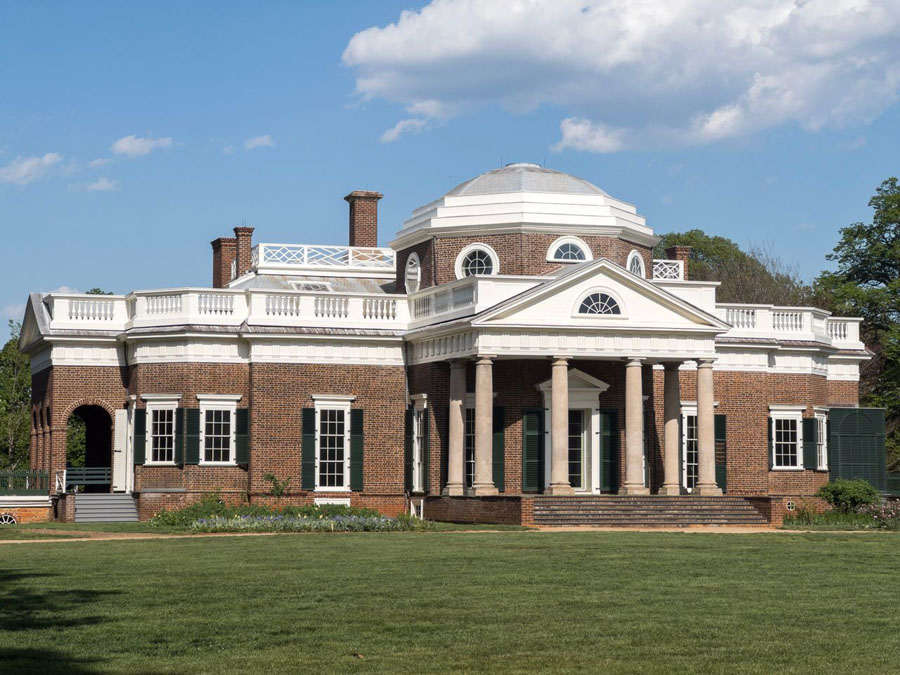
I spent my weekends in Pittsburgh visiting and receiving relatives and friends. On the first weekend, Dr. Cohen drove me to Charlottesville, Virginia, to spend some time with Afshan. I enjoyed my stay there thoroughly. Afshan hosted a lunch at her residence to which she invited her friends, including the famous historian Dr. Richard Barnett, to meet me. We also visited the University of Virginia and the residence of Thomas Jefferson, one of the primary leaders of the American Revolution and the third President of the USA (1801–1809), which tourists were allowed to visit after paying an entry fee of twenty dollars. I enjoyed seeing the lifestyle of people in the early nineteenth century and was thoroughly impressed by Thomas Jefferson’s library and its contents.
The next weekend, Sabbo and Aatif came to take me to their residence in West Virginia. I was pleased to spend two days with them and enjoyed the delicious meals Sabbo prepared especially for me. We also went shopping and bought some gifts for Nilofer, Tipu, and Khurram.
The following weekend, Farid and Sadaf, along with their little daughter Haya, visited me. They were living in New Jersey at that time and had to drive many hours to reach Pittsburgh. Sadaf brought a lot of homemade, delicious food, which was sufficient to feed me for at least a week. This was indeed a precious gift for me, given the fact that I had to cook my dinner every day while buying my lunch from the Indian food cart on the University campus. It was a pleasure to meet Farid and Sadaf after a long time. Farid was a young boy when we were living in Madison in the late seventies and early eighties. Sadaf was the daughter of my late lamented niece Afroz, and I had seen her growing up as a little girl in Gorakhpur before her marriage to Farid. They stayed with me for the weekend and drove back home on Monday morning.
Farid also suggested that I visit Saeed and Farzana in Davenport and drive from there to Madison to meet old friends. I liked the idea and flew to Davenport the next weekend. It was a sheer joy meeting Saeed, Farzana, and their sons Safi and Hameed after more than fifteen years. Needless to say, I deeply enjoyed the hospitality and affection they offered. The next morning, Saeed drove us to Madison, where we stayed with our old friend Abdullah Badshah. He took me to the Eagle Heights colony, where we used to live during my student days in Madison. He was also kind enough to take me to the residence of Professor Kemal Karpat, who was pleased to meet me and inquired about my academic activities in India. I gave him copies of my latest publications, and he promised to get back to me after reading them. I was, however, unfortunate not to meet Professor Frykenberg, who was probably out of town at that time. In the evening, Professor Memon came to meet me, which was another joyous occasion. Meeting relatives and friends after such a long time was a fulfilling experience, but all good things must come to an end, and I returned to Pittsburgh on Monday morning.
Return to Allahabad and a Devastating Loss
By mid-April 2004, my tenure as the Visiting Fulbright Expert at the University of Pittsburgh concluded, and I began to prepare for my return journey to Allahabad. It was a sheer pleasure to stay there and share my knowledge and experience with the students and colleagues at the University of Pittsburgh. I still hold pleasant memories of the time spent in Pittsburgh and remain grateful to Dr. Cohen and his colleagues at the South Asia Centre of the University for helping me at every step and making my sojourn in Pittsburgh joyous and memorable.

Afshan, Dr. Cohen, Sabbo, and Aatif came to bid farewell to me at the Pittsburgh airport. I took the same route back home: Pittsburgh–Detroit–Amsterdam–New Delhi, where I arrived the following evening. Tipu was at the airport to receive me as usual. I spent the night with him in his Gurgaon home and flew to Allahabad the next morning. It was a sheer joy seeing Nilofer at the airport, which came as a wonderful surprise and pleasure. Khurram couldn’t come to the airport since he had to attend his classes at the University. Coming back to familiar surroundings and seeing my loved ones after one and a half months was heartwarming and cherished, and I thanked Allah profusely for whatever little I could achieve away from home in a distant land.
I resumed my duties at the Department of Mediaeval and Modern History the very next day. Since the annual examinations of the University were scheduled to begin soon, it was my responsibility, as the Head of the Department, to ensure the smooth conduct of the examinations with the help of my colleagues and the Controller of Examinations.
While the examinations were underway, a personal tragedy shattered our normal life. My revered mother had been unwell for a long time and was undergoing treatment in Lucknow. On 20th May 2004, we learned that her health had deteriorated and that she had been admitted to a local hospital. We rushed to Lucknow the same day and went straight to the hospital. She was in the ICU and didn’t respond to my entreaties to open her eyes. Sadly, she went to her heavenly abode the next day.
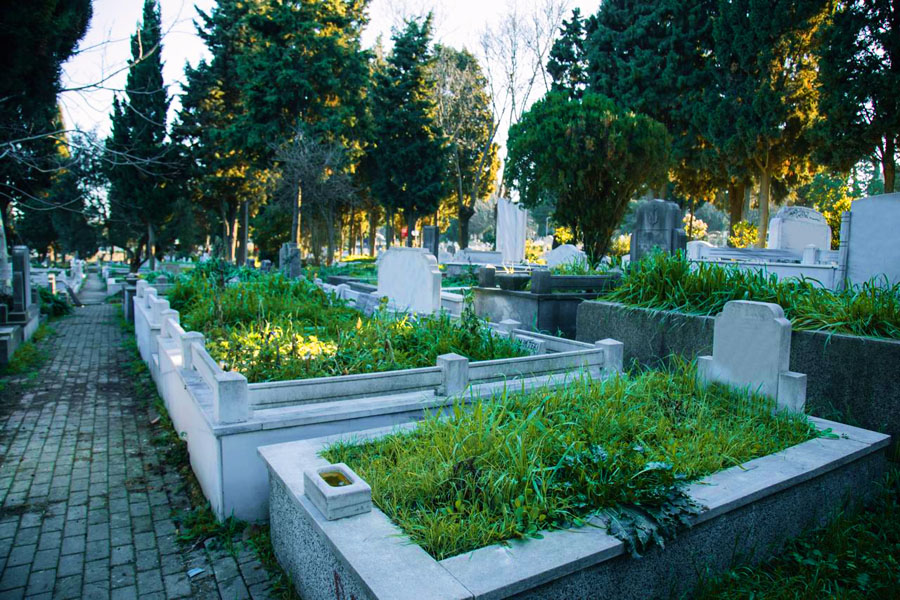
Her mortal remains were brought to Muhammad Bhai’s residence, where she had been living for a few weeks. All my brothers and sisters had reached there by that time. It was decided to lay her to rest in Lucknow itself, as it was not advisable to carry her body all the way to Allahabad in the extremely hot weather. After the Asar prayers on 21st May 2004, she was laid to rest in the nearby graveyard.
The passing of my mother was an unbearable shock and a source of profound pain for me personally. Tears continued to flow from my eyes, and the grief was intolerable. Even to this day, I remember her love and affection for me every single day, and not a day has passed since her demise that I have not prayed for her maghfirat in my daily five prayers and during the recitation of the Holy Quran. May Allah increase her rank in paradise.
My time in Pittsburgh as a Fulbright Visiting Expert was a deeply rewarding chapter, allowing me to build bridges of understanding through history and reconnect with dear friends and family across the United States. Yet, the high point of my academic accomplishments was shadowed by the deepest sorrow of my life upon returning to Allahabad. Losing my mother left a void that no honor or achievement could ever fill, reminding me that amidst all the travels and accolades, it is the love and blessings of our parents that truly anchor our lives.
To be continued…


One comment on “From the Backbenches to the Vice Chancellor’s Chair: My days at Allahabad University – Part 15”