In the seventeenth part of my memoir, I recounted a period marked by significant transitions both at home and within the university. We had to bid emotional farewells to our sons as Tipu embarked on an overseas corporate career in London and New Jersey, while Khurram moved to Delhi to pursue his doctoral research in psychology. Alongside those familial shifts, I navigated the demanding challenges of university governance—most notably chairing the apex committee for UGAT 2007, Allahabad University’s first-ever nationwide entrance examination, which we executed with absolute integrity, logistical secrecy, and success. In July 2007, a new chapter of institutional responsibility opened when I was appointed Dean of the Faculty of Arts, bringing with it the urgent task of overhauling neglected administrative facilities, organizing major academic gatherings, and implementing long-overdue procedural reforms.
Assuming Charge and Overhauling the Dean’s Office
In July 2007, by virtue of being the senior-most professor in the Faculty of Arts, I was appointed Dean, Faculty of Arts, for a term of three years. I took charge of the faculty in the presence of the Vice-Chancellor from the outgoing Dean, Professor K.G. Shrivastava of the English Department.
When I assumed charge of the Dean’s office, I found it in a virtual mess. The Dean’s chamber was a tiny room with old-fashioned furniture consisting of a few chairs and a medium-sized table. There was only one washroom in the office, which resembled a neglected public lavatory and was practically unsuitable for decent use. The office also lacked a conference room where meetings of the Faculty Board of Arts could be held in a congenial environment. Every professor in the faculty and several senior Associate Professors were members of this Board; the office therefore required a spacious hall for holding its meetings, which were convened whenever important academic or administrative matters arose for deliberation.
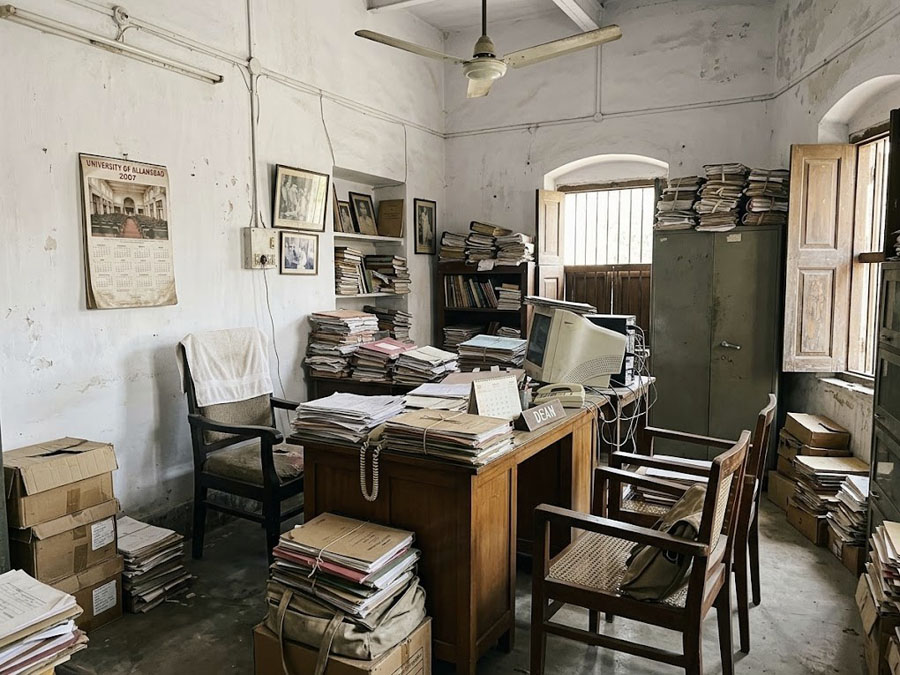
The office superintendent at the time was the President of the University Employees’ Union. While he was respectful in his demeanor, he did not take much interest in daily office work owing to his union engagements. Fortunately, two office assistants, Surendra Singh and Kuldeep Awasthi, were thoroughly well-versed in their work and helped me immensely throughout my tenure as Dean. The Dean’s office coordinated all the academic and administrative activities of the teaching departments across the faculty, and all important files regarding these matters passed through our desks. Needless to say, the responsibilities at hand—alongside my regular teaching schedule in the History department—were arduous and demanded continuous oversight at every level.
I decided first of all to do something to refurbish the facilities available at the Dean’s office. I held a detailed meeting with the University Engineer and the Estate Officer, explaining that it was difficult for me to discharge my duties under such spartan conditions. I requested them to draw up a plan for constructing a new chamber with an attached washroom for the Dean, fitted with new furniture commensurate with the dignity of the office. I also asked for at least two new washrooms for staff and visitors, and a spacious conference room with comfortable seating for meetings of the Faculty Board of Arts.
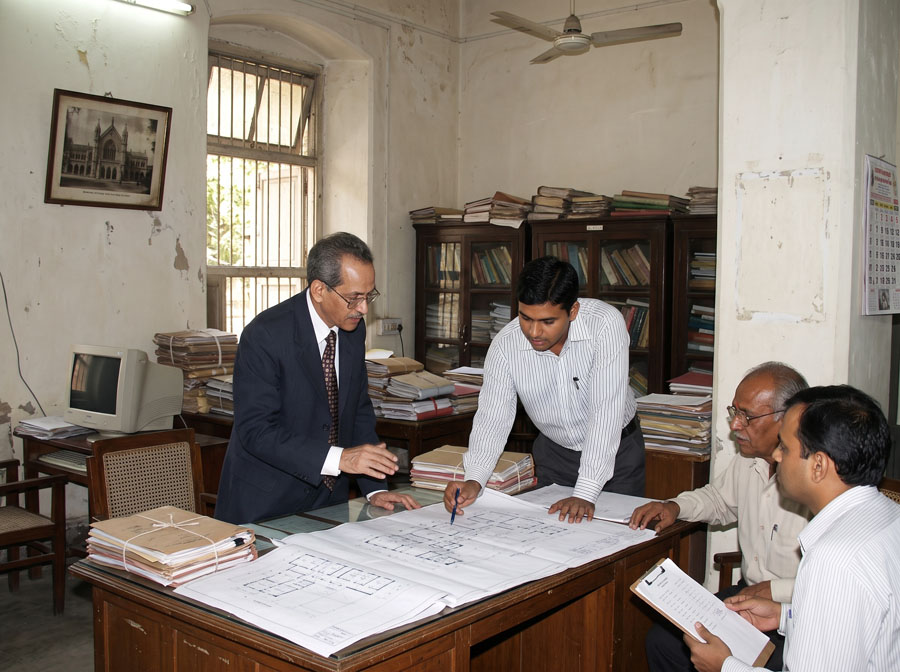
As luck would have it, there was ample physical space within the Dean’s office building to accommodate these additions, coupled with substantial development funds that the university had recently received from the Central Government following its restoration to Central University status. A comprehensive renovation plan was prepared and promptly approved by the Vice-Chancellor, and construction work commenced within a few weeks.
In the meantime, the first meeting of the Faculty Board of Arts under my tenure was scheduled. With the dedicated help of Surendra Singh and Kuldeep Awasthi, a comprehensive agenda was drafted and dispatched to all members of the Board. The meeting was convened in the North Hall of the Senate House campus, where practically every item on the agenda was thoroughly discussed and approved. Many senior members of the Arts faculty welcomed me warmly as the new Chairman of the Faculty Board and assured me of their full cooperation in all matters concerning the faculty. Following the meeting, I personally and meticulously drafted the minutes, which were circulated to all members in due course.
Within three months, the transformation of the Dean’s office was complete. A new chamber for the Dean, fitted with an attached washroom, elegant furniture, and a desktop computer, was ready for use. A spacious conference room equipped with comfortable furniture and two window air conditioners—designed to seat approximately thirty people—was constructed. Two well-maintained washrooms for the office staff and visitors were also provided. I thanked the University Engineer and the Estate Officer for their prompt response in giving the Dean’s office a much-needed face-lift.
I also approached the Head of the Fine Arts Department and requested him to provide a few paintings to adorn the bare walls of the conference hall. Within a few days, he kindly presented three excellent paintings depicting the historic landmark buildings of the university. At his suggestion, two paintings were hung in the conference hall, while the third was placed in the Dean’s chamber. Thereafter, all meetings of the Faculty Board and key departmental deliberations were conducted in this dignified conference hall.
The 150th Anniversary of 1857: A National Seminar
In 2007, the Government of India decided to commemorate the 150th anniversary of the Revolt of 1857 on a grand scale, organizing conferences and seminars in universities across the country to familiarize students and the wider public with various facets of what has been hailed as the “First War of Indian Independence.” The Indian Council of Historical Research (ICHR) sanctioned a substantial grant to our History department to organize a three-day national seminar on the Movement of 1857.
As Head of the Department, the responsibility of coordinating the seminar fell upon my shoulders. With the dedicated help of my colleagues and research scholars, we made elaborate preparations—inviting delegates and keynote speakers from universities and colleges across India, and arranging their food and lodging in the University Guest House and student hostels.
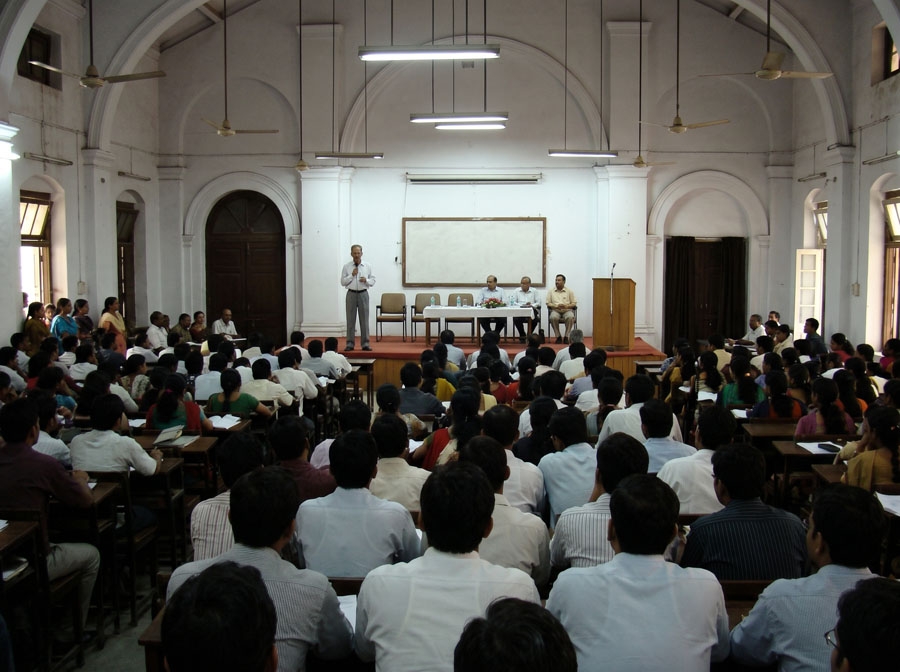
I invited Professor Mushirul Hasan, the eminent historian and Vice-Chancellor of Jamia Millia Islamia, to deliver the inaugural address. He had kindly accepted my invitation, but at the eleventh hour, an unexpected emergency prevented him from traveling to Allahabad. Unfortunately, Vice-Chancellor Professor Rajen Harshe was also out of town on the opening day. At short notice, we approached Professor Misra of Patna University to inaugurate the seminar, and he graciously agreed to grace the occasion.
To ensure that regular classes in the department were not disturbed, the seminar was held, with permission from the university administration, in the North Hall of the Senate House campus. In my welcome address, I spoke at length on the profound historical significance of the 1857 uprising in modern India. I reminded the audience that it was a truly pan-Indian movement in which Hindus and Muslims fought shoulder to shoulder against British imperialism—an epic struggle that resulted in the sacrifice of hundreds of thousands of lives and livelihoods, and compelled the British Crown to radically revise its administrative policies in India. I also paid tribute to the heroic sacrifices of Maulvi Liaquat Ali and his comrades, who spearheaded the revolt in Allahabad. Professor Misra delivered an eloquent address analyzing the pivotal milestones of the 1857 struggle, which was warmly received by the audience. The seminar received extensive coverage in the local press and attracted large, engaged audiences on all three days. We breathed a collective sigh of relief at its smooth and successful conclusion, which added significantly to the academic prestige of both our department and the university.
Reforming Doctoral Admissions with Transparency
From the moment I assumed charge as Dean, Faculty of Arts, I had been receiving persistent complaints and representations from students regarding the lack of transparency in Ph.D. admissions, as a result of which many deserving candidates were unfairly denied entry. I discussed this pressing issue with my esteemed colleague, Professor V.C. Pande, and together we resolved to devise an objective system that would guarantee fairness and transparency throughout the admission process.
We formulated a standardized evaluation matrix under which every doctoral applicant was awarded objective points based on their academic record from High School through to the M.A. examinations, proportional to their actual percentage of marks. Additional marks were allotted to candidates who had qualified the National Eligibility Test (NET) or Junior Research Fellowship (JRF), as well as for research papers published in established, peer-reviewed journals. Eligible candidates were then interviewed by an admission committee comprising the three senior-most faculty members of the department, with each member awarding an independent score out of ten. A consolidated merit list was prepared by tallying these cumulative scores, and admissions were offered strictly in order of merit against the available departmental seats.
Vice-Chancellor Professor Harshe was so impressed with this equitable framework that he not only approved it immediately, but decreed that doctoral admissions across all teaching departments in the university would henceforth be conducted using the admission model formulated by the Department of Mediaeval and Modern History.
Implementing Central Ordinances and Passing the Torch
In 2008, the new Ordinances of the Central University of Allahabad received parliamentary approval. Professor V.C. Pande and his drafting committee had worked tirelessly over the preceding two years to formulate these Ordinances, and upon receiving the assent of Parliament, they were implemented forthwith.
One pivotal clause in the new Ordinances restricted the headship of an academic department to a fixed term of two years. The traditional convention, under which the senior-most professor retained the headship indefinitely until superannuation, was formally abolished. Accordingly, heads of departments who had already served for more than two years were directed to step down to allow the next senior-most professor to take charge.
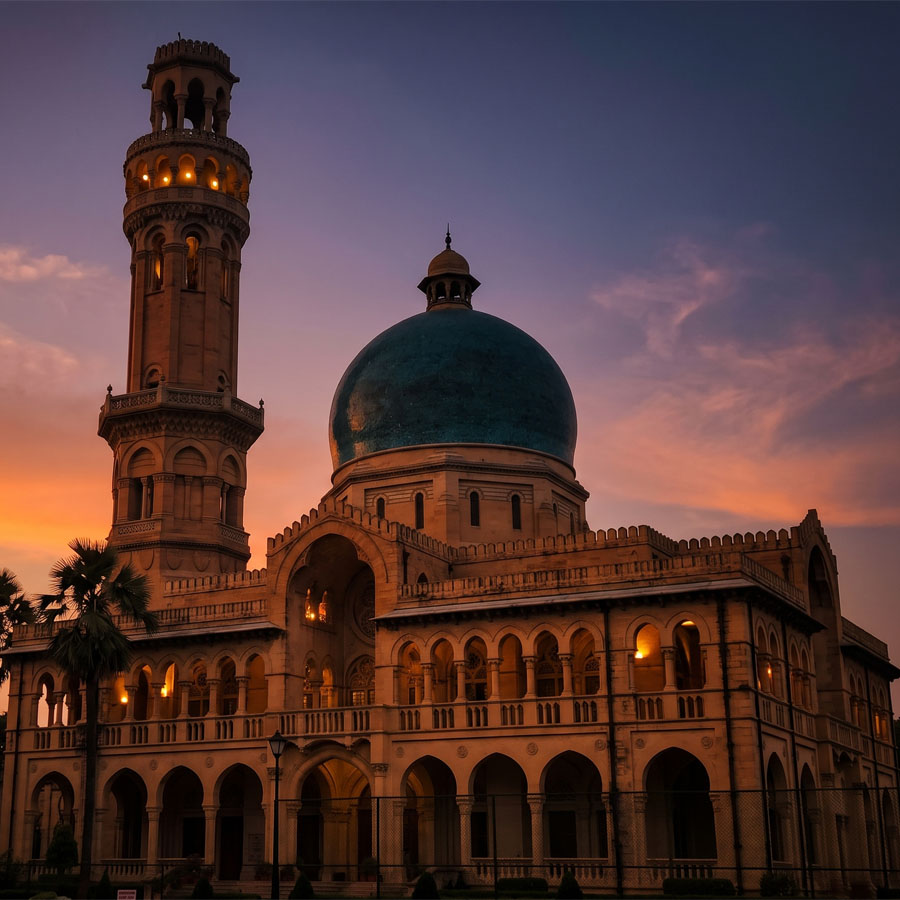
Having served as Head of the Department of Mediaeval and Modern History for nearly eight years, I was asked to hand over charge to Professor V.C. Pande, who was next in line of seniority. I complied with the order that very day, readily and with a light heart, knowing full well that the department would remain in safe, capable, and scholarly hands. On a personal level, it brought immense relief; shouldering the dual administrative burdens of both the department and the entire Faculty of Arts alongside my regular teaching duties had taken a heavy toll on my time and energy.
I requested Professor Pande to shift into the official chamber designated for the Head of the Department immediately, assuring him that I would relocate my books and files to another room. However, being the thorough gentleman that he was, he insisted that I continue occupying the Head’s room and chose instead to function from his existing office.
The 20th Session of the UP History Congress
In October 2009, the twentieth session of the UP History Congress was convened in Allahabad. Because the session was hosted by the Department of Ancient History, Culture, and Archaeology, the core organizational arrangements were handled by their faculty, while our department extended complete institutional backing to ensure the event’s success.
The inaugural session was held in the iconic Senate Hall of the university. In my opening remarks as General Secretary of the UP History Congress, I reminded the gathering that our Department of Mediaeval and Modern History holds the rare academic distinction of having founded both the Indian History Congress and the UP History Congress. In 1935, the celebrated Indian History Congress had been established by the then Head of our Department, Professor Sir Shafaat Ahmad Khan (1921–1942), who also served as its first President. Similarly, in 1983, the UP History Congress had been established under the initiative of my revered teacher, Professor Radhey Shyam, who served as its founding President, alongside Dr. S.N.R. Rizvi as its first General Secretary.
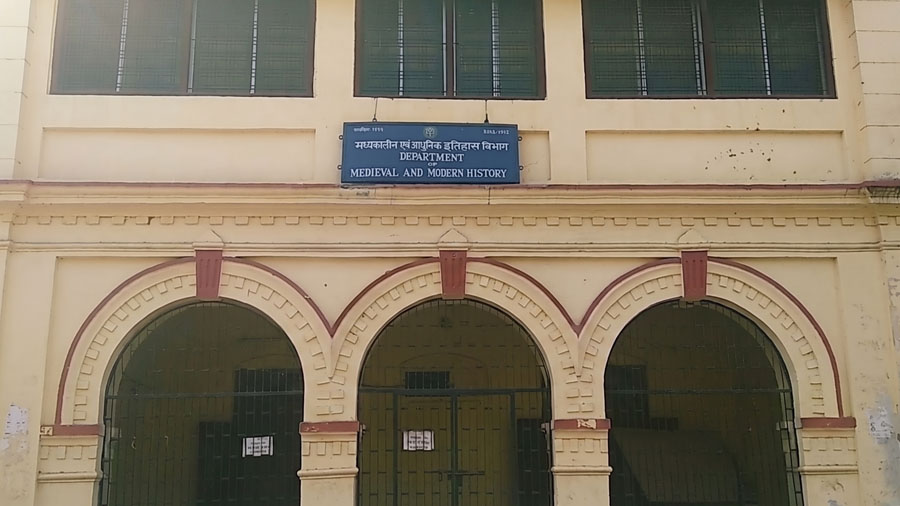
I also outlined the core aims and objectives of the UP History Congress, which continues to provide an essential annual platform for young, upcoming historians and college teachers across Uttar Pradesh to assemble, share original findings, and showcase their research. The Congress was formally inaugurated by Vice-Chancellor Professor Rajen Harshe, who, as always, spoke with great eloquence on the craft of history and its wider significance for society. With a large turnout of local and outstation delegates, the three-day academic deliberations concluded on an inspiring and memorable note.
Looking back, the years between 2007 and 2009 were defined by institutional renewal and the satisfaction of leaving things better than I found them. Whether it was modernizing the physical infrastructure of the Dean’s office, pioneering a merit-based doctoral admission system, or passing the departmental baton after eight fulfilling years as Head, each step reinforced my belief in transparent, principled governance. Stepping away from administrative routine allowed me to appreciate how deeply our department’s legacy was interwoven with the broader landscape of Indian historical scholarship—a legacy I remained determined to serve both in the archives and in the lecture hall. (To be continued).