

Of all the Sufi orders operating in India, only the Chishtis and, to some extent, the Naqshbandis were destined to create a pan-Indian identity for themselves and go on to play a momentous role in the religious, social, and—according to some modern scholars—political life of the country in the medieval period. Others had, at best, a regional presence and influence. The Firdausis, for instance, were active merely in Bihar. The Suhrawardis and Qadiris were popular in Punjab, Sind, Gujarat, and Kashmir. The Shattaris likewise attained significance primarily in modern Madhya Pradesh, Bihar, Gujarat, and the Deccan.
The Meaning and Philosophy of Shattar
As the plural of the Arabic word shakir (or shatir), the literal meaning of shattar is one who has broken with the world, or a running footman. Both of these connotations were used by Shattari Sufis to explain the term Shattar. “When the seeker of truth,” writes Mir Imamuddin Rajgiri (d. 1717), “dissociates himself from all sides, concentrates, and yearns to behold the vision of God, he becomes shatir. Since he encounters self-annihilation while experiencing union, he witnesses the Unity of Being, Acts, and Attributes of the Almighty and doesn’t see anything except God. He becomes united with the Ultimate, and hence the term Shattar seems well deserved for him.”

Muhammad Ghausi Shattari, the seventeenth-century Shattari Sufi and author of Gulzar-i-Abrar, on the other hand, opines that the order was so called because of the extraordinary speed of its adherents in traversing the mystic path. The first step on the Sufi path of the Shattaris, writes Ghausi Shattari, is therefore equivalent to the last step of other saints. The Shattaris also claim that Ilm-i-Shattar (the knowledge of Shattar) was the best possible way of attaining the Sufi goal of annihilation in God. Not only had the Prophet Muhammad learned Ilm-i-Shattar, they claim, but all the great Sufis were major exponents of Shattari practice and were also known by the title of Shattar.
Shah Abdullah Shattar: The Founder in India
The founder of the Shattari order in India was Shah Abdullah Shattar (d. 1485). He received spiritual training from Sheikh Muhammad Aarif Taifuriyah, who is also reported to have given him the title of Shattar, pleased by his expertise in Ilm-i-Shattar. Sheikh Aarif subsequently invested him with his khilafat (spiritual succession) and commanded him to go to India to propagate Shattari doctrines.

He reached India probably in the mid-fifteenth century. Wandering through Manikpur and Jaunpur, attired in regal robes and accompanied by numerous followers, Abdullah eventually settled in Mandu (in modern Madhya Pradesh), where he established the first Shattari khanqah in India. The Shah died in 1485 and lies buried inside the Mandu fort. Sheikh Pir Meerati Shattari (d. 1633) later built a magnificent tomb over his grave with the help of Emperor Jahangir.
Sheikh Muhammad Ghaus and His Spiritual Training
Though Shah Abdullah sowed the seeds of the Shattari order in India, the seed grew into a full-fledged, fragrant tree thanks to the efforts of Sheikh Abul Muayyad Muhammad, better known as Muhammad Ghaus Gwaliori (d. 1563). He was brought up and trained by the famous Shattari Sufi and native of Gwalior, Sheikh Zuhur Hajji Hamid Husur (d. 1524). The author of Gulzar-i-Abrar would have us believe that Zuhur, who was not blessed with any son of his own, had seen Ghaus and his elder brother Fariduddin (alias Sheikh Phul) in a dream during his sojourn in Medina, and that in the dream the Prophet had placed the two Indian boys under his care.
In accordance with the Prophet’s instruction, the Sheikh returned to India. Ghaus met the saint in Gwalior when he was seven years old and immediately entered his tutelage. For two years, the saint trained his young disciple at Gwalior in Shattari practices. At the age of nine, Sheikh Zuhur took young Ghaus to the mountains of Chunar (in modern Mirzapur district) and subjected him to rigorous ascetic practices for thirteen years. According to Shattari traditions, the young Sufi subsisted only on the leaves of trees found in the jungles of Chunar throughout this period.

Ghaus emerged from this long and arduous apprenticeship well-versed in the secrets of tasawwuf and a scholar of repute. It was during his sojourn in Chunar that he wrote his famous treatise on Sufism, Jawahir-i-Khamsah. Satisfied with Ghaus’s spiritual and intellectual attainment, Sheikh Zuhur appointed him his Khalifa and instructed him to settle in Gwalior. The saint was only twenty-two years old at this time.
Ties with Babur and the House of Timur
Like Shah Abdullah Shattar, Muhammad Ghaus was not averse to maintaining close ties with the state and enjoyed friendly relations with Mughal Emperors Babur, Humayun, and Akbar. As early as November 1526, when the Mughal army laid siege to Gwalior fort, he threw his lot with the invaders and helped the Mughal commander Rahimdad capture the fort. Babur was suitably impressed with the saint. Three years later, we find him in Agra interceding with Babur on behalf of Rahimdad, who had earned the Emperor’s wrath because of his rebellious posture. “Since the Shaykh,” writes Babur, “was a dervish and a powerful spiritual man, I forgave Rahimdad’s crime for his sake.”
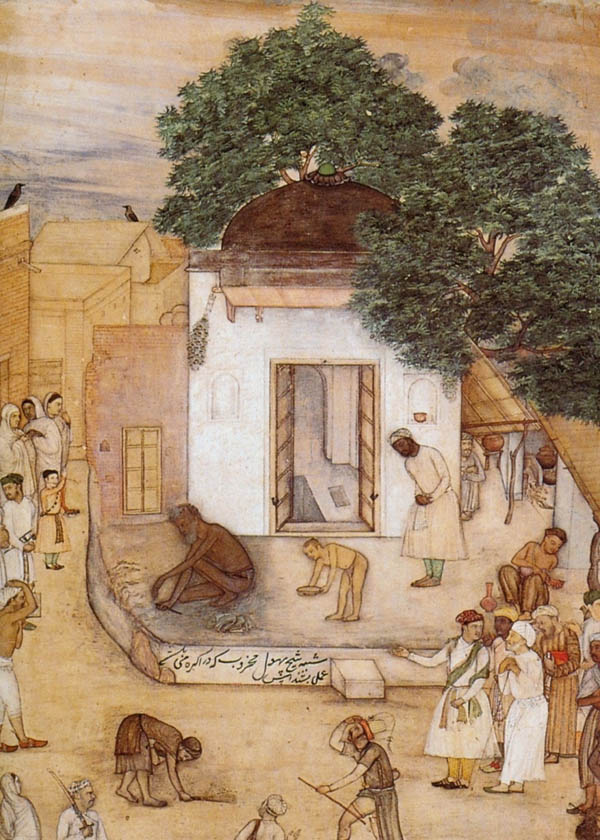
The accession of Humayun to the throne marked the beginning of much closer relations between the family of Muhammad Ghaus and the house of the Mughals. The Emperor became a disciple of Ghaus’s elder brother, Sheikh Phul. According to Badauni, Phul was a past master in the science of exorcism and a “worker of miracles and wonders.” Humayun always enjoyed his company and even took him along on his Bengal campaign. From Bengal, the Emperor sent him as an envoy to his brother Mirza Hindal to offer wise counsel when reports of the Mirza’s rebellion reached the Mughal court. Hindal, however, had the Sheikh executed on the trumped-up charge of being in league with the Afghans (1538). The author of Mirat al-Asrar writes that the spiritual bounty of Sheikh Phul had kept Humayun protected from all evils, and even after his death, the Emperor continued to enjoy his blessings and hence remained free from any major discomfort throughout his life.
Persecution, Exile, and the Gujarat Years
The assassination of Sheikh Phul did not hamper cordial relations between the Shattaris and Humayun. The Emperor became a devotee of Muhammad Ghaus and sought his advice in affairs both spiritual and mundane. Humayun’s defeat at the hands of Sher Shah Suri (r. 1540–1545) in the battles of Chunar and Kannauj, and his subsequent expulsion from India, brought a temporary halt to Muhammad Ghaus’s relations with the Mughals.
He had to pay dearly for his intimacy with the fallen dynasty. Sher Shah’s known antipathy for Mughal supporters made the situation precarious for Muhammad Ghaus. His controversial treatise, Risala-i-Mi’rajiyya, came in handy for his detractors to put him in the dock. In this treatise, the Sheikh had described his own experience of mi’raj (mystic ascension) and had claimed that during his spiritual ascent, he had met God and conversed with Him. The Sheikh was charged with blasphemy, and a royal order for his execution was mooted. The saint fled for his life and took shelter in Gujarat, where he established the first Shattari khanqah in Ahmedabad.
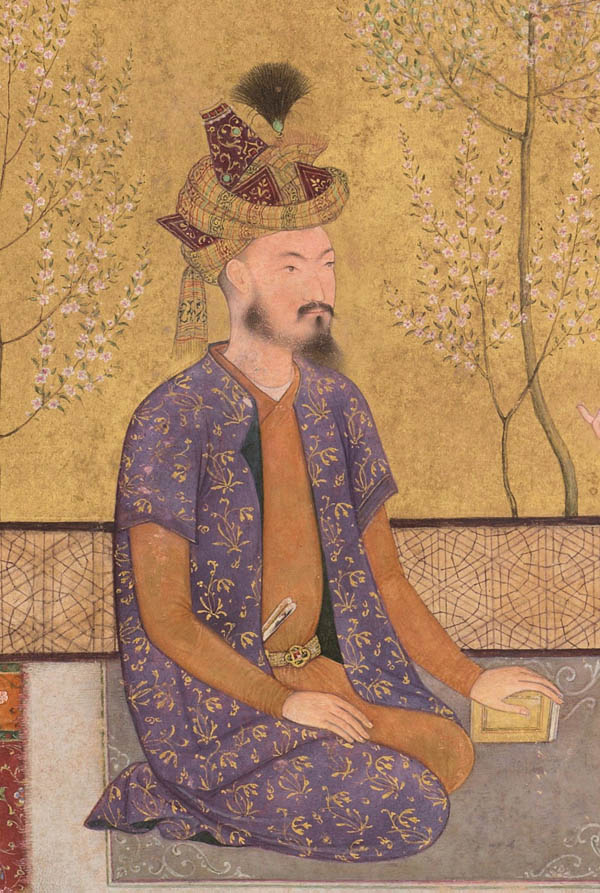
The Sheikh stayed in Gujarat for eighteen years, but during this period, he remained in touch with Humayun. In a letter, Humayun demonstrated his reverence for Muhammad Ghaus, expressed his anguish at not being able to serve him, and thanked the Almighty for facilitating the saint’s escape to Gujarat and protecting him from the clutches of the monstrous Afghans. In his reply, Ghaus expressed his pleasure at receiving the glad tidings of the Emperor’s well-being. God, the saint observed, had placed the Emperor in a difficult situation at present in order to make him perfect, assuring him that the days of distress would soon be over and “the bride of success will soon take her seat on the marriage-dais.”
Return under Akbar and Court Politics
After the restoration of Mughal authority in India (1555), Muhammad Ghaus returned to Gwalior. Three years later, he visited Agra and was cordially received by Emperor Akbar. But with the accession of the new ruler, power equations at the imperial court had changed. His old rival, Sheikh Gadai, held the high office of Sadr-us-Sudur (Minister of Religious Affairs). Gadai resented the saint’s presence in Agra. “By the arrival of the Sheikh,” writes Badauni, “the greatest shock came to Sheikh Gadai. As a result of the narrow outlook, hypocrisy, and envy which characterizes the religious elites, he thought that the Sheikh’s arrival would diminish his own position.”
Gadai raked up the old controversy associated with his treatise Risala-i-Mi’rajiyya and poisoned the ears of the Regent, Bairam Khan, who became hostile to him. Finding the court atmosphere uncongenial, Ghaus returned to Gwalior disappointed.
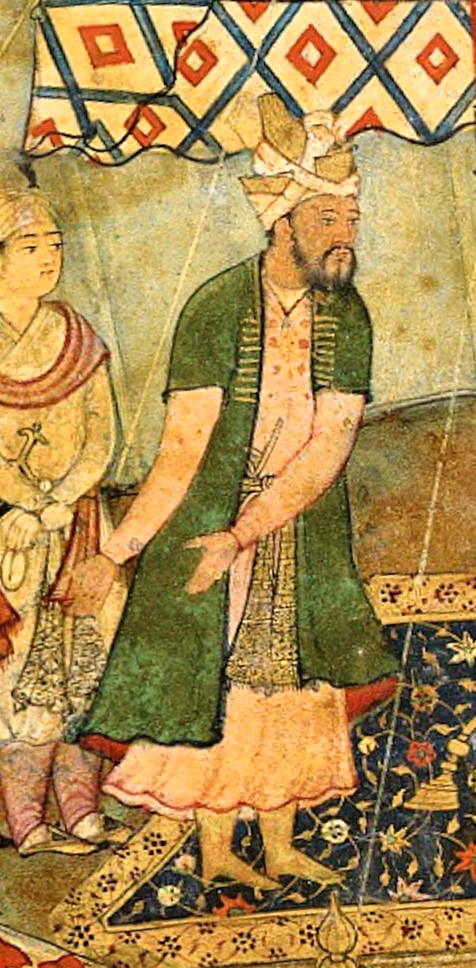
Shortly afterwards, Akbar went to Gwalior on a hunting expedition and took some time off to visit the Sheikh’s khanqah, ostensibly to pay his respects to the saint. The actual purpose of the visit, however, was to procure the fine Gujarati bullocks in the possession of the saint. Ghaus not only presented the bullocks to Akbar but also took the opportunity to symbolically initiate him into the Shattari order. Akbar took no notice of the initiation, but a few years later, he again availed himself of the services of the saint when Fateh Khan, the Afghan governor of Chunar, offered to surrender the fort on the condition that Muhammad Ghaus should come to Chunar and escort him to the court in person. At the Emperor’s request, the Sheikh visited Chunar, secured the surrender of the fort to Mughal officials, and brought Fateh Khan safely to Agra. In 1563, Muhammad Ghaus passed away and was laid to rest in Gwalior.
Yogic Influences and Eclectic Practices
Muhammad Ghaus was a man of liberal disposition and enjoyed the company of Sufis and yogis alike. He borrowed freely from yogic thought and taught his disciples self-discipline and breath control as practiced by the yogis. He also translated the famous yogic text Amrit Kund from Sanskrit into Persian, entitling it Bahr al-Hayat.
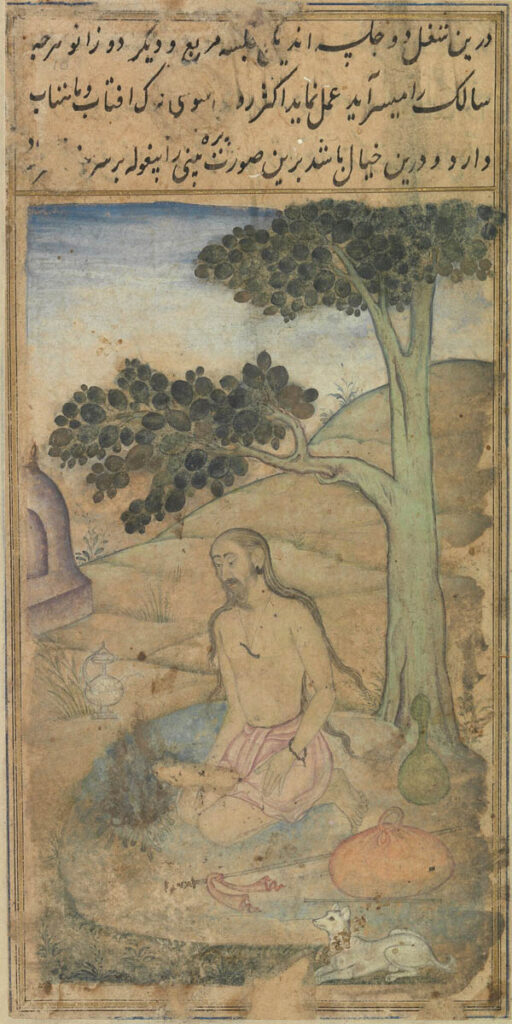
Muhammad Ghaus’s prolonged sojourn in the wilderness of Chunar, the rigorous physical and spiritual exercises carried out by him, and his alleged subsistence on tree leaves alone during this period also indicate strong yogic influence.
Divergent Chroniclers: Badauni versus Abul Fazl
Mughal chroniclers have offered divergent views regarding the personal traits and spiritual attainments of the saint. Badauni, though critical of certain facets of the saint’s personality, is full of praise for his erudition, humility, generosity, and spiritual prowess. He calls the Sheikh a past master in the science of exorcism and believed that he possessed supernatural power to an ample degree. “Many great and famous holy men in Delhi, Gujarat, and Bengal,” writes Badauni, “have risen from the fringe of his robe, and memorials of his perfection still remain in Hindustan.”
Badauni’s contemporary, Abul Fazl, on the other hand, held Muhammad Ghaus in great contempt. He presents a caricature of the saint’s spiritual accomplishments, calls him an impostor, and ridicules his attempt to initiate Akbar into the Shattari order. He also writes that the saint and his brother, Sheikh Phul, “put saintship to sale and acquired land and villages by fraud.”
Abul Fazl’s diatribe against Muhammad Ghaus is hardly surprising. His contempt for traditional Sufis and the ulama was well known. The harassment that his father, Sheikh Mubarak, had suffered at the hands of the orthodoxy during the Sur regime had also added to his antipathy. Furthermore, a man of diverse talents and widespread spiritual influence like Muhammad Ghaus represented a potential threat to Abul Fazl’s own standing at court.
A Lasting Legacy of Synthesis

Regardless of this controversy, Muhammad Ghaus remains the most outstanding Shattari Sufi of all time. A man of extraordinary learning, in humility, generosity, and catholicity of outlook he had few equals among his contemporaries. His erudition, ascetic discipline, and broad popular appeal contributed substantially to the popularity of the Shattari order in India. His eclecticism and his pioneering attempt to bring about a creative synthesis of Hindu and Islamic thought and spiritual practice remain worthy of emulation for contemporary Indian saints and thinkers alike.